

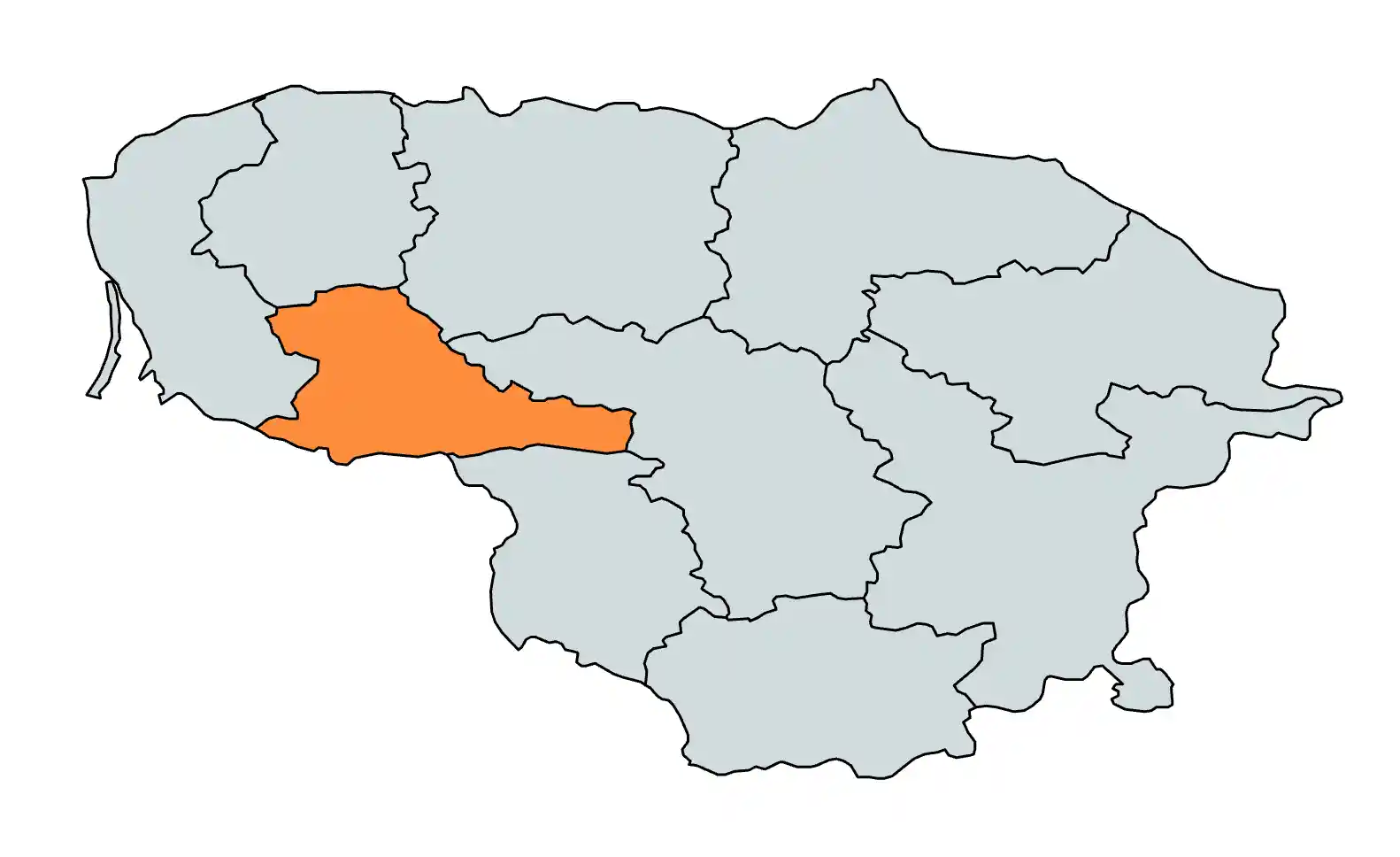
Tauragė County is the rugged frontier of the west where the forest is a wall of green. This region was once a vital borderland defended by stone castles and wooden forts against the crusaders. Today it is a paradise for hikers and cyclists who want to explore the untamed Karšuva woods or the steep banks of the Jūra River.
The Panemunė road follows the Nemunas River along the southern edge of the county offering views of massive castle ruins like Raudonė and Panemunė. These red brick towers rise above the trees and offer views that stretch all the way to the horizon. It is a land of raw nature and deep history where the villages feel like they are part of the forest itself.
Local life is tied to the river and the wood with traditional smokehouses and forest festivals that celebrate the harvest. You can find quiet parks with ancient oaks and old border markers that tell stories of empires and smugglers. The Tauragė County is for those who want an adventure off the beaten path where the silence of the woods is the only soundtrack.
Tauragė (county) highlights
- Tauragė Castle This 19th century brick fortress was originally built as a customs house on the border. Today it houses a museum and a cultural center surrounded by a leafy park in the heart of the region.
- Pagramantis Regional Park Explore the steep river banks and hanging bridges that cross the Akmena and Jūra rivers. The park is famous for its raw nature and the dramatic outcrops of ancient clay.
- Panemunė Castle This renaissance fortress features two massive towers and a beautiful courtyard. You can walk through the old halls and see the original defenses that once guarded the river route.
- Viešvilė Nature Reserve Visit the visitor center of this strictly protected area to learn about the unique bog ecosystems. It is a place of total silence where the forest and the marsh meet in their natural state.
- Raudonė Castle Climb the tall circular tower of this red brick manor for a view that stretches over the Nemunas valley. The surrounding park is filled with massive old oaks that have stood since the Middle Ages.
- The Nightingale Valley Find this quiet recreational area tucked into a loop of the Akmena river. It is a perfect spot for a picnic or a quiet walk along the water under the shade of the trees.
- Nosaičiai Mound Climb this steep hill to see the remains of an ancient settlement dating back over a thousand years. The site offers a panoramic view of the wet meadows and the surrounding forest.
- The Tamošaičiai Stone See a massive boulder known as the Giant which sits on a river bank in the middle of the woods. It is a local landmark tied to many legends about the old gods of the forest.
- Skaudvilė Regional Museum Discover the history of this old market town which was once a vital stop on the road to Prussia. The museum holds a unique collection of tools and folk art from the borderlands.
- Jurbarkas Bridge Drive across the longest road bridge in the country which spans the wide Nemunas River. It offers a great perspective of the scale of the valley and the power of the water.
The local Four
History of Tauragė (county)
Tauragė County is a legendary frontier zone where European history was decided by high level diplomacy and border wars. In 1812 the Tauragė Convention was signed in the village of Požerūnai where the Prussian army defected from Napoleon’s forces changing the tide of the war. For centuries the Nemunas River served as a fortified border with red brick castles like Panemunė and Raudonė built to control river tolls.
During the 1864 language ban the county became the world’s most active transit point for illegal books with the border town of Smalininkai operating a sophisticated network of underground warehouses. Smugglers known as Knygnešiai navigated the treacherous riverbanks and deep ravines to keep the national spirit alive. This rebellious border culture remains a point of deep pride for the local people.
The county’s geography is defined by the Akmena and Jūra rivers where steep banks and deep ravines were used by medieval partisans to ambush crusader patrols. In the 20th century the region served as a vital customs hub between Lithuania and East Prussia. The history of the Tauragė county is a story of a gateway that has seen the rise and fall of multiple empires.