

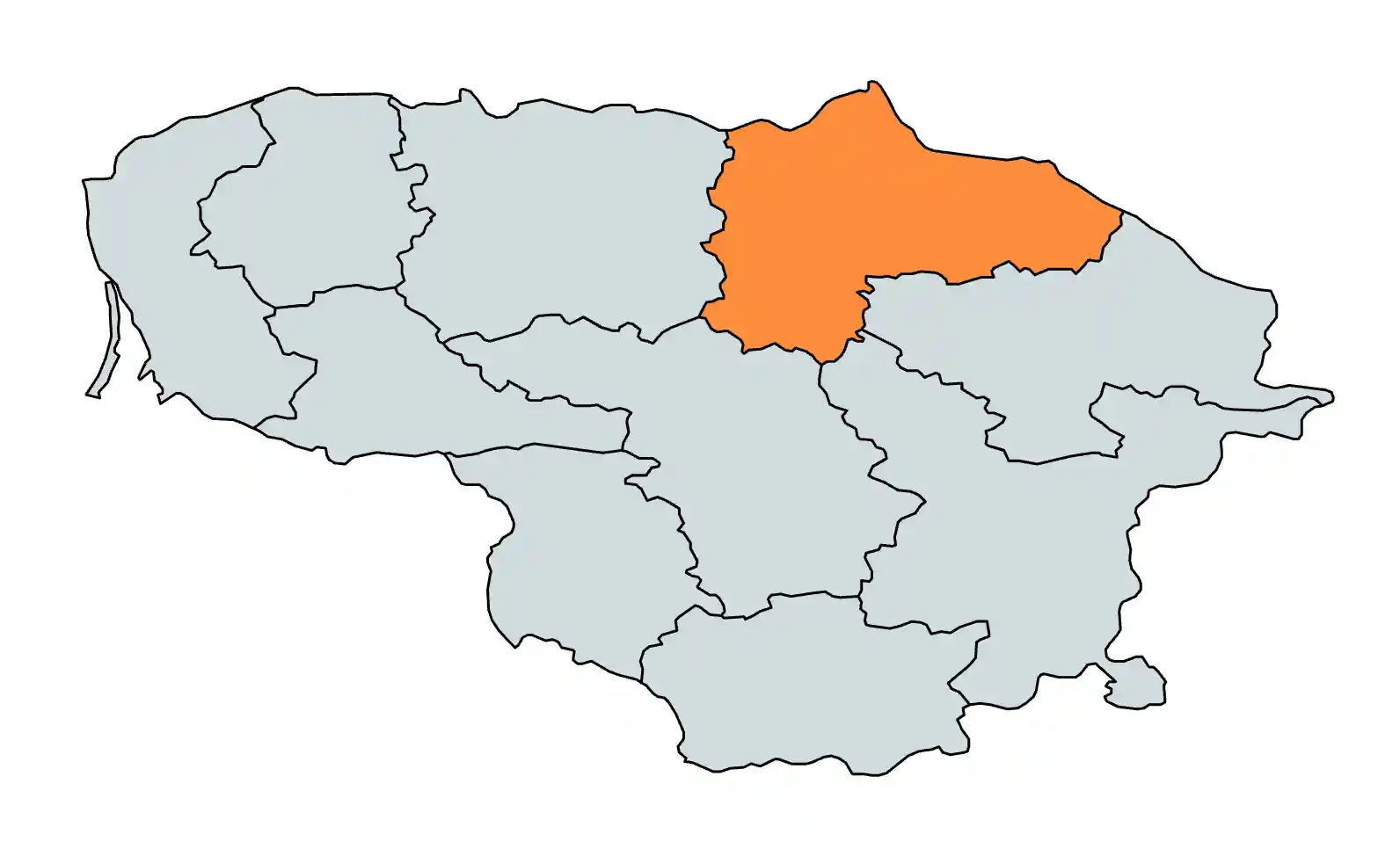
Panevėžys County is a land of northern plains and the clicking sounds of a narrow gauge railway. The Siaurukas train is a living relic of the past that still carries travelers through the flax fields and over old steel bridges. The Nevėžis River winds through the landscape creating green parks and quiet fishing spots that define the local pace of life.
The county is famous for its industrial spirit and its love of the arts. You can find the Juozas Miltinis theater which put this area on the cultural map or visit the local lore museum to see a world class collection of insects. The countryside is dotted with stone windmills and old breweries that have used the same recipes for generations to create some of the best beer in the Baltics.
Hiking paths in the Krekenava Regional Park lead you to observation towers where you can spot wild bison roaming in the forest enclosures. The manors of the north like Bistrampolis provide a glimpse into the life of the old nobility with horse stables and leafy parks. This is a county of quiet rivers and mechanical wonders perfect for those who love to discover hidden gems.
Panevėžys (county) highlights
- The Narrow Gauge Railway Take a ride on the historic Siaurukas train which has been clattering through the northern fields for over a hundred years. The old wooden wagons and small stations feel like a trip back to the steam age.
- Bistrampolis Manor This restored estate offers a mix of luxury and history with its own horse stables and a large park. It is a great road trip stop for a gourmet meal or a quiet walk under the old trees.
- Krekenava Observation Tower Scale this modern tower to see the winding Nevėžis River as it cuts through the meadows. The nearby visitor center offers a chance to see wild bison in a large forest enclosure.
- Upytė Linen Museum Discover the long history of flax and linen production in a traditional wooden windmill. You can see how the blue flowers are turned into the fine white fabric that the region is famous for.
- Rokiškis Manor House This grand palace is home to a regional museum with a massive collection of wood carvings. The central square of the town nearby is one of the most beautiful and well planned in the country.
- Biržai Castle Visit the only bastion style fortress in Lithuania which sits on the shore of the oldest man made lake. The museum inside tells the story of the wars with the Swedes and the local nobility.
- The Sinkholes of Biržai Explore a landscape where the ground literally disappears into deep circular pits. This unique geological phenomenon has created hundreds of holes some of which are filled with green water.
- Kirkilai Observation Tower This crescent shaped tower offers a view over a cluster of sinkholes that have turned into small lakes. The view from the top is especially beautiful when the water reflects the blue sky.
- Palėvenė Monastery Find the ruins of this old dominican monastery tucked away in a quiet village. The crumbling brick walls and the peaceful river nearby create a haunting and beautiful atmosphere.
- Stelmužė Oak While technically on the border this is the oldest tree in the country and a must see landmark. The massive trunk is so wide it takes several people to circle it and it has stood for over a thousand years.
The local Four
History of Panevėžys (county)
Panevėžys County is an industrial and technical hub shaped by the 19th century rail expansion and flax trade. In 1899 the construction of the Narrow Gauge Railway connected northern farms to the Baltic ports making the region a leading exporter of high quality linen. The local nobility like the Tyzenhauzas family in Rokiškis built grand manors that functioned as centers for science and hunting.
Northern towns like Biržai became famous for a unique brewing tradition where local beer was crafted with mineral rich water from the region’s limestone sinkholes. Geologically the county is famous for 7,000 active sinkholes formed by dissolving gypsum layers beneath the soil which have created a landscape unlike any other in the country. This geological instability has shaped local myths and settlement patterns for centuries.
During the industrial era the Nevėžis River powered the massive flour mills that supplied the entire Baltic region with grain. The 1863 Uprising also saw heavy action here as local rebels used the marshy forests of the north to launch ambushes against imperial troops. The history of the county is a blend of technical innovation and a fierce connection to the unique karst landscape of the north.