

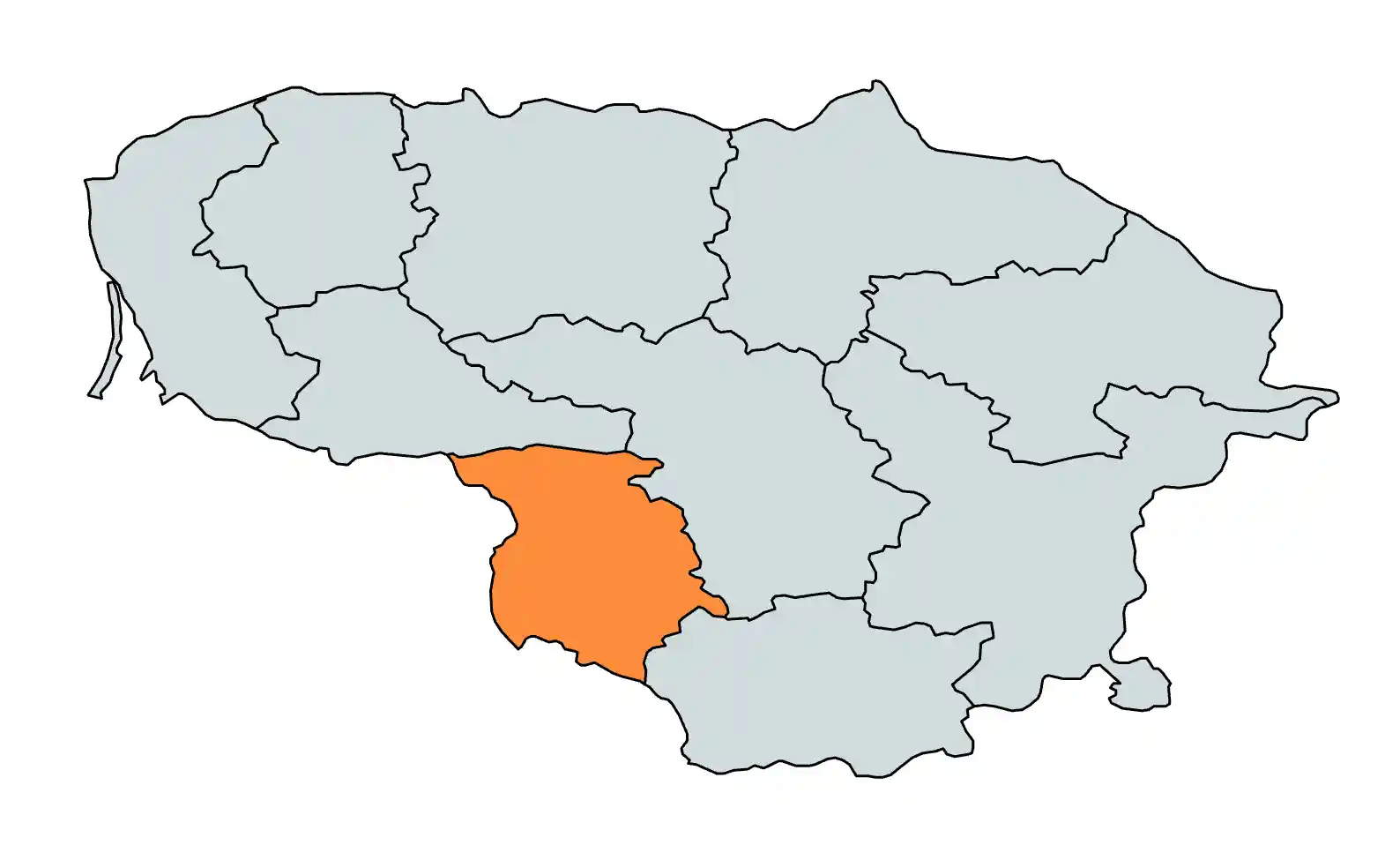
Marijampolė County is the golden breadbasket of the southwest where the horizon is flat and the soil is rich. This is the land of the Suvalkija people who are proud of their tidy farms and their distinct local dialect. The roads here cut through endless fields of wheat and sugar beets passing by grand manor houses with white pillars and orderly gardens.
A unique stop on your trip is the tripoint near Vištytis where the borders of three nations meet at a single stone marker in the woods. The nearby Vištytis Lake is one of the deepest in the country offering clear water for swimming and quiet campsites under the oaks. You can also explore the Metalo Fantazija museum where hundreds of sculptures are made from recycled scrap metal parts.
The county is a master of agricultural beauty and traditional craft. Small towns like Kybartai hide underground cellars from the railway era while the central squares are often filled with the smell of fresh bread and local honey. It is a peaceful county where the sky feels bigger than anywhere else and the history of the land is written in the furrows of the fields.
Marijampolė (county) highlights
- Vištytis Regional Park Drive to the edge of the border to see a lake so deep and clear it is often called the European Baikal. The park features rolling hills and mysterious stones that mark the boundary between three nations.
- Gelgaudiškis Manor This neoclassical estate sits on a high bank of the Nemunas River surrounded by a massive park. The interior features unique murals and hosts traditional dance events for visitors.
- Zypliai Manor Explore this active cultural center where local blacksmiths and potters still practice their crafts in the old stables. The manor park is famous for its long linden tree alleys and outdoor art.
- Metalo Fantazija Museum This unique outdoor gallery features hundreds of sculptures made from recycled scrap metal. It is a creative and quirky stop that shows the industrial spirit of the region.
- Vištytis Windmill Visit this rare wooden windmill which has been restored to show the inner workings of old grain milling. It stands on a hill and offers a great view of the surrounding agricultural plains.
- The Holy Spring of Šilelis Find this quiet forest spring where locals have collected water for centuries believing in its healing powers. The path to the spring is lined with wooden carvings and quiet benches.
- Sudargas Mounds Climb a series of five massive hillforts that line the river bank offering views into the distance. This was once a vital defense line and now serves as a scenic park for hikers.
- Paežeriai Manor This elegant white palace sits on the shore of a lake and houses a museum of regional history. The tall viewing tower provides a panoramic look over the flat and fertile Suvalkija plains.
- Kybartai Underground Caves Explore the hidden brick vaults and cellars beneath the railway station built in the 19th century. These massive tunnels were once used for storing customs goods and are a true hidden gem.
- The Great Stone of Vištytis See one of the largest boulders in the country which according to legend was dropped by the devil. It is a massive landmark in the middle of a field that highlights the glacial history of the land.
The local Four
History of Marijampolė (county)
Marijampolė County is the intellectual and agricultural heartland where the modern Lithuanian identity was forged in the 1800s. After the 1422 Treaty of Melno stabilized the western frontier the Sūduva wilderness was cleared into the nation’s most fertile grain belt. This agricultural wealth funded a generation of scholars who refined the local Suvalkija dialect into the standard Lithuanian language used today.
Between 1864 and 1904 the county became the primary corridor for Book Smugglers who transported forbidden Latin script books from across the Prussian border through the deep woods of Vištytis. These smugglers were supported by wealthy farmers who maintained secret home schools to resist imperial Russification. This underground network ensured the survival of the national culture during its most vulnerable period.
The Marijampolė County is the birthplace of the national anthem and served as a tactical staging ground for the 1831 Uprising against the Russian Empire. The manor estates like Paežeriai stand as monuments to the prosperous "Golden Age" of the local gentry who valued both the plow and the pen. Today the county continues to thrive as a hub for international transit and high yield agriculture.