

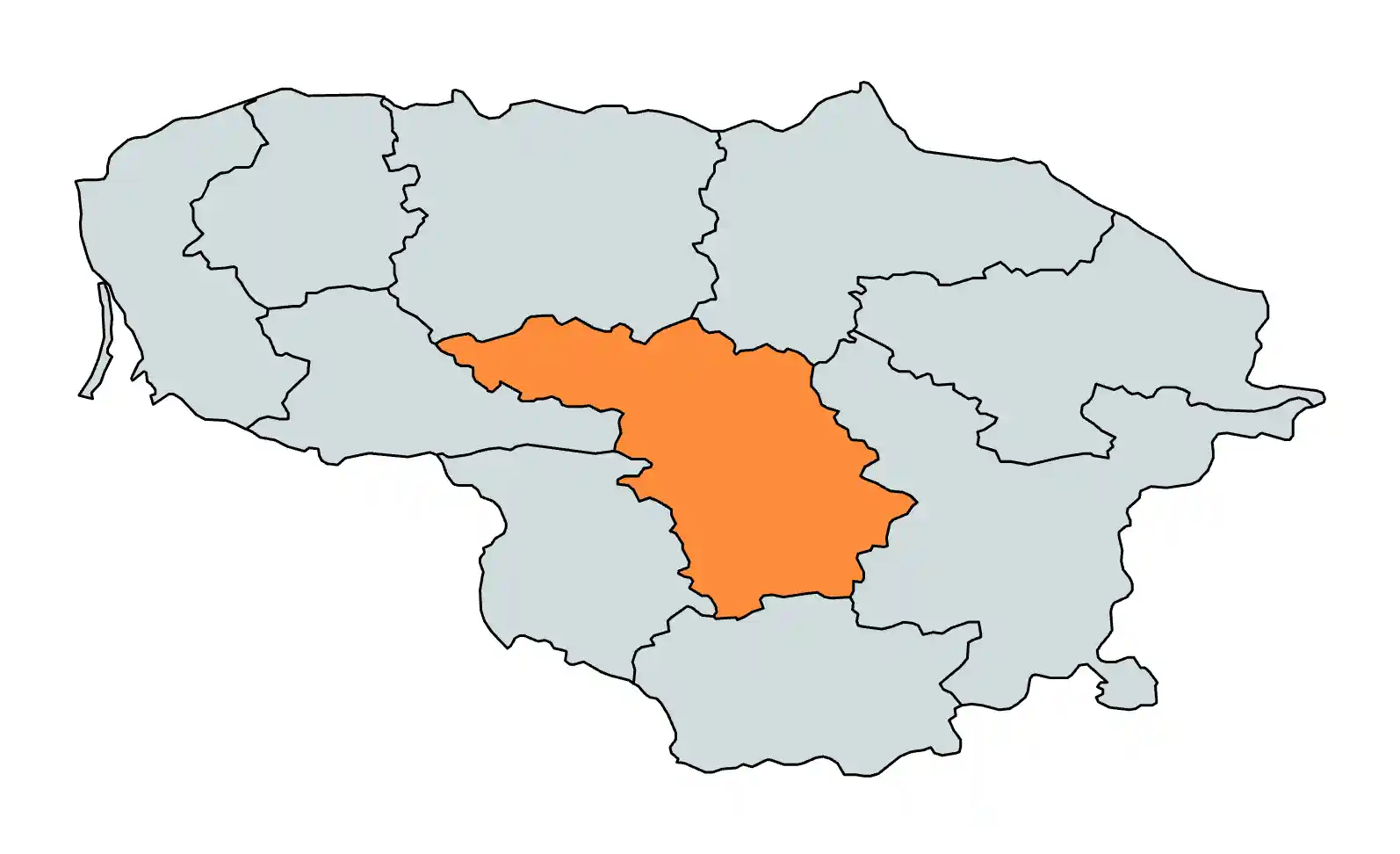
Kaunas County sits at the very heart of the country where the two largest rivers meet under the shadow of a medieval fortress. The landscape is dominated by the Kaunas Reservoir a massive body of water created by a dam that looks like a sea. Along its shores you find the Pažaislis Monastery a baroque masterpiece with orange bricks that glow in the fading light.
This region is famous for its interwar architecture and bold street art that turns every city wall into a canvas. Beyond the urban center the roads wind toward Rumšiškės where one of the largest open air museums in Europe recreates entire villages from every corner of the nation. You can walk through ancient farms and wooden churches to see how the people lived hundreds of years ago.
The plains are fertile and dotted with grand manor estates like Raudondvaris which hosts concerts and art festivals in its red brick halls. For a view from above you can ride the historic funiculars or watch hot air balloons drift over the river valleys. This county is an area of engineering marvels and cultural pride where the history of the nation feels alive in every town square.
Kaunas (county) highlights
- Pažaislis Monastery This italianate baroque masterpiece sits on a peninsula surrounded by the waters of the Kaunas Sea. The marble interiors and peaceful forest surroundings make it one of the most romantic stops in the central region.
- Rumšiškės Open Air Museum Walk through a massive park that recreates entire 18th century villages from across the nation. You can explore old farmsteads and wooden mills to see the authentic rural life of the past.
- Kadagiai Valley Hike the boardwalk along the edge of a cliff covered in ancient juniper bushes overlooking the river. This trail offers some of the most dramatic and scenic views of the Nemunas loops in the country.
- Birštonas Mineral Springs Stop in this quiet resort town for a walk through the Vytautas the Great Park to breathe the salty mineral air. You can try the natural spring water for free at several public pavilions.
- The Ninth Fort This massive concrete memorial and fortress serves as a somber reminder of the tragedies of the world wars. The brutalist sculptures and underground tunnels offer a powerful and moving historical experience.
- Kaunas Reservoir Regional Park Drive along the winding roads that skirt the massive water reservoir to find hidden beaches and high cliffs. It is a popular spot for sailing and watching the sunset over the wide water horizon.
- Raudondvaris Manor Visit this red brick castle to explore the grand halls and the leafy park that hosts art festivals. The manor is a perfect example of the renaissance style and serves as a cultural hub for the region.
- Dubrava Arboretums Discover a rare swamp forest where a wooden path leads through a graveyard of dead trees preserved by nature. This eerie and beautiful site is a hidden gem for photographers and nature enthusiasts.
- Zapyškis Church This small gothic church stands alone in a meadow right on the bank of the Nemunas River. It is one of the most iconic and photographed buildings in the region especially during the flood season.
- Seredžius Mound Climb the steep stairs of this massive hillfort for a panoramic view of the river valley. Local legends say a Roman prince once lived here making it a spot of mystery and ancient power.
The local Four
History of Kaunas (county)
Kaunas County has been the nation’s commercial and strategic nexus since the 1300s when a red brick fortress was built to guard the confluence of the Nemunas and Neris rivers. By 1441 the region joined the Hanseatic League establishing a powerful guild of merchants who exported grain and honey to Western Europe. This wealth funded the construction of gothic churches and a bustling town square that became a trade landmark.
In the 1660s the wealthy Pacas family funded the Pažaislis Monastery employing Italian masters to create the most intricate baroque marble interior in the Baltics. The county later became the temporary national capital in 1919 triggering an architectural boom that produced over 6,000 modernist buildings in just two decades. This period established the county as a diplomatic hub and a center for pioneering aviation at the Aleksotas airfield.
In 1959 the landscape was permanently altered by the construction of the Kaunas Hydroelectric Power Plant which flooded 35 villages to create the Kaunas Sea reservoir. This massive engineering project changed the local climate and ecology but provided the energy needed for modern industrial growth. Today the county remains the industrial and cultural heartbeat of the central Lithuanian plains.