

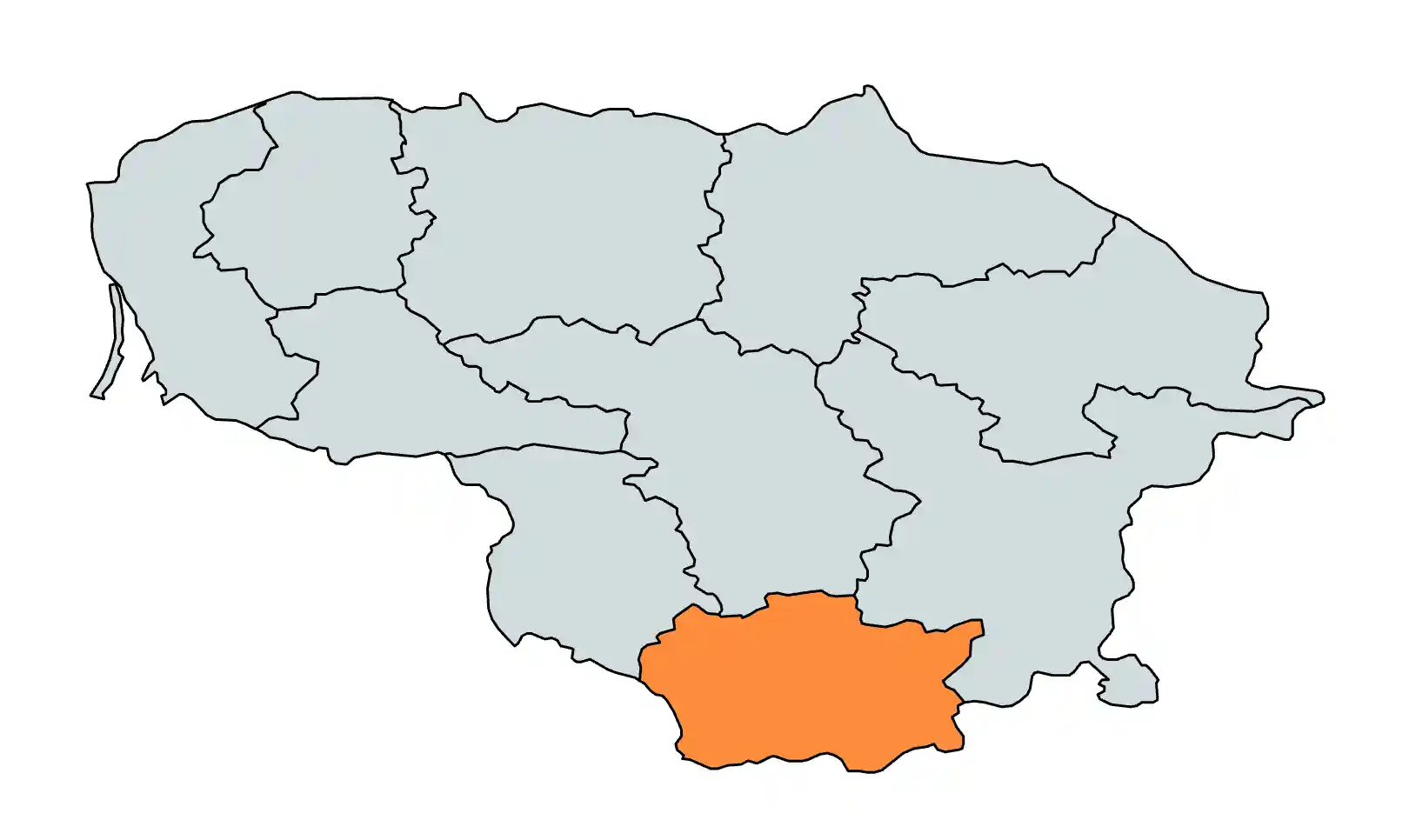
Alytus County serves as the wild green gateway to southern Lithuania where the Nemunas River carves massive loops through ancient pine stands. This region is a paradise if you're seeking a mix of wellness and history away from the busy capital. You can explore the vast Dzūkija National Park where the soil is sandy and the forest floor is famous for its wild mushrooms and berries.
The road leads you to Merkine where a sleek observation tower provides views over the river confluence that look like a painting. Nearby you find the mystical pyramid of Česukai a place known for its glass dome and quiet energy. The county is also home to Grūtas Park where a strange collection of Soviet statues rests among the trees creating a surreal walk through a dark chapter of history.
Druskininkai sits at the edge of the county offering world class spa treatments and the year round Snow Arena for indoor skiing. You can drive through quiet villages like Marcinkonys to see traditional wooden houses and hear the local dainos songs. The Alytus County is the lung of the nation where the scent of resin and the sound of the flowing river create a perfect backdrop for a restorative journey.
Alytus (county) highlights
- Dzūkija National Park Drive through the largest protected forest in Lithuania to discover traditional wooden villages and crystal clear rivers. It is the perfect spot for picking wild mushrooms and berries while exploring the sandy pine barrens.
- Grūtas Park This eerie open air museum displays a massive collection of Soviet statues and relics rescued from city squares. It offers a surreal walk through a dark historical era set against a quiet woodland backdrop.
- Merkinė Observation Tower Climb this unique architectural structure nicknamed the Pine Forest for a bird's eye view of the Nemunas River loops. The tower is designed to blend into the trees and provides one of the best sunset vistas in the south.
- Druskininkai Snow Arena Experience a massive indoor winter playground that offers skiing and snowboarding every day of the year. This high tech facility is one of the largest of its kind in Europe and perfect for an active road trip stop.
- Liškiava Monastery Visit this stunning late baroque ensemble perched on a high bank overlooking the Nemunas River. The underground crypts and the peaceful hilltop setting make it a hidden gem for architecture and history lovers.
- The White Rose Bridge Walk across the highest pedestrian bridge in the country which spans the deep valley of the Nemunas. It connects the city to the wild hiking trails of the Vidzgiris forest and offers breathtaking vertical views.
- Metelys Regional Park Stop here to see the great lakes of the south where bird watching towers look out over massive wetlands. It is a quiet sanctuary for rare species and a great place for a picnic by the water.
- Čepkeliai Marsh Explore the largest bog in Lithuania via a wooden boardwalk that leads deep into the prehistoric wetlands. This strictly protected reserve feels like a journey back in time to an untouched wilderness.
- Raižiai Mosque Discover one of the few remaining wooden mosques in the region which serves the local Tatar community. This small green building is a rare cultural gem that highlights the diverse religious history of the area.
- Obelija Lake Find this quiet hidden lake for a peaceful swim or a night of camping away from the tourist crowds. The surrounding hills and dense woods provide a private and natural escape for road trip adventurers.
The local Four
History of Alytus (county)
The history of Alytus County is defined by its role as the southern defensive shield of the Grand Duchy of Lithuania. In the 1300s Grand Duke Gediminas established a line of wooden fortresses on massive earthen mounds like Punia and Merkinė to intercept Teutonic raids. Following the 1410 Battle of Grunwald the region transitioned into a royal hunting preserve where the Dainava Forest supplied timber and wild game for the state.
In the late 1300s Grand Duke Vytautas settled Lipka Tatars here who introduced unique cavalry tactics and built wooden mosques that still stand in Raižiai. By the 1830s the discovery of high concentration mineral springs transformed Druskininkai from a salt mining village into the premier health resort of the Russian Empire. This era of peace allowed the region to flourish as a gateway for European travelers seeking restorative nature.
During the 1940s the dense bogs of Čepkeliai became the headquarters for the Cross of Vytis partisans who operated from complex underground bunker networks. This resistance movement utilized the treacherous landscape to maintain the longest running guerrilla war in Europe. Today the county preserves this legacy of strength through its protected national parks and historical monuments.