

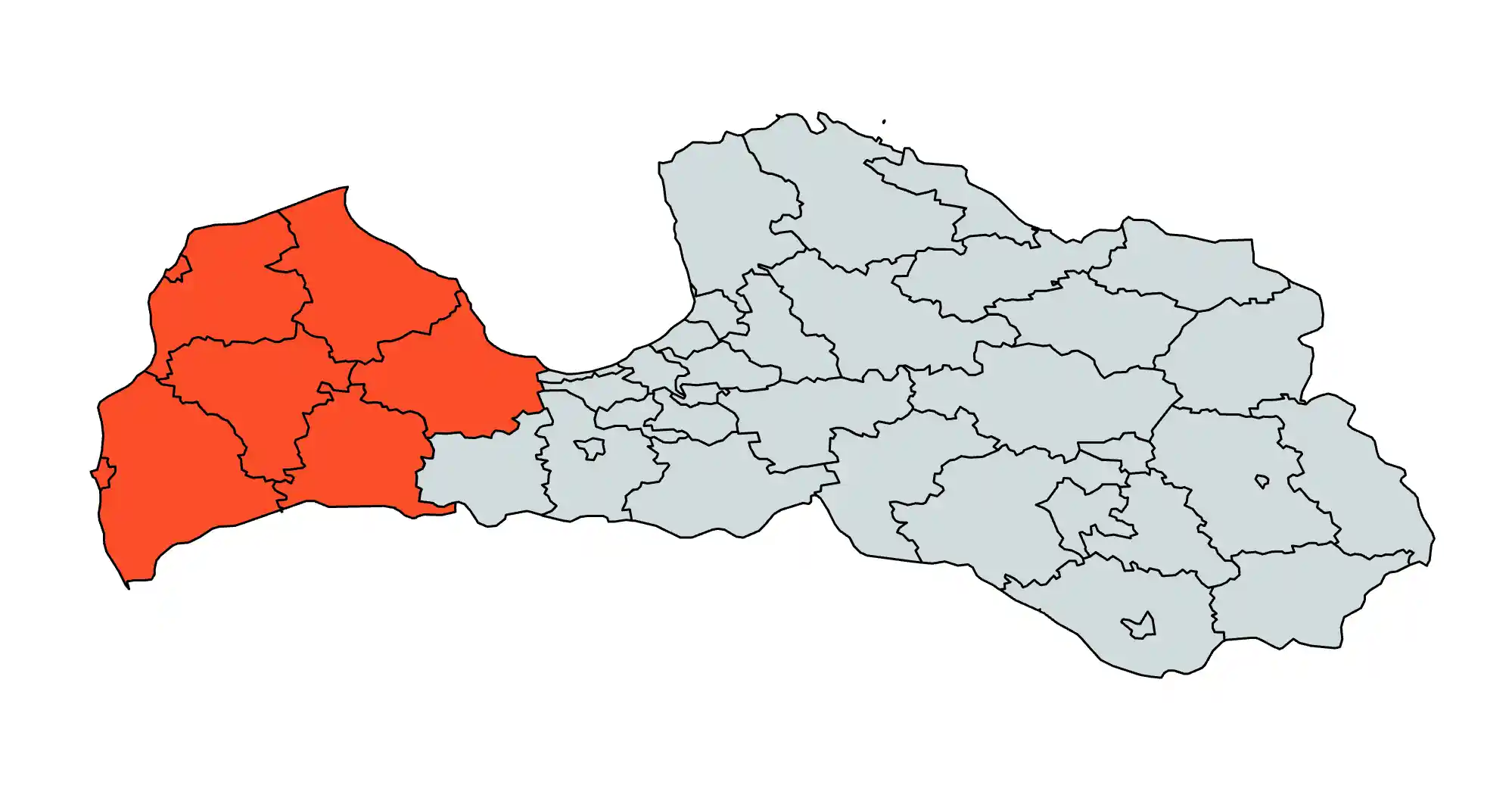
The Kurzeme region is where the Baltic Sea meets the Gulf of Riga at the windswept Cape Kolka. This coastal stretch is a paradise for those seeking a rugged Baltic coast scenic drive far from the city crowds. The road follows the water through the Slītere National Park where pine trees lean toward white sand and hidden Liv fishing villages offer a glimpse into a dying seafaring culture.
Further south the trail leads you to the town of Kuldīga where the Venta Rapid spans the river as the widest waterfall in Europe. You can walk across the historic red brick bridge and watch the water tumble over the limestone ledge in a gentle roar. The streets here feel like a time capsule with small wooden houses and the narrow Alekšupīte stream flowing directly between the buildings.
Your trip ends along the steep bluffs of Jūrkalne where the land drops twenty meters straight into the crashing surf. This is a favorite spot for paragliders and sunset seekers who want to see the sky turn pink over the open sea. Whether you are exploring the giant radio telescope at Irbene or tasting smoked fish in a seaside yard the Kurzeme region delivers the raw power of the northern coast.
Kurzeme (region) highlights
- Cape Kolka Stand at the edge of the world where the Baltic Sea and Gulf of Riga crash together over a graveyard of old shipwrecks. It is a wild and windy place where you can see the power of two seas meeting in one spot while walking on soft white sand.
- Venta Rapid Walk across the historic red brick bridge to see the widest waterfall in all of Europe as it flows over a low limestone ledge. You can even wade through the shallow water or watch the fish jump during the warm and sunny summer months.
- Karosta Prison Visit this dark military site to learn about the hard life in a real Soviet era jail that was used by many different armies. You can take a guided tour to see the cells or even stay the night for a real thrill if you are brave enough.
- Irbene Radio Telescope Explore a giant secret space dish that was once used for spying on the west during the long years of the Cold War. It sits deep in the pine woods and looks like a massive metal prop from a science fiction movie.
- Riežupe Sand Caves Go deep into the earth to find the longest maze of sand caves in the land which were dug by hand over many years. The walls are soft and gold as you walk through the dark paths by the light of a small candle.
- Jūrkalne Bluffs Look down from high gray cliffs that drop twenty meters straight into the crashing surf of the open sea below. It is the best spot for a scenic drive along the steep western coast where the land is slowly falling into the water.
- Lake Usma Rent a small boat on this huge lake to find hidden bays and quiet green islands that are perfect for a swim. It is a top pick for a peaceful break during a long road trip if you want to see the stars away from city lights.
- Slītere Lighthouse Climb the steep stairs for a view over the dense blue woods that hide wild moose and large boar in the brush. The view from the top reaches all the way across the sea to the distant coast of Estonia on a clear day.
- Kuldīga Old Town Wander through a town that feels like a film set with old wooden houses and narrow canals that run between the streets. It is the perfect place to stop for a meal on a stone terrace while watching the small river flow by.
- Pedvale Art Park Walk through a vast open field where giant stone and metal sculptures sit among the rolling green hills and farm land. It is a unique place where modern art and the quiet life of the country become one.
The local Four
History of Kurzeme (region)
Kurzeme was the home of the Kurši, a wealthy tribe of Baltic Vikings who traded amber for silver and gold. These sailors were so strong that early kings from Sweden and Denmark wrote about their raids in famous old sagas. You can still drive to the hidden hills where they built their wooden forts to guard the sea path from rival ships.
In the 1600s, the region became a world power under Duke Jacob, who built a massive navy from the tall pines of the local woods. He was so bold that he started colonies as far away as the island of Tobago in the Caribbean and the Gambia River in Africa. This era left the coast dotted with red brick palaces and ports that once held exotic spices and tropical wood.
During the Cold War, the entire shoreline was a closed military zone to stop people from fleeing to the west in small boats. Soldiers kept the sand raked smooth to find footprints, and locals even wore tin cans on their shoes to hide their tracks. Today, you can drive past giant secret radio dishes and ghost towns that were hidden from the maps for over forty years.