

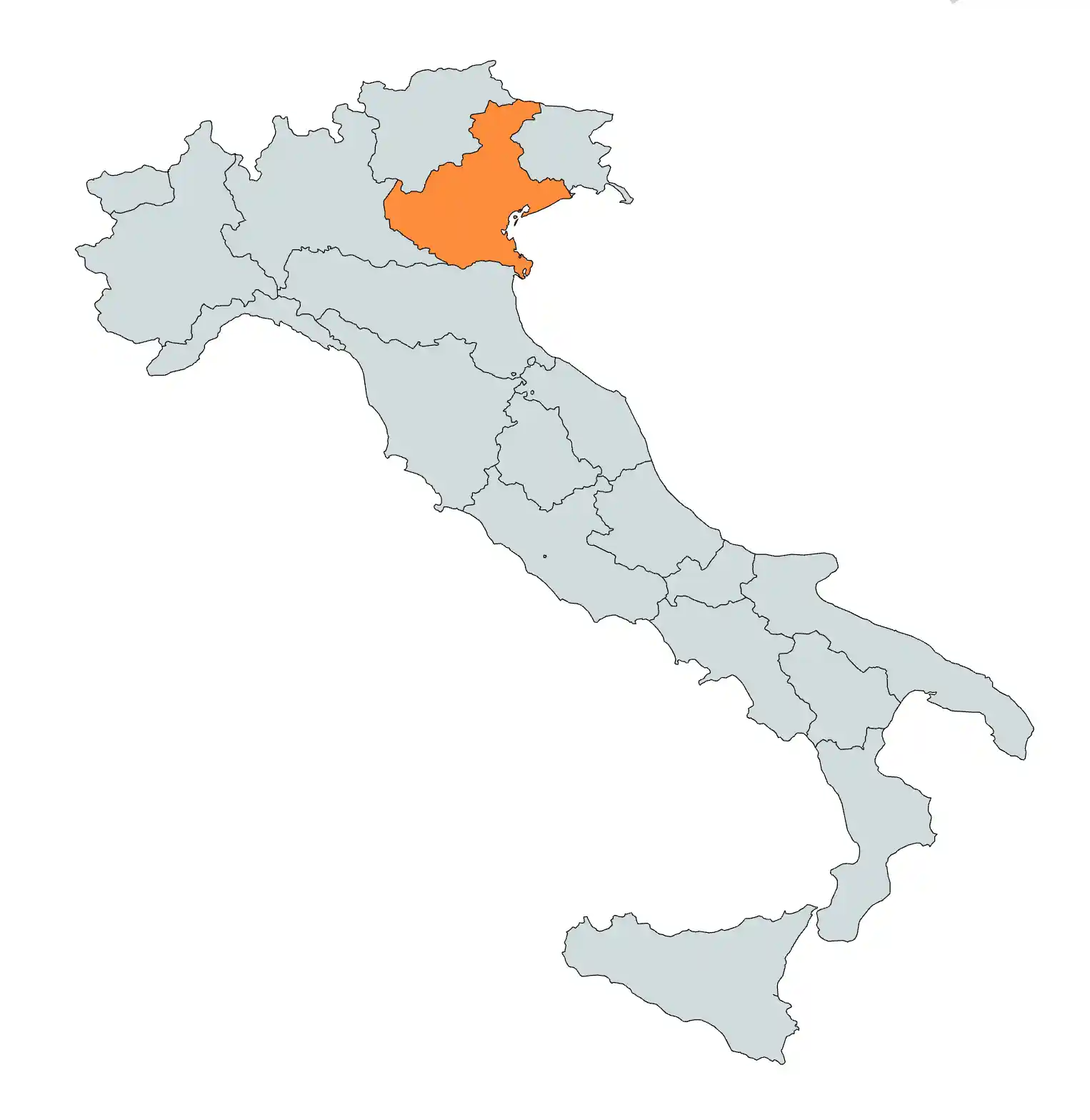
Veneto is a region of immense scale and historical power. Spanning every landscape from the towering Dolomite peaks in the north to the shallow lagoons and beaches of the Adriatic Sea. This region was the core domain of the mighty Venetian Republic, which controlled the seas for a thousand years. The wheels of your care move through centuries of wealth, natural beauty and art that remains globally influential.
The roads here connect Italy’s geographical extremes. In the north, you can drive challenging routes through the mountain passes leading toward Cortina d’Ampezzo. Southward, flat, quick roads link the region’s historical anchors. You must visit Verona for its Roman arena plus the Shakespearean connection and Vicenza to see the architectural perfection of Andrea Palladio’s villas.
Venetian cuisine reflects delicate seafood and rice dishes near the coast. Inland, it's rich polenta and meat. The region is the source of Prosecco, the globally popular sparkling wine. Also the famous red wine Amarone has its home in the region. Every sight you'll enjoy speaks to the enduring strength of the historical Republic.
Veneto highlights
- Verona Best known for Romeo and Juliet. Verona also offers a beautifully preserved Roman arena, lively piazzas and elegant shopping streets. In summer, opera performances fill the ancient amphitheater.
- Vicenza A city shaped by architect Andrea Palladio. Famous for elegant villas (Palladian Villas) and Renaissance palaces. It feels refined and calm compared to larger Italian cities.
- Venice The world famous canal city with St Mark’s Square, the Doge’s Palace and endless waterways to explore by foot or boat. Beyond the main sights, quiet neighborhoods like Cannaregio reveal everyday Venetian life.
- Padua A historic university city with the Scrovegni Chapel, home to Giotto’s iconic paintings. The lively squares and cafés give it a youthful energy.
- Treviso Often overlooked, Treviso charms with canals and a relaxed local feel. It is also considered the birthplace of tiramisu.
- Lake Garda (Eastern Shore) Towns like Malcesine, Bardolino and Lazise combine lakeside beaches and mountain views. Ideal for swimming, cycling and relaxed lakeside dining.
- Valpolicella Wine Region Drive through the hills west of Verona. This area is famous for producing the rich red wine known as Amarone.
- Prosecco Hills of Valdobbiadene Beautiful vineyard landscapes where Italy’s most famous sparkling wine Prosecco is produced. The scenic roads between Valdobbiadene and Conegliano are among the most beautiful in the region.
- Asolo Known as the "city of a hundred horizons". A small hill town known for its artists, castle views and quiet elegance. Asolo feels timeless and is perfect for a calm escape from busy tourist routes.
The local Four
History of Veneto
The history of Veneto began with its position as a key Roman territory. Connecting essential roads like the Via Postumia. The region’s destiny was shaped by its people fleeing barbarian invasions. They retreated to the safe, shallow lagoons, founding Venice. This geographical isolation allowed the city to develop into the Serenissima: an independent Maritime Republic that grew rich by controlling the spice and silk trade routes between East and West.
By the late Middle Ages, the Venetian Republic extended its power inland. Conquering the mainland territory. This included Padua, Vicenza and Verona. This expansion made the Republic a major political and military power in Italy. This era also saw the construction of magnificent architectural works including the great villas of Andrea Palladio. Built for the wealthy Venetian elite seeking investment and leisure outside the lagoon.
The Republic’s millennium of independence ended dramatically when Napoleon conquered Venice in 1797. Following the Napoleonic Wars, the region fell under the control of the Austro Hungarian Empire. This period of foreign rule lasted until the mid 19th century, when Veneto was finally unified with the rest of Italy. The region retains the immense cultural legacy, architecture and wealth accumulated during its thousand year rule.