

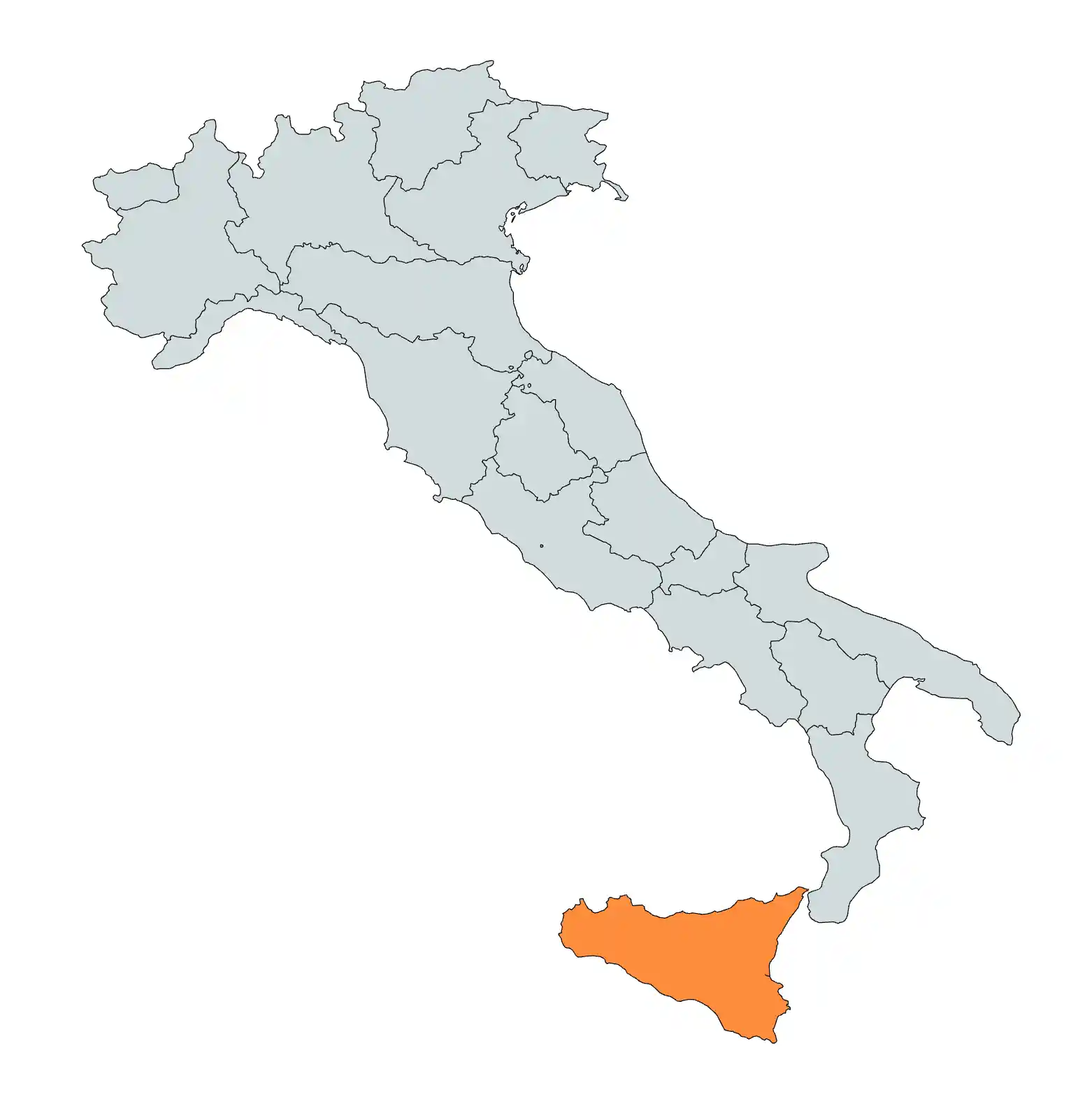
Sicily is not just an island. It is the powerful heart of the Mediterranean. Situated at the very crossroads of Europe and Africa, the island’s history is a complex weave of Greek, Arab, Norman and Baroque influences. Driving here will always be in the presence of Mount Etna, the continent's largest active volcano.
The roads here will lead you through spectacular but challenging scenery. You can drive the volcanic slopes of Etna, explore the beautiful eastern coastline. You could aso navigate the chaotic streets of Palermo and Catania. Everywhere you look, empires overlap. Greek temples stand near Norman castles and Byzantine mosaics reflect Arab ceilings. The Baroque towns of the Noto Valley provide magnificent proof of the island’s architectural resilience.
Sicilian cuisine is as complex as its history. It is famous for its exceptional street food, rich sweets (cannoli), excellent seafood and unique Arab inspired dishes. The food perfectly reflects the intensity of its culture.
Sicily highlights
- Palermo Sicily's lively capital full of street markets Arab Norman architecture and historic palaces. Visit Palermo Cathedral, the Norman Palace and enjoy legendary Sicilian street food.
- Mount Etna Europe’s most active volcano dominates eastern Sicily. You can drive up its lower slopes, hike around old lava fields and even take guided tours near the summit craters.
- Taormina A beautiful hilltop town with an ancient Greek theater overlooking the sea and Mount Etna. Its streets, beaches and classic views make it one of Sicily’s most iconic stops.
- Valley of the Temples, Agrigento One of the best preserved Greek temple sites in the world. Walk among massive Doric temples set on a ridge with sweeping countryside views.
- Syracuse and Ortigia An ancient Greek city with a beautiful island old town. Explore Roman ruins, Baroque streets, seaside cafés, and the legendary Fountain of Arethusa.
- Noto Valley (Baroque Towns) The capital of Sicilian Baroque, famous for its golden stone buildings and grand staircases. Especially beautiful at sunset when the city glows warm amber.
- Scala dei Turchi A striking white limestone cliff shaped like giant steps along the coast. A perfect stop for coastal views, swimming, and photography.
- Erice A mountain town above Trapani with stone streets, ancient walls and beautiful views over the sea and salt flats. Often wrapped in mist for a mystical feel.
- Trapani Salt Pans and Windmills Historic salt fields with shallow pools, old windmills and flamingos at sunset. A peaceful and unique landscape unlike anywhere else in Italy.
The local Four
History of Sicily
The history of Sicily began with its colonization by the Greeks starting in the 8th century BC. Sicily became the jewel of Magna Graecia (Greater Greek) by building spectacular temples and cities like Syracuse and Agrigento. This golden age of culture was brutally ended by the Roman Empire, which conquered the island and turned it into Rome’s breadbasket, primarily exploiting its rich agricultural land.
After the fall of Rome, the island was taken by Byzantine, then Arab forces. The Arab era brought new crops, architecture and irrigation systems. The most prosperous time came under the subsequent Norman Kingdom of Sicily. Palermo became a cosmopolitan capital where Arab craftsmen, Byzantine mosaic artists and Norman architects worked together. Creating a unique art and administrative style that exists nowhere else in Europe.
Sicily fell into the hands of foreign powers, primarily the Spanish and later the Bourbon rulers of the Kingdom of Two Sicilies. After unification with Italy in 1860, the island struggled to integrate, yet its historical layers remain fully visible today.