

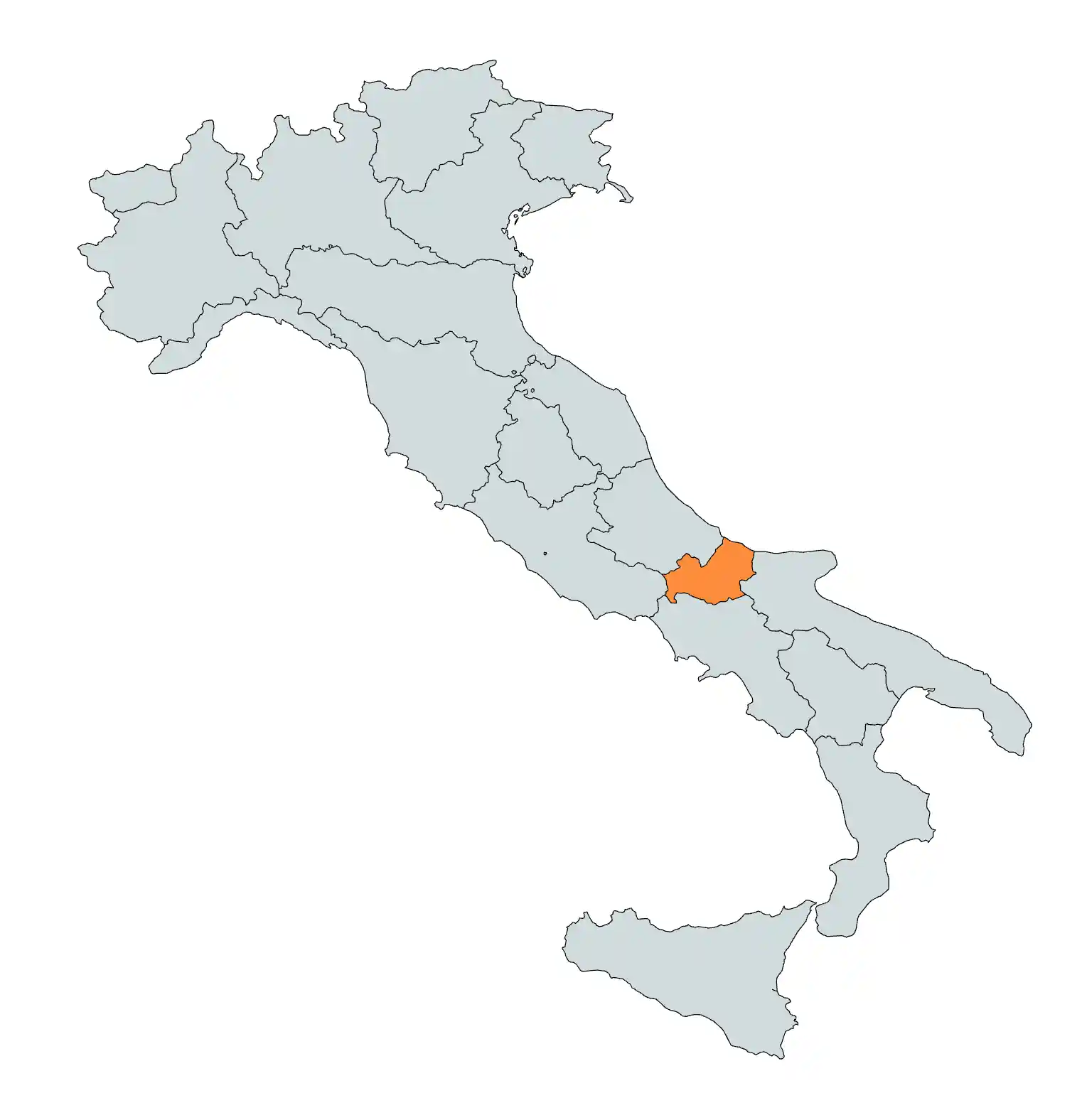
Molise is the quiet secret of Southern Italy. A region often overlooked and beautifully untouched. As the nation's second smallest region, it packs a surprising punch of natural beauty. From the high Matese mountains down to a short stretch of the Adriatic coast. A road trip through this region gives you genuine solitude. Moving through untouched forests and gentle hills.
It's a relaxed scenic drive. You will encounter the tratturi: wide historical sheep migration paths that cross the region. Molise was the ancient Samnite stronghold, leaving behind significant ruins and powerful historical sites, particularly near Isernia. The scenery transitions rapidly from mountain peaks to the peaceful coast with villages like Campobasso and Termoli.
Molise’s cuisine relies on superb local cheese, durum wheat pasta and red wine. The region is also famous for unique artisanal crafts, including the bell making foundry in Agnone and fine blade work. This place perfectly embodies the spirit of slow-pace travel. Experience the beauty of a region defined by its history and its quiet pace.
Molise highlights
- Campobasso Explore the region's capital. The city is dominated by the formidable Monforte Castle with its panoramic views.
- Saepinum (Altilia) The Roman Ruins. Explore the well preserved remains of this Roman city. It is located directly on a historical tratturo sheep migration path.
- Termoli Visit this coastal highlight. It features a charming historical fishing village and a beautiful medieval Swabian Castle overlooking the Adriatic.
- Pietrabbondante See the magnificent ruins of the Samnite Temple complex. This site is a powerful symbol of preRoman civilization.
- Agnone Bell Foundry Tour the Marinelli Foundry. It is one of the world's oldest bell makers. Still using traditional techniques in production.
- Monte Miletto Drive through the high Apennine mountain peaks of the Matese range. Enjoy the untouched nature and peaceful mountain lakes.
- Capracotta Discover this high mountain village. It is known as one of the snowiest and most traditional spots in Southern Italy.
- Isernia National Museum See important archaeological finds. The area is known for housing evidence of Europe's oldest Paleolithic settlements.
The local Four
History of Molise
This region was the stronghold of the Samnite civilization. They were powerful and organized people who resisted Roman expansion. The Samnites fought three major wars against Rome, making this territory a crucial battleground for control. After the final Roman conquest, the region became an essential part of Imperial Rome. Used for agriculture and connected by the tratturi, the network of historical sheep migration paths.
Following the collapse of the Roman Empire, Molise was settled by invading tribes, including the Lombards. Due to its isolated, mountainous geography, the region avoided the political turbulence of the coast. Powerful local families built fortified castles throughout the Matese mountains, maintaining strict control. For centuries, Molise was politically connected to its larger northern neighbor (Abruzzo) and was ruled under the distant crown of the Kingdom of Naples.
Its mountain passes were crucial for movement but its towns remained small and independent. Molise achieved its identity as a separate region only in 1963, splitting from Abruzzo. This region will let you discover the foundational history of the Samnites and the heart of traditional Southern Italy.