

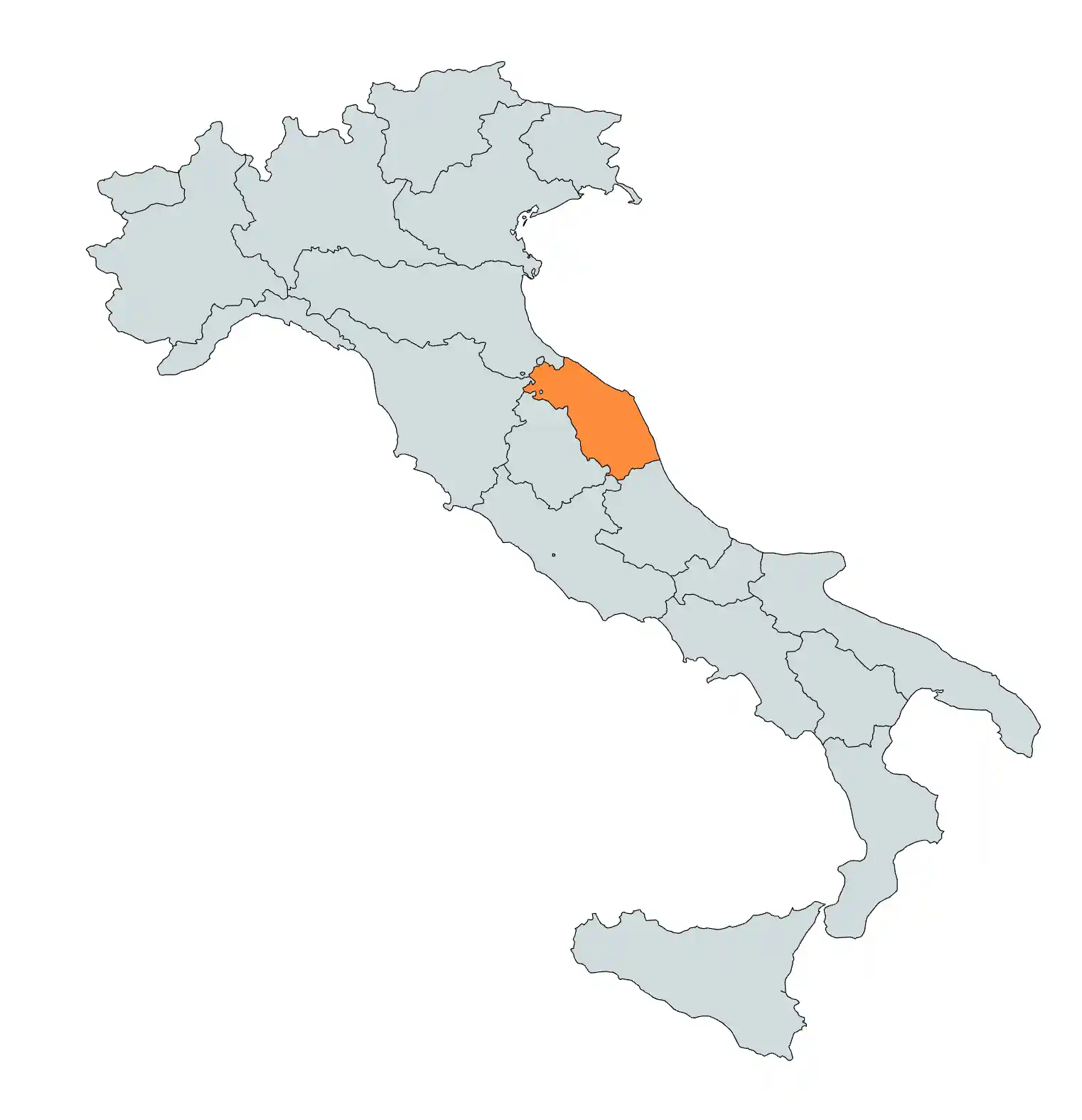
Marche is a series of mountain chains running strictly parallel from the high Apennines to the Adriatic Sea. This part of your road trip will follow stunning limestone gorges with Renaissance hilltop cities.
The roads move from the Adriatic coastal highway to twisting mountain passes. Inland, you must visit Urbino. It's a perfect example of a Renaissance city. On the coast, the Conero Promontory have spectacular cliffs and hidden coves that break the otherwise flat Adriatic shoreline.
Marche’s cuisine reflects its local nature: robust mountain recipes and fresh Adriatic seafood. The region is known for artisanal crafts, including fine paper making, high quality leather goods and excellent white wines like Verdicchio. Visit Marche for quality craftsmanship and cultural depth. This region will provide unforgettable memories of Italy’s Adriatic coast.
Marche highlights
- Urbino A Renaissance hilltop masterpiece. A beautifully preserved Renaissance city and birthplace of Raphael (famous painter). Urbino has its elegant Ducal Palace and amazing hilltop views. Its historic center feels like stepping straight into a 15th-century painting.
- Frasassi Caves Italy’s Most Spectacular Caverns. These enormous underground chambers feature towering stalactites, cathedral-like halls and surreal limestone formations. The guided routes take you deep into one of Europe’s greatest geological wonders.
- Conero Coast Beautiful cliffs & turquoise bays. South of Ancona, the Conero Riviera offers white pebble beaches, pine forests, and clear blue water backed by limestone cliffs. Hidden coves like Spiaggia delle Due Sorelle are especially breathtaking.
- Loreto Sanctuary A Major Pilgrimage Site. Loreto’s Basilica della Santa Casa is believed to house the Virgin Mary’s home, carried here in the Middle Ages. It remains one of Italy’s most important religious sites.
- Ascoli Piceno The City of Travertine. Its main square, Piazza del Popolo, is one of Italy’s most beautiful and elegant palaces. Try the local specialty: olive ascolane. It's fried olives stuffed with seasoned meat.
- Fiastra Lake & Lame Rosse Know as "The Italian Grand Canyon". A turquoise mountain lake paired with Mars-like red rock formations. The hike to Lame Rosse rewards visitors with a landscape unlike anywhere else in Italy.
- Gradara Castle Italy's Romeo & Juliet. This perfectly preserved fortress is where, according to local tradition, Paolo and Francesca’s tragic love story unfolded. Its fortifications provide beautiful views over the countryside.
- Monti Sibillini A paradise for hikers, the Sibillini mountains are wrapped in legends of sorceresses and ancient rituals. In spring, the Castelluccio plateau explodes into a patchwork of colorful wildflowers.
- Fabriano The history of Paper. Discover the unique industrial history of paper making. This village has been producing fine paper since the 13th century.
The local Four
History of Marche
The Via Flaminia route was used to provide logistics from the Adriatic coast directly to Rome. After the fall of the Roman empire, the region fragmented. The northern coastal strip was ruled by the Byzantine Empire and known as the Pentapolis. Meanwhile, the city of Ancona grew into a powerful, independent Maritime Republic, trading heavily with the East.
The Renaissance era brought unparalleled cultural power to the hilltop city of Urbino . Under the refinement of the Montefeltro family, Urbino became an ideal city and a major center for arts and humanism. The entire region was gradually absorbed into the territories controlled by the Papal States, leading to centuries of centralized, quiet administration.
This long era of Papal administration largely froze the region in time, preserving its historical charm and rural character. The major cultural and spiritual center of the region became the Sanctuary of Loreto, a huge pilgrimage site. Upon Italian unification in the 1860s, Marche finally became part of the new kingdom. When you visit this region, you'll witness the legacy of high Renaissance culture that once served as the Papal State’s backyard.