
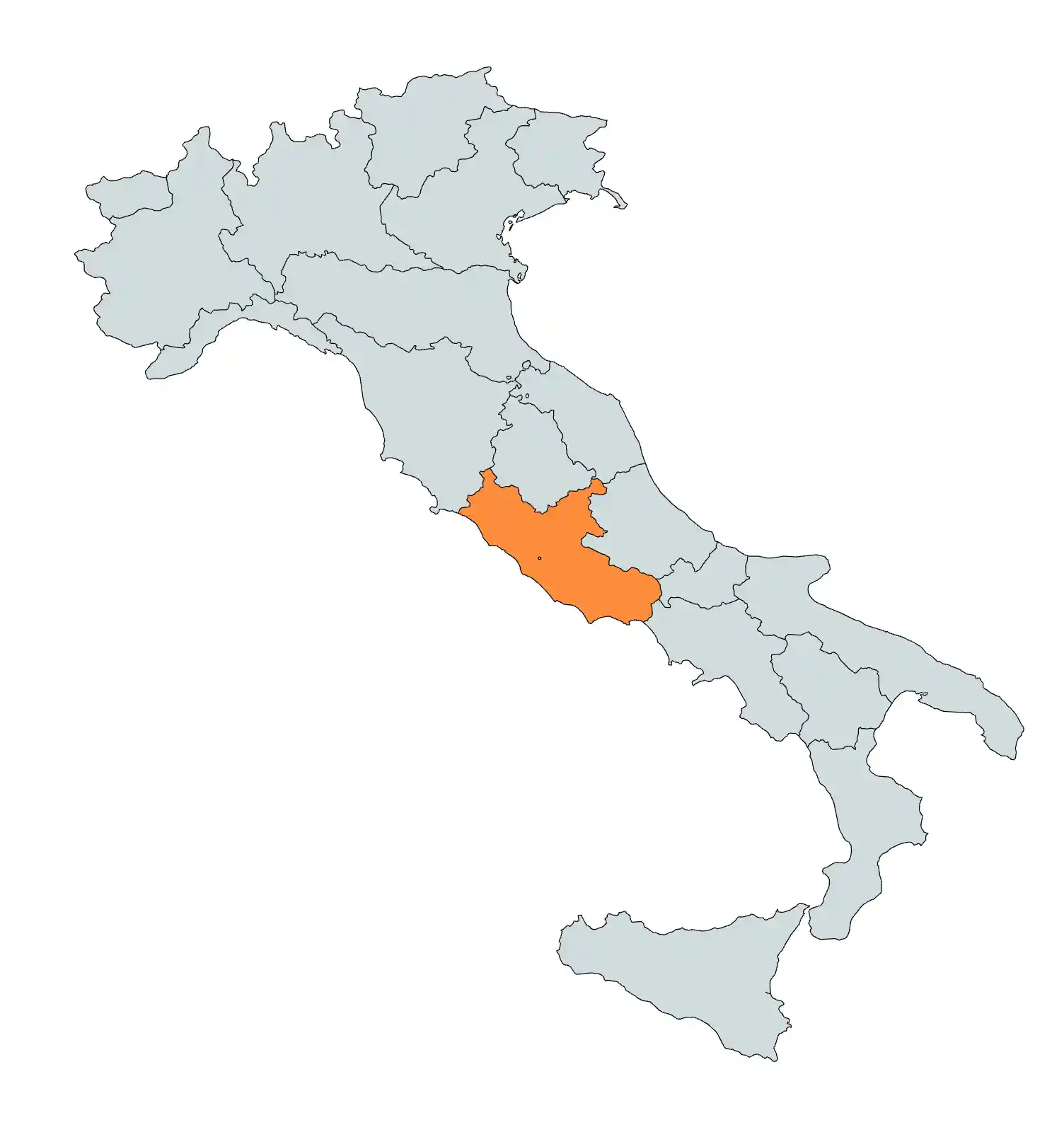
Lazio is the undisputed historical and political capital of Italy. Dominated by Rome, the eternal city, the entire region feels layered with empires. Roads here lead you to the unparalleled grandeur of Rome and the unspoiled Etruscan hills and coastal parks that surround it. This region is essential for understanding Europe as these historic empires build an important part of that foundation.
While traffic jams are part of the Rome experience, the true journey begins outside the city. You can drive the ancient Consular Roads, like the Appian Way, which once connected the entire Roman empire. The beautiful Castelli Romani are a cluster of scenic hill towns built on the Alban Hills provide fresh air and views over the capital. Further north, you discover the mysterious but well preserved tombs and settlements of the Etruscan civilization. This region is like a driving through the textbooks of Western history.
Lazio's cuisine is foundational to Italian cooking. Look for dishes based on sheep's milk cheese (Pecorino Romano), locally grown vegetables and excellent white wines from the Alban Hills. This region delivers authentic history on every corner covering 2000 years of life. It will take you to the true epicenter of European history.
Lazio highlights
- Rome The capital city is a treasure of history. From the Colosseum and Roman Forum to the Vatican Museums and St. Peter’s Basilica. Walk these historic streets, piazzas and fountains to feel the heartbeat of this eternal city.
- Tivoli Famous for Villa d’Este with its elaborate gardens and fountains and Villa Adriana (the sprawling Roman emperor’s retreat). These sites combine history, art and scenic beauty.
- Appian Way (Via Appia) Drive or walk this historical Consular Road. It is lined with Roman tombs and ancient cobblestones outside the city.
- Pantheon See this perfect example of Roman engineering. It is the best preserved structure from the imperial era.
- Cerveteri Etruscan Necropolis Walk through the unique, well preserved burial mounds and tombs of the powerful Etruscan civilization.
- Ostia Antica A remarkably preserved port town of Rome. Explore temples and mosaics that provide a quieter alternative to the busy capital.
- Viterbo Known as the “City of Popes”. Viterbo has medieval architecture, thermal baths and charming old town streets. The Papal Palace is a must-see historic landmark.
- Montecassino Abbey An iconic Benedictine abbey with a turbulent history. It was rebuilt after WWII. The hilltop location has beautiful views of the surrounding valleys.
- Lake Bracciano A volcanic lake surrounded by charming towns like Bracciano and Anguillara. Visit Orsini-Odescalchi Castle and enjoy waterside dining or outdoor activities.
- Sperlonga A whitewashed coastal town with beautiful beaches and the historic Roman villa of Emperor Tiberius. Its seaside charm is perfect for a relaxing getaway.
The local Four
History of Lazio
The powerful Etruscan civilization controlled the northern areas, leaving behind well preserved tombs and settlements. The region’s destiny was sealed by the rise of Rome, founded on the banks of the Tiber River. From here, the city grew from a Republic into a world spanning Empire. The Consular Roads, like the Appian Way , were engineered out of Lazio to govern, transport goods, and expand Imperial power across Europe and beyond.
Though the Western Roman Empire collapsed, the city of Rome retained its status as a critical political and spiritual capital. The Papacy became the dominant temporal power, and the Vatican controlled the surrounding region for over a thousand years. This Papal State era saw the building of magnificent Baroque churches and palaces. For centuries, Rome and Lazio dictated the religious and cultural life of Western civilization.
In 1870, Rome became the capital of a unified Italy, securing Lazio’s role as the nation’s political center. The density of this historical legacy is staggering. You can walk through forums built by emperors, see the walls built by popes and explore the ancient settlements of the Etruscans. This is not just a road trip is anymore but your personal journey into the historical backbone of Western civilization.