

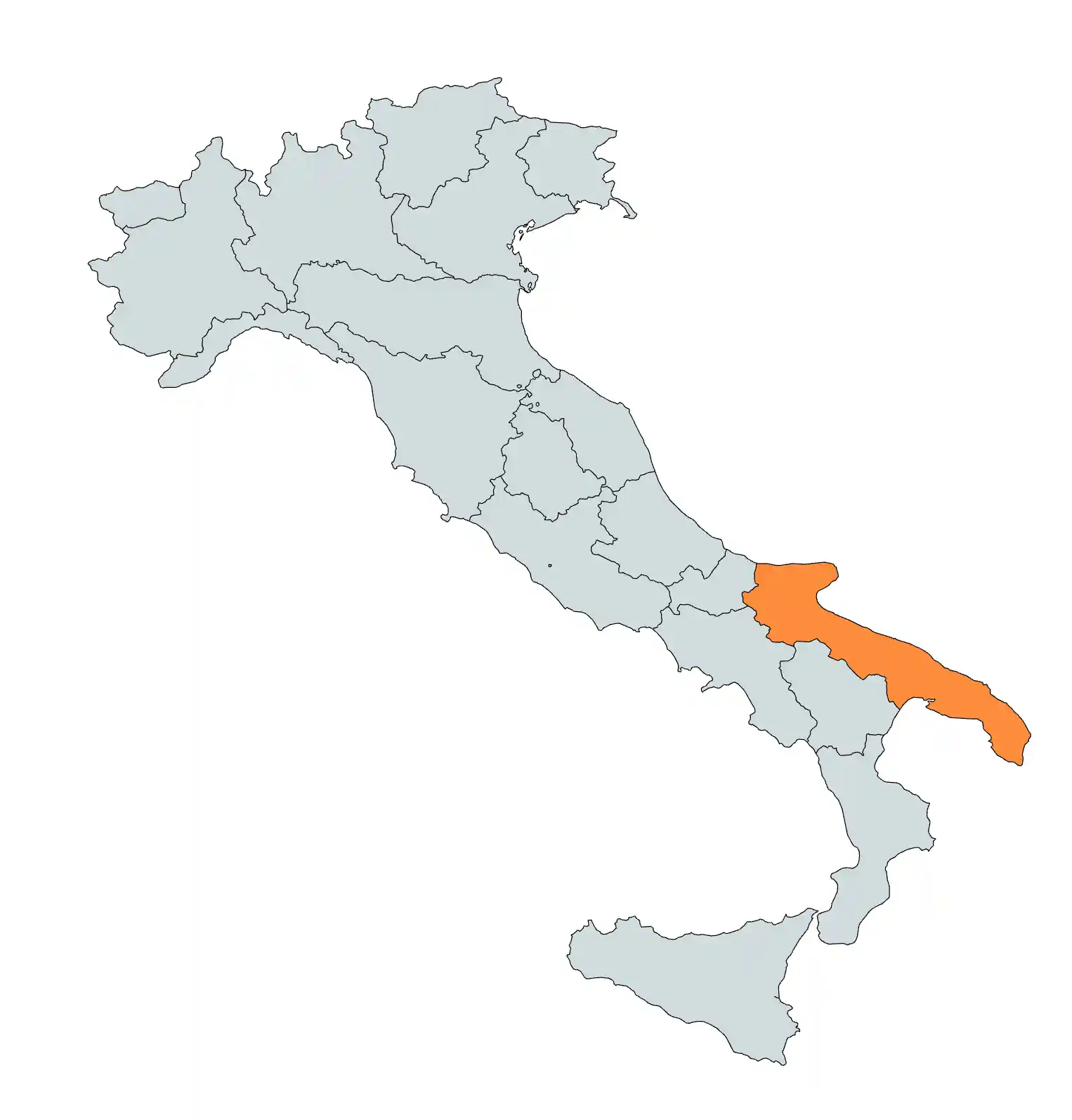
Apulia is the sun drenched "heel" of the Italian boot. This long region is completely surrounded by the clear waters of both the Adriatic and Ionian Seas. It's a spectacular coastal drive dominated by the intense brightness of white limestone cities like Ostuni. The air feels raw, genuinely Mediterranean and sunny almost year round.
The scenic roads guide you to unique historical treasures. You will drive through endless olive groves, many dating back hundreds of years. The south is home to Lecce, a city famous for its spectacular Baroque architecture. Further north lies Alberobello, where you can explore the conical houses known as trulli.
Apulian cuisine is simple, pure and mostly from the local sea and land. The region is the world’s largest producer of olive oil which defines every meal. Look for fresh seafood, rustic bread and sun ripened vegetables. If you're seeking the authentic rhythm of Southern Italian life, this is for you. A region worth visiting with the warmth of its people and the clarity of its crystal blue coast.
Apulia highlights
- Alberobello’s Trulli Walk through the village of Alberobello. You can see the hundreds of whitewashed trulli with conical stone roofs form one of Italy’s most unique architectural landscapes. The Rione Monti district is iconic. While Aia Piccola provides a more authentic feel.
- Polignano a Mare This magical seaside town is perched atop limestone cliffs carved by the Adriatic. Its famous Lama Monachile cove, accessible through a Roman-era bridge. It's one of the most photogenic beaches in Italy.
- Lecce The “Florence of the South”. Lecce’s historic center is a masterpiece of baroque elegance. You can discover ornate churches, palaces and a Roman amphitheater emerging unexpectedly in the heart of the city. Its warm Lecce stone glows beautifully at sunset.
- Gargano This natural reserve combines wild beaches, ancient forests, white sea cliffs and isolated coastal villages. Don't miss the Umbra Forest, one of the richest biodiversity zones in Southern Italy.
- Ostuni The White City. Sitting high on a hill, Ostuni just amazes with its brilliant whitewashed homes overlooking the olive groves and coastline below. Its alleys and rooftop views are pure Mediterranean magic.
- Castel del Monte Frederick II’s mysterious octagonal fortress rises from the Murge plateau. Its perfect geometric design and unknown original purpose make it one of Italy’s most intriguing medieval structures.
- Tremiti Islands A small archipelago in the Adriatic known for crystal-clear waters and wild nature cliffs. Ideal for snorkeling, diving and escaping the mainland crowds.
- Otranto Italy’s easternmost village combines seaside charm with interesting history. The cathedral’s extraordinary mosaic floor. Depicting mythological creatures, biblical scenes and a Tree of Life. It's an absolute medieval masterpiece.
The local Four
History of Apulia
The history of Apulia is defined by its geometry as Italy's heel. Its coastline has always served as a critical crossroads for Mediterranean civilizations. First colonized by Greek settlers (Magna Graecia), the region was later central to the Roman Empire. Roman trade and military roads originated here, linking the peninsula to the East. The strategic port cities became powerful hubs for centuries of commerce and conquest.
The medieval era brought strong Norman influence. They established a chain of spectacular castles along the coast, many of which are still standing today. Apulia then became a vital departure point for European Crusaders sailing to the Holy Land. Later, under Spanish influence, cities like Lecce experienced an incredible architectural rebirth. Leading to the decorative style known as Lecce Baroque.
You can see this piece of history by driving past Roman columns, Norman defensive castles and the fascinating trulli houses of the central region. This part of your road trip is an adventure into the deep historical melting pot that is the gateway to Southern Italy. It's the story of a coastline that changed the course of European history.