

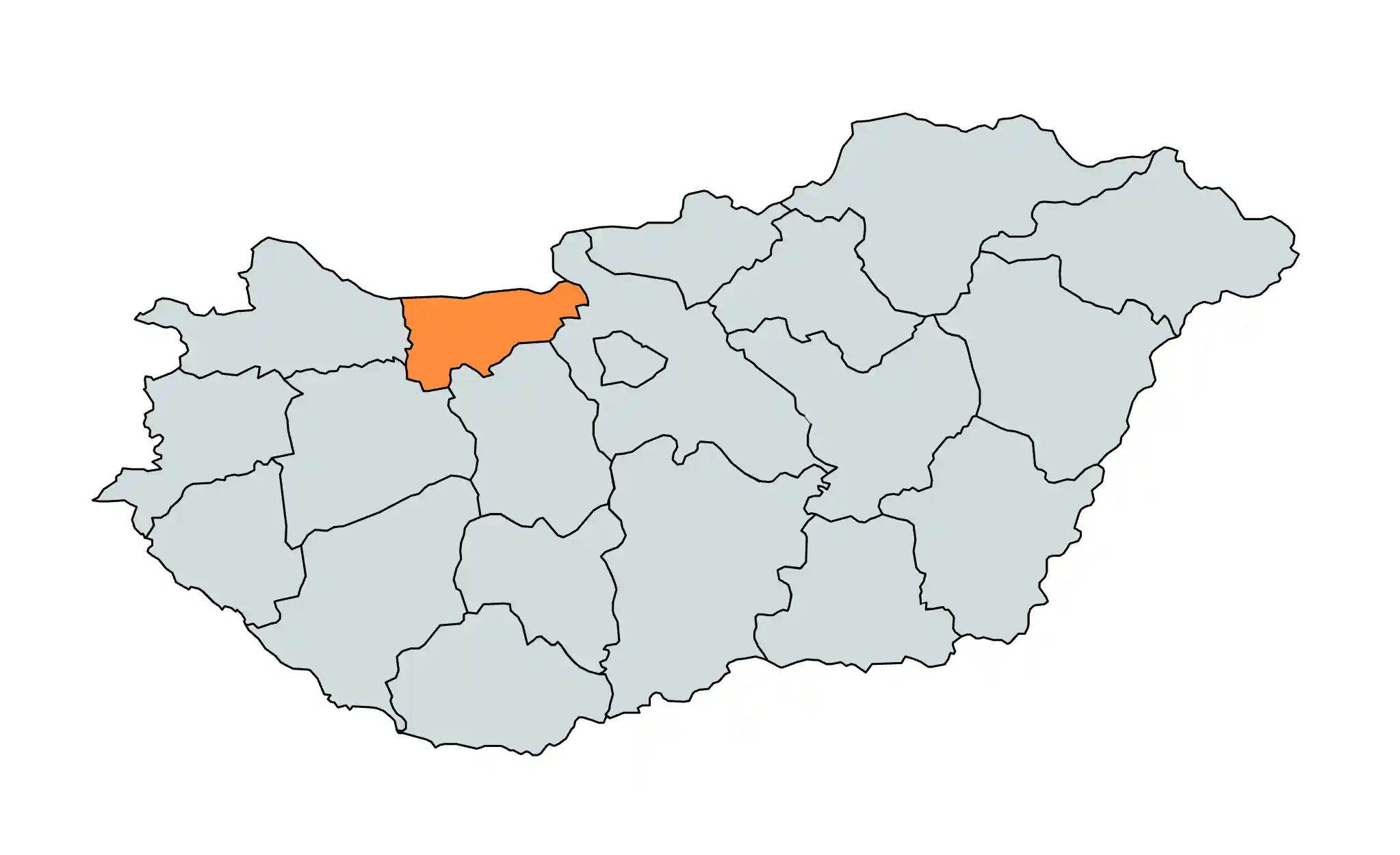
The river carves a path through the hills of Komárom-Esztergom. You will see the massive dome of the Esztergom Basilica from miles away. It sits on a cliff overlooking the water. This was the first capital of the land. The giant bronze doors tell a story of faith and power. You can stand on the bridge and see two countries at once.
Drive along the river to find the fortresses of Komárom. These massive stone walls once guarded the border. They are full of dark tunnels and history. It is a great place to stretch your legs and explore. You can feel the cold air coming from the deep underground vaults. The massive courtyard inside the fort feels like a city of its own.
The Gerecse hills offer quiet paths for a quick hike. You can find old quarries and hidden lookouts. The forest is cool even on the hottest days. It is a region of power and stone. The views of the winding river below are worth every step. You can spot red marble in the rocks as you walk the forest trails.
Komárom-Esztergom highlights
- Esztergom Basilica Visit the largest church in the land which sits on a high hill over the wide blue Danube river. The dome is massive and the view of the river bend is the best in the north.
- Visegrád Citadel Climb to a stone fort perched high on a cliff where kings once kept their golden crowns. The view of the river turning through the green mountains is a famous sight.
- Tata Lake Castle See a brick fort that sits on the edge of a large blue lake and was once a summer home for kings. The park is full of old trees and has a water mill that still works.
- Monostor Fortress Explore a giant underground city of brick and earth built to guard the river against any army. The tunnels are long and cold and the walls are thick enough to stop any cannon.
- Bábolna Stud Farm Visit a royal horse farm where the stables are grand and the history of the riders is very long. The park has a museum of old wagons and a beautiful rose garden.
- Vértesszőlős Footprints See the real footprints of a human who lived here hundreds of thousands of years ago. The site is a rare look at the very start of life in the river valley.
- Majk Hermitage Visit a quiet circle of tiny white houses where monks once lived in silence and prayer. The tall clock tower and the forest around the site make it a very calm stop.
- Gerecse Mountain Path Drive through a forest of grey rocks and green trees to find high points with views of the Danube. It is a favorite spot for climbers and people who love a quiet hike.
- Neszmély Boat Museum See a collection of old iron steam ships that once pulled wood and grain along the giant river. You can walk on the decks and see the giant engines of the past.
- Dömös Gorge Hike through a deep narrow path where the rock walls rise high above a small stream in the woods. It is a wild and cool place for a walk during a hot summer drive.
The local Four
History of Komárom-Esztergom
Komárom-Esztergom is the Iron Gate of the Danube, a place of massive stone and deep water. In the late 10th century, this was the capital where the first King was born and crowned, turning a high limestone cliff into the spiritual heart of the nation. The massive Basilica that stands there today sits on layers of royal ruins dating back a thousand years. This high altitude history is the anchor of the Danube Bend scenic drive.
The river here was the Limes, the fortified border of the Roman Empire for four centuries. They built the massive stone bridgeheads and forts of Brigetio to watch the barbarian lands across the water. Later, in the 1800s, the region saw the construction of the Gibraltar of the Danube (a series of massive brick forts) that could house 200,000 soldiers. These tunnels and bunkers were so strong they were never actually attacked, standing today as silent giants of brick and earth.
Under the hills lies a secret world of caves and hot springs that have been used since the Stone Age. The region history is found in the contrast between the light on the river and the darkness of the monk cells carved into the cliffs. Today, the region is a place of grand views and industrial heritage, where the giant river turns through the mountains like a blue ribbon. It is a story of a border that became a bridge between the East and the West.