

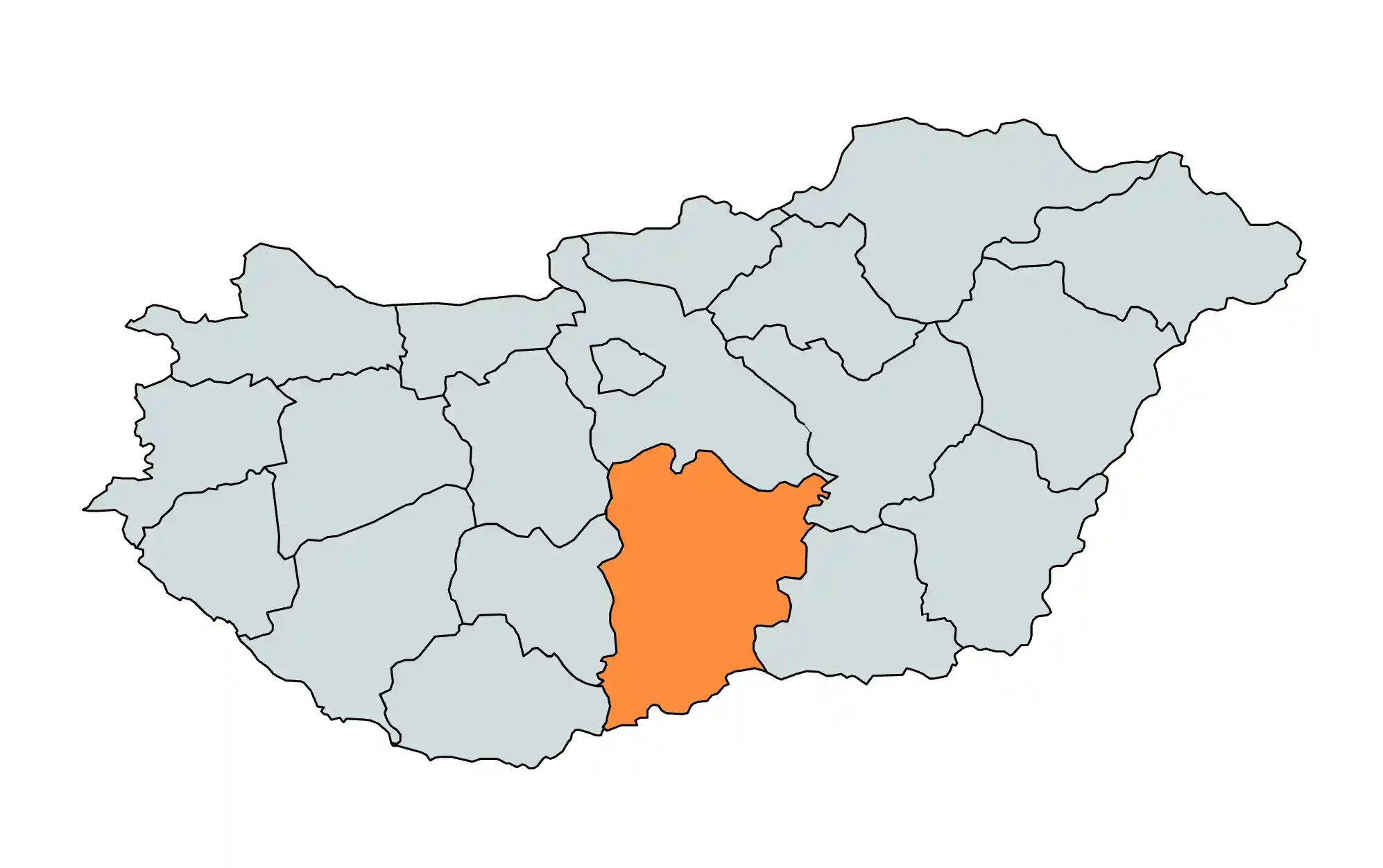
Bács-Kiskun is the heart of the Great Plain. The horizon stretches forever under a massive sky. This is the land of freedom and wide open spaces. Sand dunes meet orchards here. You can feel the spirit of the old Hungarian cowboys. The golden grass ripples in the wind like a dry ocean. You will see white farmhouses filling the landscape far apart from each other.
Pull over in Kecskemét to see the colorful tile roofs. The buildings look like they are made of lace. Then, head to the Kiskunság wilds. You might see a whirlwind over the dry grass. It is the perfect place to watch a traditional horse show. Watch for the dust clouds as the riders gallop past at full speed. The acrobatic skills of the local horsemen will leave you in awe.
Grab a bowl of spicy fish soup by the Danube. The local paprika gives it a deep red kick. End your day at a farmhouse with a glass of apricot brandy. This region is raw and real. It is the soul of rural Hungary. Every farm track leads to a new discovery in the sand. You can find peace in the vast silence of the evening fields.
Bács-Kiskun highlights
- Bugac Puszta Drive into the heart of the Great Plain to see traditional horse shows and rare grey cattle roaming the wild grasslands. The open sky and sandy trails offer a true look at the old nomadic life of the Hungarian riders.
- Hajós Wine Village Explore a unique world of over twelve hundred tiny white wine cellars carved into a small hill near the road. This underground village looks like a scene from a fairy tale and stays cool even in the heat of summer.
- Kalocsa Floral Art Visit the center of colorful embroidery and red pepper farming to see houses painted with bright flower patterns. You can smell the spicy scent of paprika drying in the sun while you walk through the local markets.
- Kiskunság Salt Lakes Stop at the white salt flats to watch rare birds gather around the shallow waters of this protected natural park. The ground glows under the sun and the quiet air makes it a perfect spot for nature photos.
- Tiszakécske River Bank Relax by the soft curves of the Tisza River where high trees shade the sandy beaches and calm waters. It is a hidden gem for a picnic during a long drive through the flat southern plains.
- Soltvadkert Lake Szelid Take a dip in a warm lake that was once a part of the Danube river bed thousands of years ago. The water is famous for its healing minerals and the sandy shores are great for a summer break.
- Kiskunmajsa Thermal Spa Park your car and soak in the hot mineral pools that bubble up from deep under the flat prairie soil. It is a quiet escape where the steam rises against the backdrop of the wide open countryside.
- Petőfi Birthplace Find the small thatched roof cottage in Kiskunfélegyháza where the most famous poet of the nation was born. The tiny rooms and old wooden tools show how people lived in the simple farm country.
- Gemenc Forest Edge Trace the edge of the largest flood forest in Europe where giant stags hide among the willow and oak trees. You can hop on a narrow train that chugs through the deep green woods by the water.
- Csongrád Pontoon Bridge Cross the river on a rare floating bridge made of old metal boats that moves with the flow of the water. It is a bumpy and fun way to enter the region from the eastern bank.
The local Four
History of Bács-Kiskun
Bács-Kiskun is a land where the shifting sands of the Danube and Tisza rivers have hidden the secrets of nomadic empires for millennia. In the 5th century, the fierce Huns used these vast open spaces as a staging ground for their sweeps across Europe. The flat horizon was a tactical playground for horsemen who could spot an approaching army from miles away, turning the sandy dunes into a natural fortress of wind and grass.
The region saw a massive transformation in the 13th century when the Cuman tribes arrived from the East. They brought with them a deep knowledge of animal breeding and a fierce independence that still defines the local Kunság identity today. This era birthed the iconic image of the lone shepherd and the grey cattle, creating a rugged cultural landscape that makes any Great Plain road trip feel like a journey through a living museum of the steppe.
Modern life in the region grew from the grit of the vineyard soldiers of the late 1900s who fought to turn the moving sand into productive soil. They planted millions of fruit trees and grapevines to anchor the earth, creating the lush orchards you see today. Now, the scent of apricot brandy and the glow of red paprika drying on porches fill the air. It is a place where man and nature struck a deal to turn a desert into a garden of fire and fruit.