

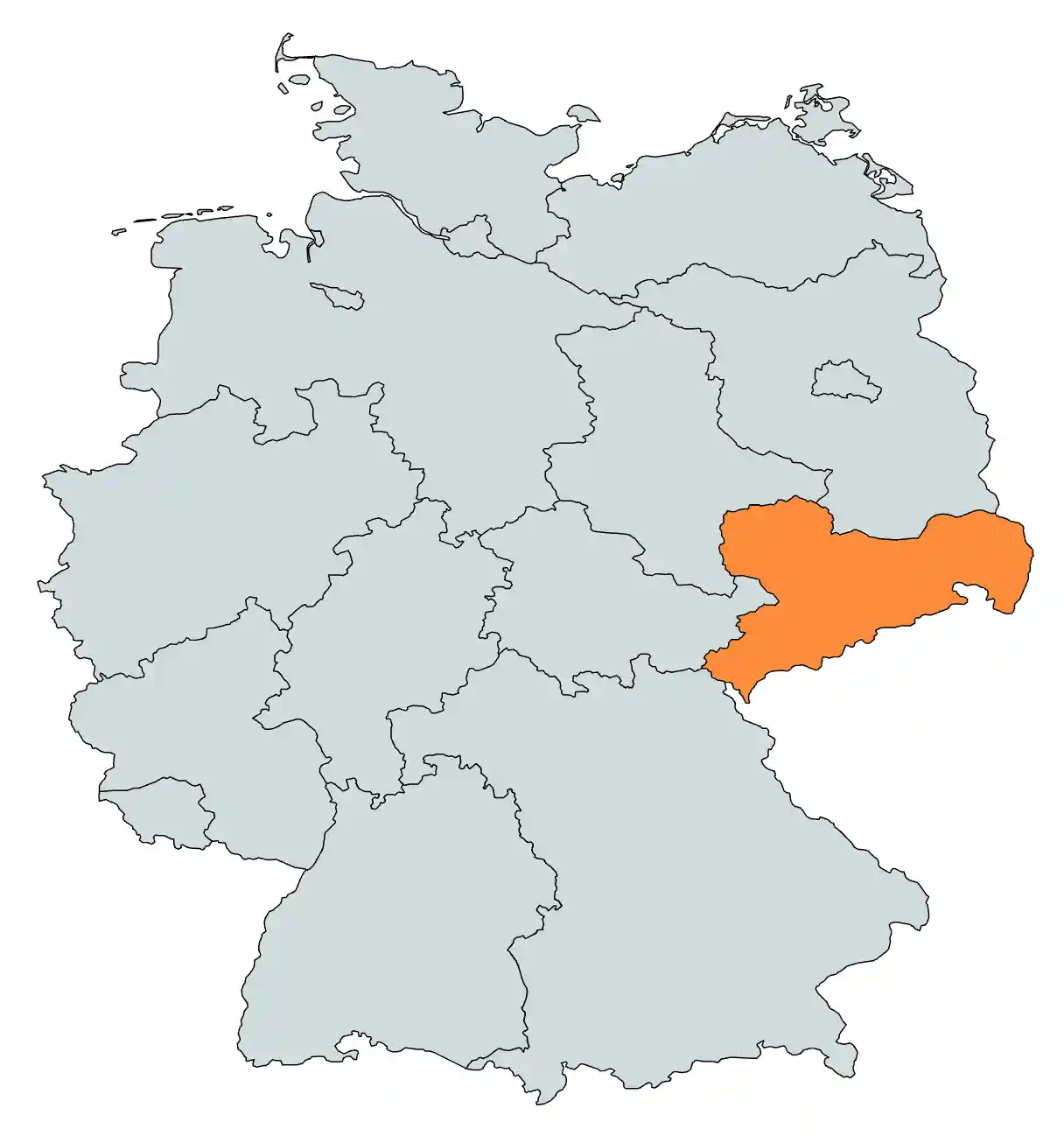
Saxony is a cultural powerhouse and a land of dramatic, unexpected landscapes. One of the most rewarding road trips in eastern Germany. This region, known as the birthplace of the Baroque revival, seamlessly blends imperial elegance with raw natural beauty. Your journey here will shift from navigating the historic cobblestone streets of the famous cities to tackling the winding scenic routes of the Ore Mountains and the Elbe Valley.
In Dresden, you can walk through the meticulously restored Baroque architecture, before driving east to the surreal peaks of the Elbe Sandstone Mountains (Saxon Switzerland), where table rocks and dramatic gorges demand spectacular stops. Farther north, the city of Leipzig has a different kind of history. Famous for its musical legacy, historic trade fairs and the intellectual culture of its famous university.
This deep history gives Saxony a unique, dignified atmosphere steeped in art and music. The kind of place where you stop for coffee in a historic café once frequently visited by world-famous composers like Bach or Luther. From the fine porcelain of Meissen to the rugged beauty of the mountainous national park, every kilometer in Saxony reveals a layer of artistic splendor.
Saxony highlights
- Dresden The capital city is known as the “Florence on the Elbe,” featuring the stunning Frauenkirche, Zwinger Palace and art museums. Walk along the riverbanks and historic streets for a mix of culture and history.
- Leipzig A cultural hub with a rich musical history tied to Bach, Mendelssohn and Schumann. Explore historic squares, modern galleries and the amazing music scene.
- Meissen Famous for its porcelain. Tour the oldest porcelain factory in Europe, founded in 1710. Watch master craftsmen create the famous crossed-swords symbol. It also has a medieval old town and the impressive Albrechtsburg Castle overlooking the Elbe River.
- Bastei Bridge & Saxon Switzerland Drive to this iconic landmark where a stone bridge spans deep gorges, revealing breathtaking views over the bizarre sandstone mountains of the Elbe River.
- Görlitz One of Germany’s best-preserved towns with Renaissance, Baroque, and Gothic architecture. Its historic streets and squares are often used as filming locations.
- Ore Mountains (Erzgebirge) Take a scenic drive through this historic mining region, which is the heartland of German folk art and traditional Christmas wood carving.
- Zittau Mountains A lesser-known gem with hiking trails, small villages and panoramic views along the German-Czech-Polish border.
- Königstein Fortress Climb the "Saxon Bastille," one of Europe’s largest hilltop fortresses, offering commanding 360-degree views over the Elbe River and the surrounding landscape. Absolutely stunning views.
The local Four
History of Saxony
The history of Saxony is one of imperial elegance and cultural dominance. Thanks largely to the powerful Wettin dynasty which ruled the region for over eight centuries. Elevated to the Electorate of Saxony, the territory became a decisive force in German and European affairs, notably serving as the cradle of the Protestant Reformation and later reaching its golden age in the 18th century under Augustus the Strong. This era saw Dresden transformed into a magnificent center of Baroque architecture, music and art. This earned it the nickname "Florence on the Elbe."
However, this political power waned after Saxony sided with Napoleon and suffered significant territorial losses in 1815. Despite its diminished size, the Kingdom of Saxony quickly pivoted to become one of Germany’s most important industrial centers. Cities like Leipzig and Chemnitz became engines of production and technology during the 19th century. Combining its legacy of royal elegance with a working-class industrial spirit.
The region faced immense hardship in the 20th century, particularly with the destruction of Dresden during World War II and its subsequent inclusion in the GDR (East Germany). In 1989, it was the city of Leipzig that became the flashpoint for the peaceful Monday Demonstrations, igniting the political change that led to a reunited Germany. Today, the restored state balances its industrial heritage with a renewed commitment to its unique artistic and historical legacy.