

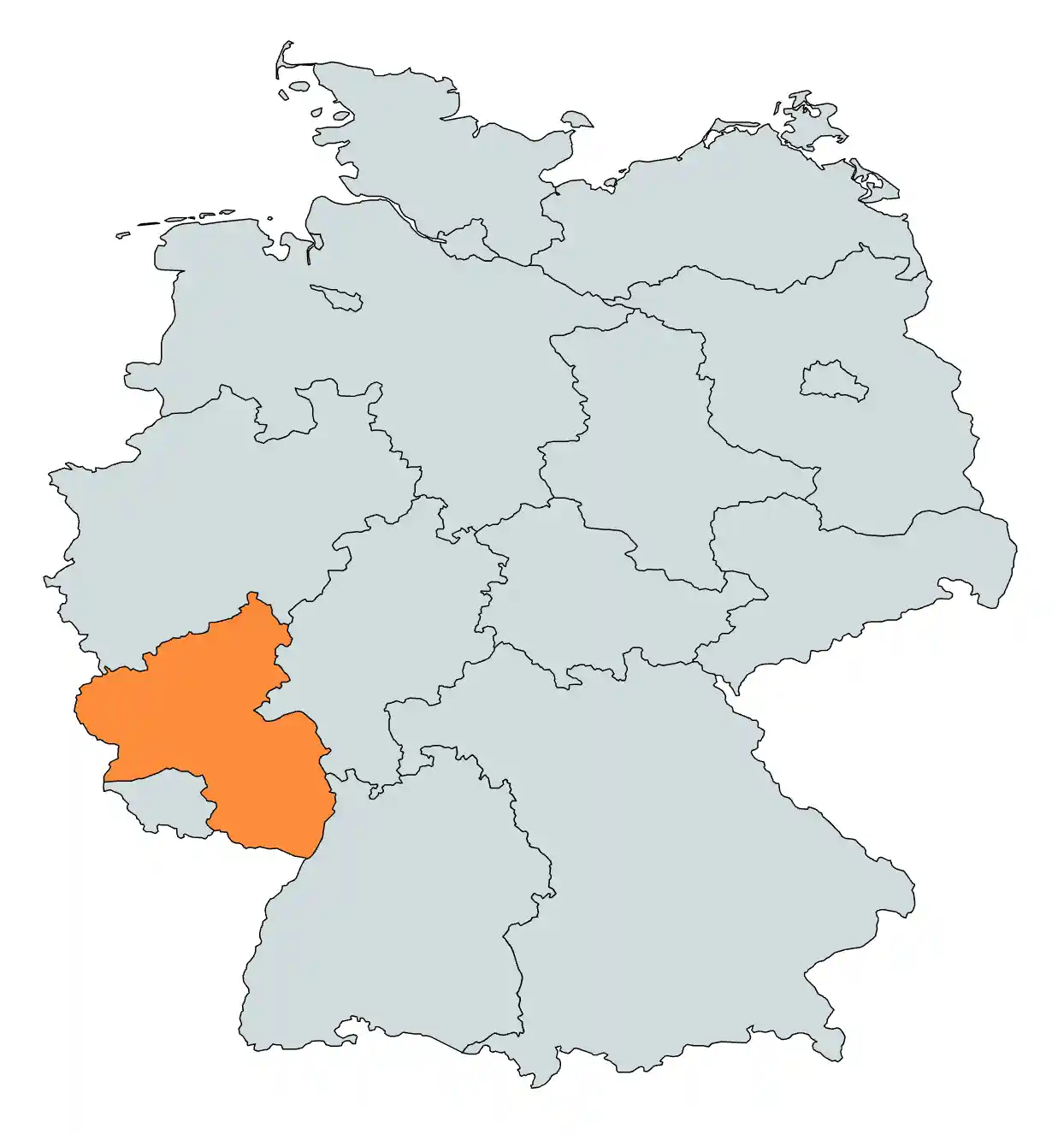
If the idea of a classic German road trip demands images of medieval castles, steep vineyards and serpentine river roads, then Rhineland-Palatinate is your ultimate German destination. This region is defined by its two spectacular rivers, the Rhine and the Mosel. They carve dramatic valleys through the landscape and hold the highest density of castles in Europe. Driving here is an adventure in itself, with winding routes that give you constant, jaw-dropping views of scenery unfolding around every bend.
Along the rivers, you navigate between steep hillsides blanketed in Riesling grapes. A short detour takes you into the mysterious highlands of the Eifel and Hunsrück. Giving you a wilder kind of beauty. You can explore the preserved Roman history in Trier, Germany’s oldest city, or park the car to explore any of the hundreds of medieval fortresses perched precariously above the water.
The region’s vibe is relaxed and celebratory, rooted deeply in its wine culture. Pull over in a tiny village like Cochem or Bacharach for a glass of crisp, locally produced Riesling, often served right where the grapes were grown. This is where history, hospitality and spectacular driving routes converge. It's a rewarding journey that perfectly captures the romantic spirit of Germany.
Rhineland-Palatinate highlights
- Burg Eltz A fairytale castle hidden deep in the Moselle forests. Burg Eltz has stood untouched for more than 850 years. You can explore its treasure vault and scenic hiking trails that lead up to the castle through peaceful woodland.
- Lorelei Rock (Rhine Gorge) Drive the B9 route along the riverbank to see this dramatic cliff above a sharp bend in the Rhine. Linked to legends of shipwrecks and sirens. You can enjoy panoramic viewpoints and charming riverside towns that line the Upper Middle Rhine Valley.
- Trier Germany’s oldest city offers Roman sights you rarely find elsewhere. Walk through the Porta Nigra, amphitheater and the Imperial Baths. Then explore the lanes of the historic center. The city also celebrates its connection to Karl Marx.
- Mainz Mainz blends Roman foundations with medieval streets and squares. Visit its impressive cathedral, explore the Gutenberg Museum with the original printing press and enjoy wine bars that celebrate the region’s famous Riesling.
- Moselle Valley Vineyards The Moselle is one of Europe’s most scenic wine regions. Terraced vineyards rise steeply above the river. Villages like Cochem, Bernkastel-Kues and Traben-Trarbach feel timeless. Enjoy tastings of world-class Riesling and slow drives along the winding river.
- Deidesheim & the Palatinate Wine Route This region is warm enough to grow figs, almonds and lemons. Deidesheim is one of its prettiest towns. Known for wine festivals, tasting rooms and countryside filled with half-timbered houses and vineyards.
- Laacher See & Maria Laach Abbey Set inside an ancient volcanic crater, Laacher See is one of the most beautiful lakes in the region. On its shores stands the Romanesque Maria Laach Abbey, a serene monastery with gardens, an art workshop and walking paths around the lake.
- Nürburgring The Nürburgring is one of the most famous racing circuits on the planet. Known for its sharp turns, dramatic elevation changes and near-mythical difficulty. You can explore the motorsport museum, watch racing events or even drive the track themselves during "tourist sessions".
The local Four
History of Rhineland-Palatinate
The history of Rhineland-Palatinate is written in stone and wine, beginning as the northern frontier of the Roman Empire. The Romans were the first to recognize the potential of this region over 2,000 years ago, founding Trier (Germany’s oldest city) and planting the first vineyards along the steep river banks. As you drive through the Mosel Valley today, you are literally following in their footsteps. The layout of many local roads and the thriving wine culture are a direct living legacy of this ancient era.
For centuries, this area was a chaotic, competitive patchwork of over 400 separate territories, ruled by rival bishops and princes. This fragmentation is exactly why the Rhine is lined with so many fortresses. Every hilltop was a border post or a toll station designed to tax the wealthy trade ships passing below.
After the Napoleonic Wars and a period of Prussian rule, the state of Rhineland-Palatinate was officially created in 1946 by the French military government, stitching together the southern Rhineland and the Bavarian Palatinate. This unique mix of Roman roots and French flair has created a region that feels culturally distinct. More relaxed, more open and in love with the good life.