

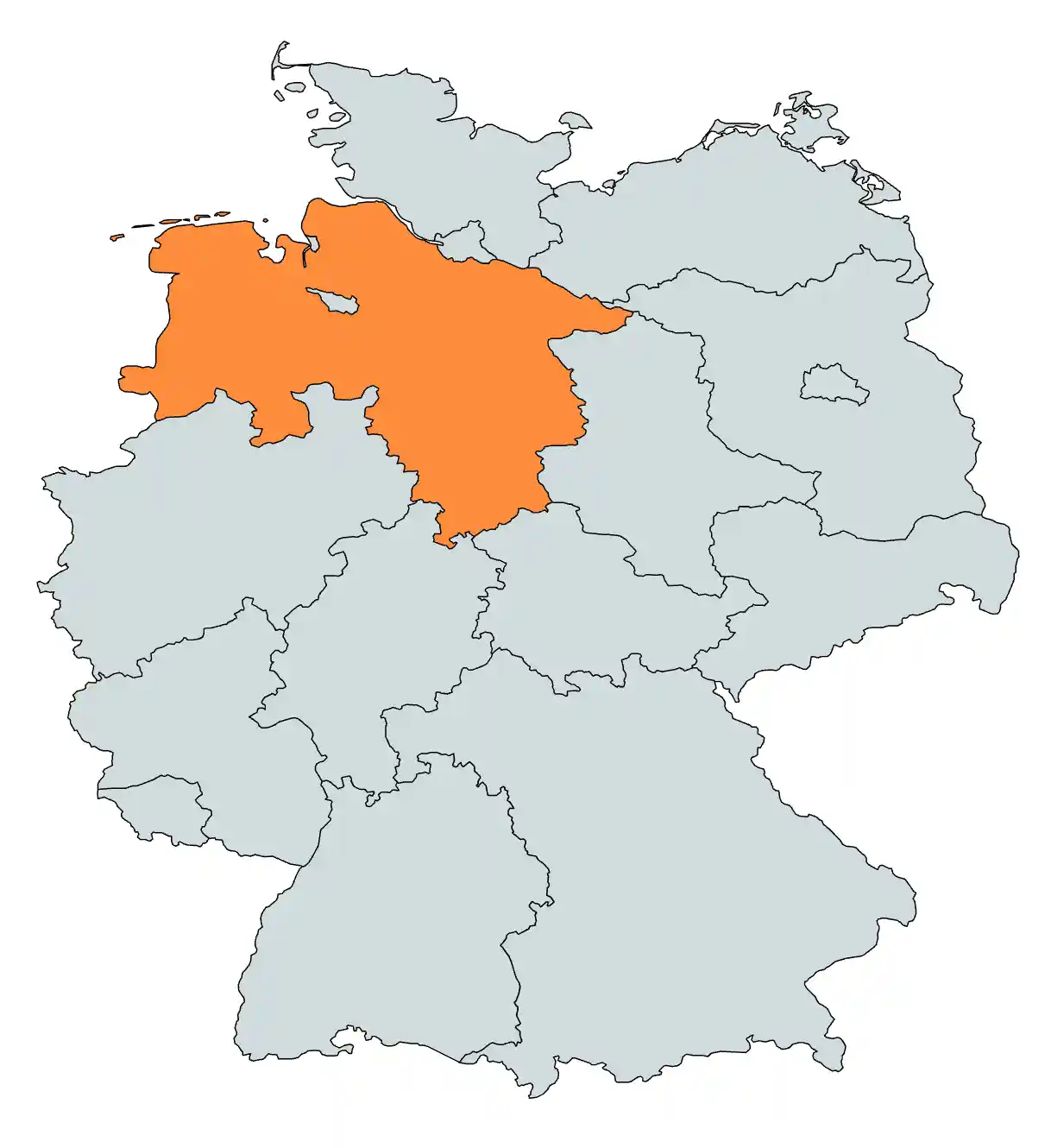
If you are looking for a German road trip defined by dramatic contrasts and wide-open horizons, Lower Saxony is where you head towards. As the second-largest state, it stretches from the misty winds of the North Sea coast all the way to the granite peaks of the Harz Mountains. The driving experience here changes completely in just a few hours. From long stretches perfect for cruising to tight, winding passes through ancient, mythical forests.
You can start your day watching seals on the Wadden Sea mudflats before ending it traversing the purple heather bloom of the Lüneburg Heath. Along the way, you will discover stunning sites like the medieval town of Goslar and beautifully preserved Hanseatic cities that testify to the region's rich trade history. Lower Saxony is the true crossroads of northern Germany, connected by scenic routes like the German Fairy Tale Route.
This region offers a sense of space and tranquility that is rare in Europe. It’s a region where nautical tradition meets deep forest myths. The atmosphere encourages you to slow down, park the car and be breathe the mountain-fresh or salty sea air. Lower Saxony is waiting for you to conquer its vast, varied landscapes.
Lower Saxony highlights
- Harz Mountains A mix of rugged peaks, dense forests, and peaceful valleys. The region offers mountain trails, scenic railways, and charming towns like Wernigerode and Goslar. The Brocken, the highest peak, is known for its legends and panoramic views.
- Lüneburg Heath (Lüneburger Heide) A purple landscape in late summer when the heather blooms. Walking paths and bike routes cut through nature while small villages like Wilsede feel frozen in time.
- Goslar Walk through this spectacular World Heritage site. Famous for its imperial history and more than 1,500 beautifully preserved half-timbered houses.
- Celle A beautiful town with one of the largest collections of half-timbered houses in Germany. Its palace, colorful streets and local cafés make it perfect for a relaxed afternoon stroll.
- Wadden Sea National Park A coastal area where tides reveal mudflats stretching far into the horizon. Guided walks let you explore the seabed while migrating birds fill the sky during spring and autumn.
- Wolfsburg Autostadt For car lovers. Part museum, part theme park and part car showcase. You can explore pavilions dedicated to different car brands, take factory tours, and enjoy landscaped park areas.
The local Four
History of Lower Saxony
The history of Lower Saxony is stretching back to the original settlements of the Saxon tribes. After being incorporated into the Frankish Empire, the region became the heartland of the powerful Guelph (Welf) dynasty in the High Middle Ages. This family controlled vast swathes of land and ruled from centers like Braunschweig.
The Guelph dynasty’s influence peaked when the Elector of Hanover inherited the British throne in 1714, linking the region to Great Britain in a unique Personal Union that lasted over 120 years. The region enjoyed significant political influence until the entire kingdom was annexed by Prussia in 1866.
This marked a decisive end to the Guelph sovereignty and integrated the region more fully into the nascent German Empire. The modern state of Lower Saxony was established by the British military government in 1946. The region is a balance of the nautical traditions of the North Sea, the myths of the Harz Mountains and the powerful automotive industry.