

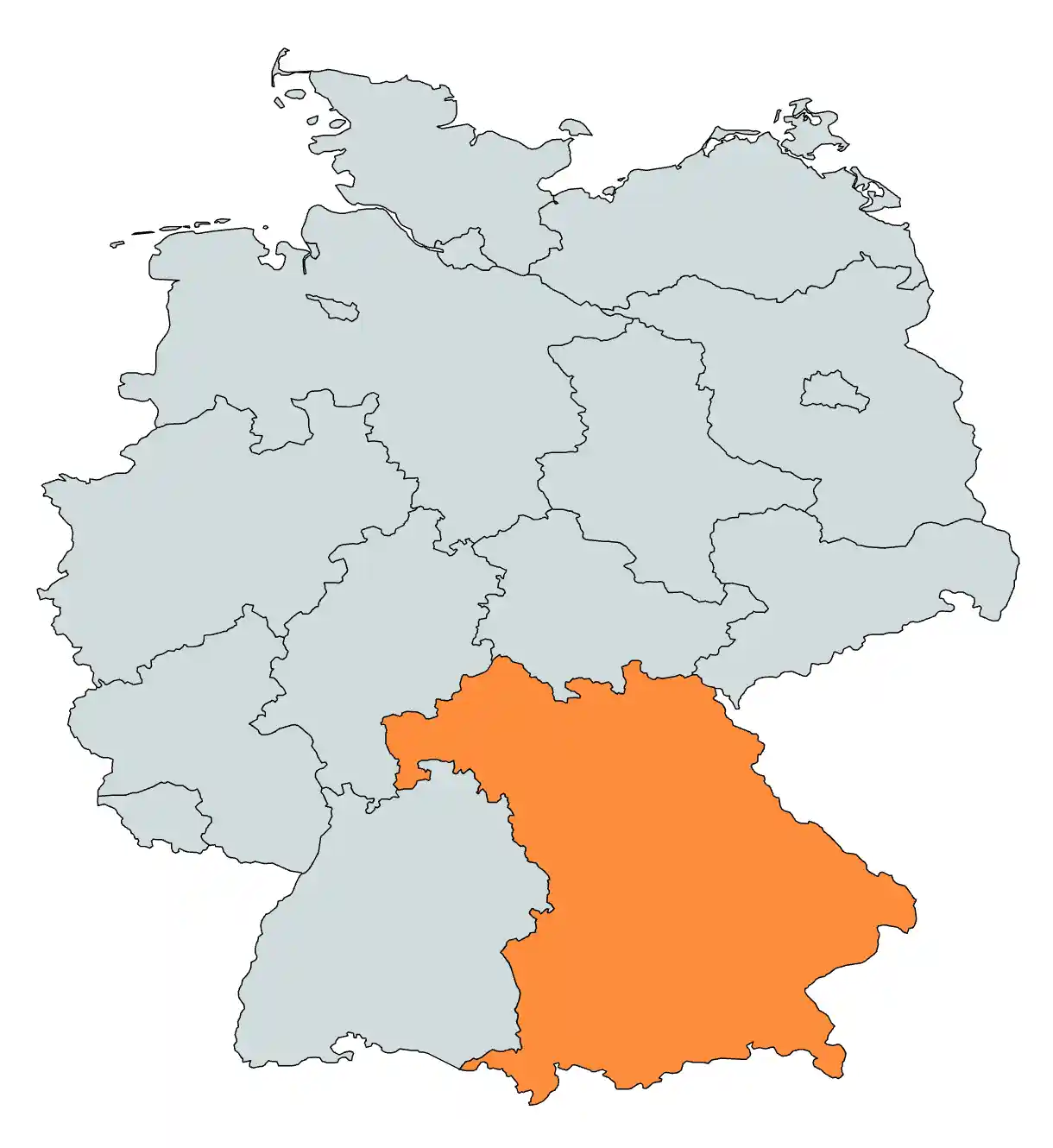
If your ideal road trip involves mountains, fairy tale castles, and roads that hug the edge of deep-blue lakes, then Bavaria is an essential German destination. This diverse southern state gives you driving experience that ranges from the panoramic sweep of the German Alpine Road (Deutsche Alpenstraße) to the charming, winding lanes of the Romantic Road. Here, the freedom of the open road is perfectly matched by the sheer scale of the landscape surrounding you.
The scenery shifts from the high drama of the Bavarian Alps, where peak after peak pierces the sky, to the hills and medieval fortifications of Franconia in the north. The absolute highlight of any route is the view of Neuschwanstein Castle soaring above the forests. It's a truly magical sight that anchors the region’s dreamlike quality. Just as compelling are the hundreds of pristine lakes like Chiemsee and Tegernsee, giving you perfect stopping points for a restorative afternoon.
Bavaria doesn't just offer stunning views; it's the a culture of true Gemütlichkeit. From the buzzing beer halls and world-class museums of Munich to the cozy Gasthäuser serving hearty food in historic towns like Rothenburg, every stop is steeped in tradition.
Bavaria highlights
- Neuschwanstein Castle (Hohenschwangau) The Iconic Fairytale Fortress. Germany’s most famous castle still feels surreal when you see it rising above the forests. Wander the Alpine foothills, visit the Marienbrücke viewpoint and explore nearby Hohenschwangau Castle.
- Munich’s Historic Heart & Biergartens Visit Marienplatz, the Residenz, and Viktualienmarkt, then relax in one of Munich’s enormous beer gardens. The English Garden’s riverside paths and surfers on the Eisbach wave are a must-see.
- The Romantic Road Germany’s Most Scenic Route This legendary driving route leads through medieval towns like Rothenburg ob der Tauber, Dinkelsbühl and Würzburg. Timbered houses, city walls, and the countryside make this a perfect driving highlight.
- Zugspitze Germany's peak. Ride the cable car or hike to the nation’s highest peak. On clear days you see Germany, Austria, Switzerland and Italy in a single panorama view.
- Eibsee Relax at the "Maldives of Bavaria," a crystal-clear turquoise alpine lake resting right at the foot of the massive Zugspitze mountain.
- Lake Chiemsee & Herrenchiemsee Palace Bavaria’s Versailles on the Water. Take a ferry to King Ludwig II’s lavish palace, wander island forests and enjoy calm lakeside towns perfect for swimming and cycling.
The local Four
History of Bavaria
The history of Bavaria is defined by a single powerful family that shaped the region for over 700 years. Emerging from the ancient Baiuvarii tribes, the region came under the rule of the House of Wittelsbach in 1180. This dynasty would go on to rule Bavaria until 1918.
By the 19th century, Bavaria became a kingdom and embraced a romantic vision of culture and architecture. King Ludwig II, fascinated by art, mythology and engineering, commissioned some of Europe’s most iconic castles. Among them are Neuschwanstein and Linderhof. His creations still shape Bavaria’s image.
Even when Bavaria joined the German Empire in 1871, it did this only after securing special rights to maintain its own army, postal service and railways. This sense of separation remains today in the official title "Free State of Bavaria" (Freistaat Bayern).
After World War II, the region successfully transformed from a purely agricultural state into a high-tech powerhouse (home to BMW and Siemens), all while stubbornly refusing to let go of the Lederhosen, festivals and traditions that make it unique.