

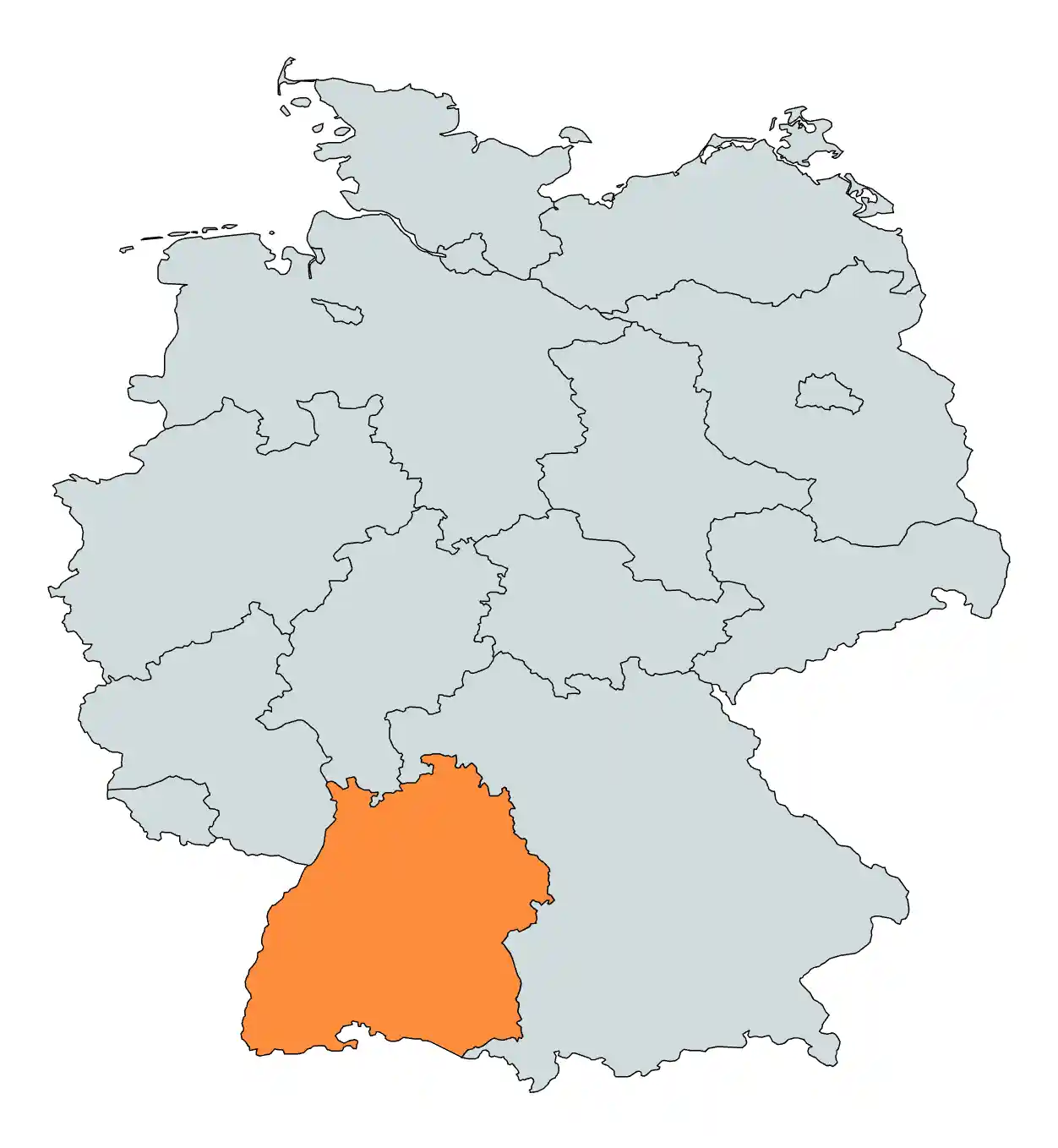
Baden-Württemberg isn’t just a destination; it is a pilgrimage. As the birthplace of the automobile, this southwest corner of Germany treats the road with admiration. You can experience the adrenaline of the unrestricted Autobahn to the legendary curves of the Black Forest High Road. This is a region where engineering perfection meets untamed nature.
One moment you are navigating the mist-covered valleys that inspired the Brothers Grimm fairy tales. The next moment you are emerging into the sunny Mediterranean-like vineyards of the Rhine Valley or tracing the shores of Lake Constance. Whether you are climbing toward the majestic Hohenzollern Castle or cruising through the Swabian Alb, the landscape provides a cinematic backdrop that demands you keep your camera within reach.
Off the road, your pit stops will be just as legendary. You can relax in the thermal baths of Baden-Baden, pay homage to automotive history at the Porsche and Mercedes-Benz museums in Stuttgart or refuel with a slice of world-famous Black Forest cake. It's a place that rewards you with a mix of high-speed thrills and tradition. Check your mirrors and hold on to your steering wheel!
Baden-Württemberg highlights
- Heidelberg & Its Romantic Castle Germany’s most poetic city, with a ruined Renaissance castle overlooking the Neckar River and a famous stone bridge.
- The Black Forest High Road (Schwarzwaldhochstraße) One of Germany’s most spectacular mountain drives. Curve past deep forests, glacial lakes and wide viewpoints stretching toward the Rhine Valley and France.
- Lake Constance & Island of Mainau A beautiful lakeside escape with palm trees, vineyards, water sports and the flower-covered Mainau Island. A perfect combination of Alpine scenery and Mediterranean vibes.
- Stuttgart’s Car Culture (Mercedes-Benz & Porsche Museums) Visit two world-class automotive museums. Where German automotive innovation and engineering shine. Even non-car lovers will find these museums fascinating.
- Ulm Minster Home of the World’s Tallest Church Spire. Its 161.5-meter tower offers breathtaking views over the city, the Danube river and the distant Alps.
- Triberg Waterfalls & Cuckoo Clock Germany’s highest waterfalls roar through pine forests. Nearby villages have the world’s biggest cuckoo clocks and long-held woodcarving traditions.
The local Four
History of Baden-Württemberg
Once home to the ancient Germanic Alemanni tribe under the Roman Empire. The two largest and most influential of these were the Grand Duchy of Baden and the Kingdom of Württemberg, which developed entirely distinct cultural and political identities.
By the eighteenth and nineteenth centuries, the separate territories of Baden, Württemberg and Hohenzollern had grown into progressive states known for education and early industrial innovation. The invention of the automobile in the region, thanks to pioneers like Karl Benz and Gottlieb Daimler, would eventually push Baden Württemberg to the forefront of global engineering, influencing cities like Stuttgart and Mannheim forever.
In 1952, after centuries of division, Baden, Württemberg Baden, and Württemberg Hohenzollern merged into the unified state you explore today. Modern Baden-Württemberg blends its imperial past, medieval heritage and industrial breakthroughs with forests, vineyards and rivers that still follow the same lines they did thousands of years ago.
Germany’s most stable and successful regions, nowadays affectionately known as the Ländle (little land).