

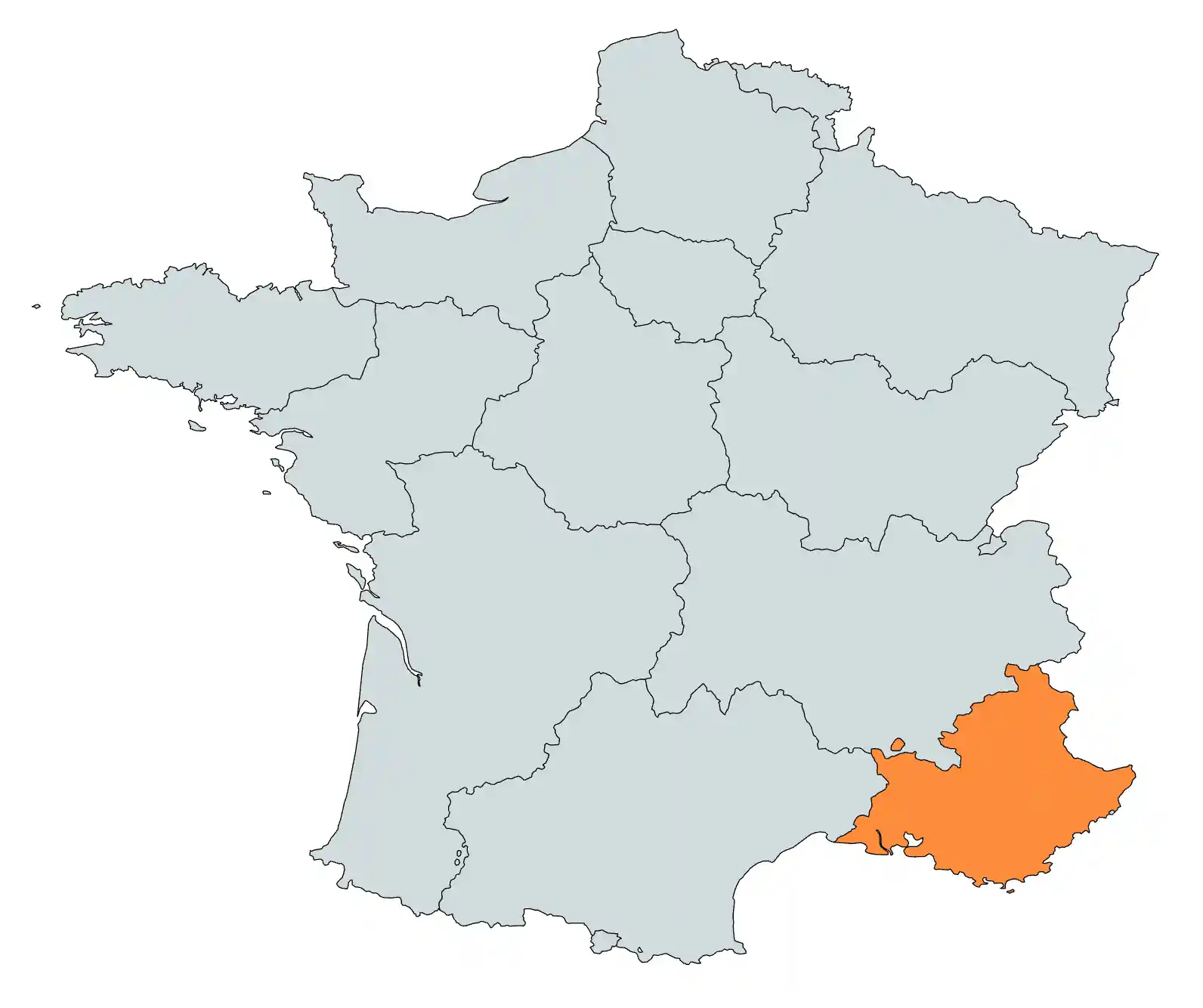
Provence-Alpes-Côte d’Azur greets you with sun, sea and mountains all at once. The Mediterranean sparkles as you drive along coastal roads. Lavender fields stretch across the hills. Olive groves and vineyards dot the valleys. Villages cling to cliffs, their terracotta roofs glowing in the sunlight.
Each part of the region has its own rhythm. Along the Riviera, palm-lined promenades and lively marinas show off luxury yachts and colourful cafés. Inland, markets overflow with fresh produce, cheeses and herbs. Narrow streets wind through medieval towns where fountains and squares invite you to pause.
The mountains of the Alps rise sharply, offering hiking trails, ski villages, and panoramic views over valleys and lavender fields below. Small roads twist through gorges and past castles perched on hilltops. The scent of pine and rosemary fills the air, blending with salty sea breezes near the coast.
Provence-Alpes-Côte d’Azur is more than a destination. It is a journey through landscapes, flavours and history. From the glamour of Nice to the quiet charm of Luberon, the region invites you to explore, taste and soak it all in.
Provence-Alpes-Côte d'Azur highlights
- Vieux Port (Old Port) of Marseille The historic heart of France's second-largest city. Surrounded by cafés and restaurants and guarded by the Fort Saint-Jean and Fort Saint-Nicolas. It is the best place to feel the pulse of Mediterranean life, especially during the daily fish market.
- Lavender Fields of Valensole Endless purple fields stretch across the Valensole Plateau, especially vibrant in summer. The fragrance and scenery create a dreamlike experience for visitors. It’s a must for photographers and nature lovers seeking Provence’s iconic landscapes.
- Verdon Gorge Europe’s deepest canyon offers dramatic cliffs, turquoise waters, and outdoor adventures. Kayaking, hiking, and rock climbing are popular ways to explore this natural wonder. Scenic viewpoints along the rim provide breathtaking panoramas of the gorge.
- Nice & Promenade des Anglais Nice combines Mediterranean charm with elegant architecture along its famous seaside promenade. Walk along the beach, explore the old town and enjoy local cuisine at lively cafés. The city also serves as a gateway to nearby coastal towns.
- Calanques National Park A series of rugged limestone cliffs and hidden coves between Marseille and Cassis. Hiking trails or boat trips reveal turquoise waters and stunning scenery. It’s perfect for swimming, snorkeling or simply soaking in the natural beauty.
- Saint-Paul-de-Vence A medieval hilltop village famous for art galleries, cobbled streets and historic architecture. Many renowned artists lived or exhibited here, giving the town a creative legacy. The surrounding views of Provence make it a picturesque stop.
- Sentier des Ocres Ochre Trail in Roussillon. Located in the Luberon area of Provence, this former ochre quarry features vibrant cliffs and trails of deep red, orange and yellow earth. Walking the trail feels like stepping onto Mars, providing a striking color palette unique to this part of the region.
- Village of Eze Settled high above the Mediterranean Sea between Nice and Monaco, this medieval fortified village has beautiful views of the Côte d'Azur. The climb through its narrow stone streets leads to an exotic garden (Jardin Exotique) built within the ruins of a fortress.
The local Four
History of Provence-Alpes-Côte d'Azur
The Greeks founded Massalia, now Marseille, around 600 BC. They made it a trading port linking the Mediterranean to inland Gaul. Roman rule followed. Roads, aqueducts and amphitheaters were built. Some still stand in Arles, Orange and Aix-en-Provence.
In the Middle Ages, the region was divided into feudal territories. Cities like Avignon rose to prominence. The papacy even moved there in the 14th century. Fortified hilltop villages and castles were built for protection. Many remain today as historic sites.
The Renaissance brought growth and culture. Palaces, churches, and public squares appeared. Trade, agriculture and wine production flourished. Coastal towns started attracting merchants and travellers, laying the foundation for the Côte d’Azur’s future fame.
The 19th century transformed the region again. The French Riviera became a playground for European aristocracy. Railways and roads connected mountains, valleys and coast. Artists like Cézanne, Van Gogh and Matisse captured the light, colours and landscapes.
In the 20th century, the region grew as a hub of culture, tourism and Mediterranean life. Historic towns, Roman ruins, hilltop villages, and coastal cities coexist with modern ports and scenic routes. Provence-Alpes-Côte d’Azur is a road trip through millennia of history.