

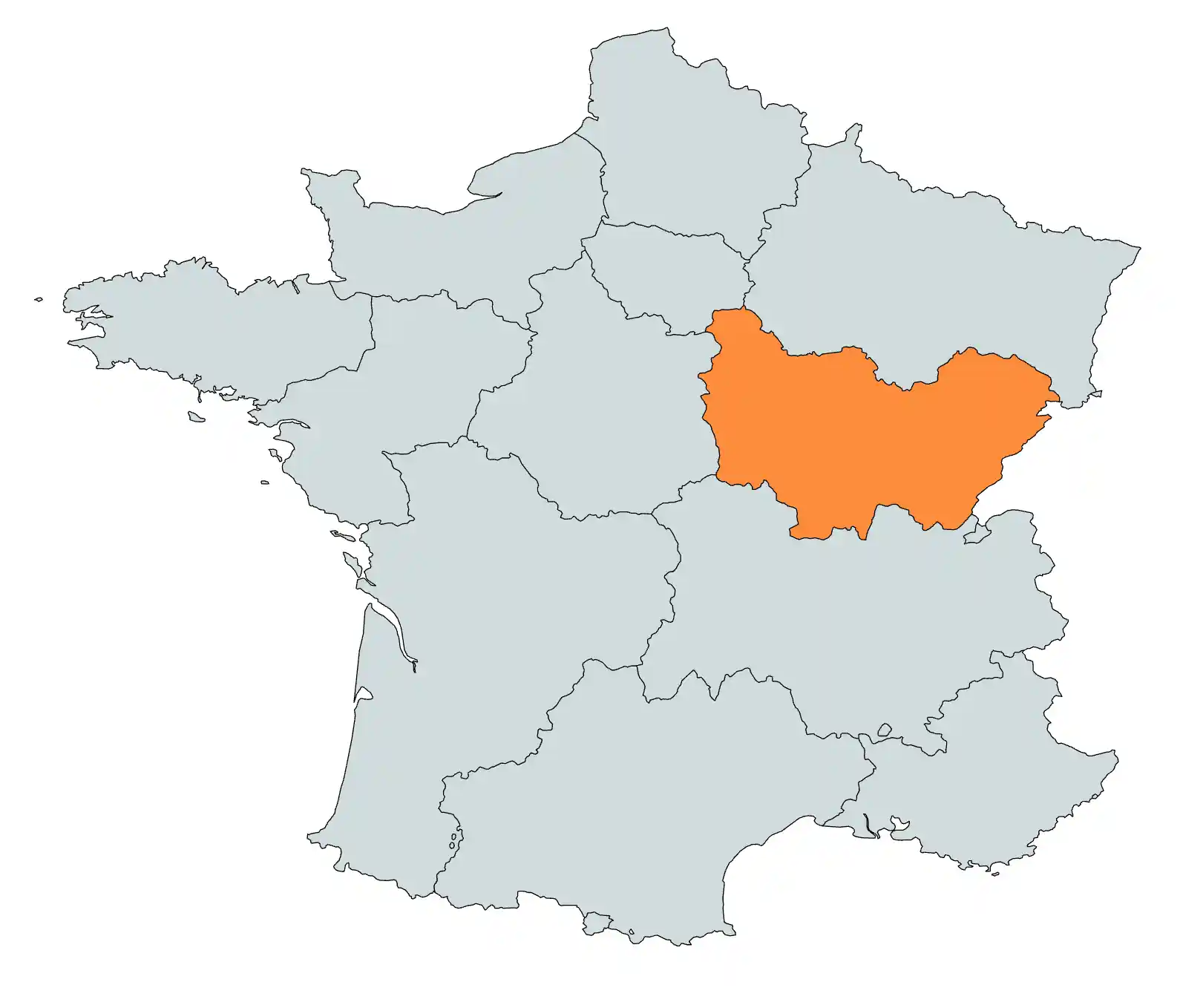
Bourgogne-Franche-Comté is a spectacular road trip region of refined contrasts, moving between world famous vineyards and powerful mountain ranges. This region combines the luxurious elegance of Burgundy with the raw natural beauty of the Jura near the Swiss border. Your drive here is a journey from gastronomic indulgence to high altitude adventure.
The journey begins on the famous Route des Grands Crus a legendary wine road connecting the world's most prestigious Pinot Noir and Chardonnay vineyards. You can explore the historic heart of Dijon, the former seat of the powerful Dukes of Burgundy. The road then shifts east toward the Jura Mountains where you find medieval cities like Besançon and stunning natural features like deep lakes and caves.
The atmosphere in this region is rich complex and deeply satisfying. It is a place where you indulge in extraordinary cuisine then explore quiet mountain trails. Bourgogne-Franche-Comté has unparalleled historical wealth, magnificent architectural heritage and a constantly changing view from the windshield.
Bourgogne-Franche-Comté highlights
- Beaune and the Hospices de Beaune Walk through the wine capital of Burgundy and visit the famous Hospices de Beaune with its colorful tiled roof. Inside, you’ll find historic halls with old medical rooms and one of the world’s most prestigious wine auctions.
- Dijon’s Gastronomic Heart Dijon offers grand squares, timber-framed houses and a food culture rooted in centuries of spice trading. Explore the Palais des Ducs or sample traditional mustard. Be sure to follow the Owl Trail through the old town.
- Route des Grands Crus Drive the legendary wine route that winds past vineyards and wine villages with centuries-old cellars. Stop for tastings in places like Gevrey-Chambertin, Nuits-Saint-Georges and Pommard.
- Cluny Abbey Once one of the most powerful monastic centers in Europe. Cluny shaped religion and politics across the European continent. Explore the remains of what was once the largest church in the world.
- The Jura Lakes and Cascades du Hérisson A paradise of turquoise lakes, cliffs, and waterfalls. The Hérisson waterfall trail leads you past a chain of cascades surrounded by lush forest and quiet viewpoints.
- Vézelay Basilica Sainte Marie Madeleine Climb the hill to this magnificent Romanesque basilica a major starting point for the pilgrimage route to Santiago de Compostela.
- Saline Royale d'Arc et Senans A remarkable industrial complex from the 18th century designed by visionary architect Claude-Nicolas Ledoux. A masterpiece of neoclassical architecture. Explore the perfect circular layout and learn about the region’s salt-making heritage.
- Abbaye de Fontenay Find serenity at this beautifully preserved Cistercian abbey tucked away in a quiet valley. A true hidden gem of Romanesque architecture.
- Lac de Vouglans Spend time at this immense emerald green lake in the Jura region. Perfect for swimming, sailing and enjoying the beautiful views.
The local Four
History of Bourgogne-Franche-Comté
The history of Bourgogne-Franche-Comté begins with the powerful Dukes of Burgundy. In the 14th and 15th centuries these Dukes governed an independent state stretching across Europe and rivaling the kings of France. They built grand palaces in Dijon and invested their immense wealth into art and architecture creating a golden age of medieval culture that you can still experience today.
The Burgundy side found its lasting fortune in the cultivation of Pinot Noir and Chardonnay creating the famous vineyards that define the landscape. Meanwhile the Franche Comté area was tied to the Holy Roman Empire and later ruled by the powerful Spanish Habsburgs. This mountain region maintained a separate cultural identity and allegiance closer to Switzerland for centuries.
The two territories were finally and officially reunited under the French crown in the 17th century solidifying the borders you encounter today. Despite this modern union the region retains its fascinating dual character. It's a road trip across these historical lines exploring the gastronomic elegance of the Dukes of Burgundy and the rugged freedom of the old Habsburg mountains.