

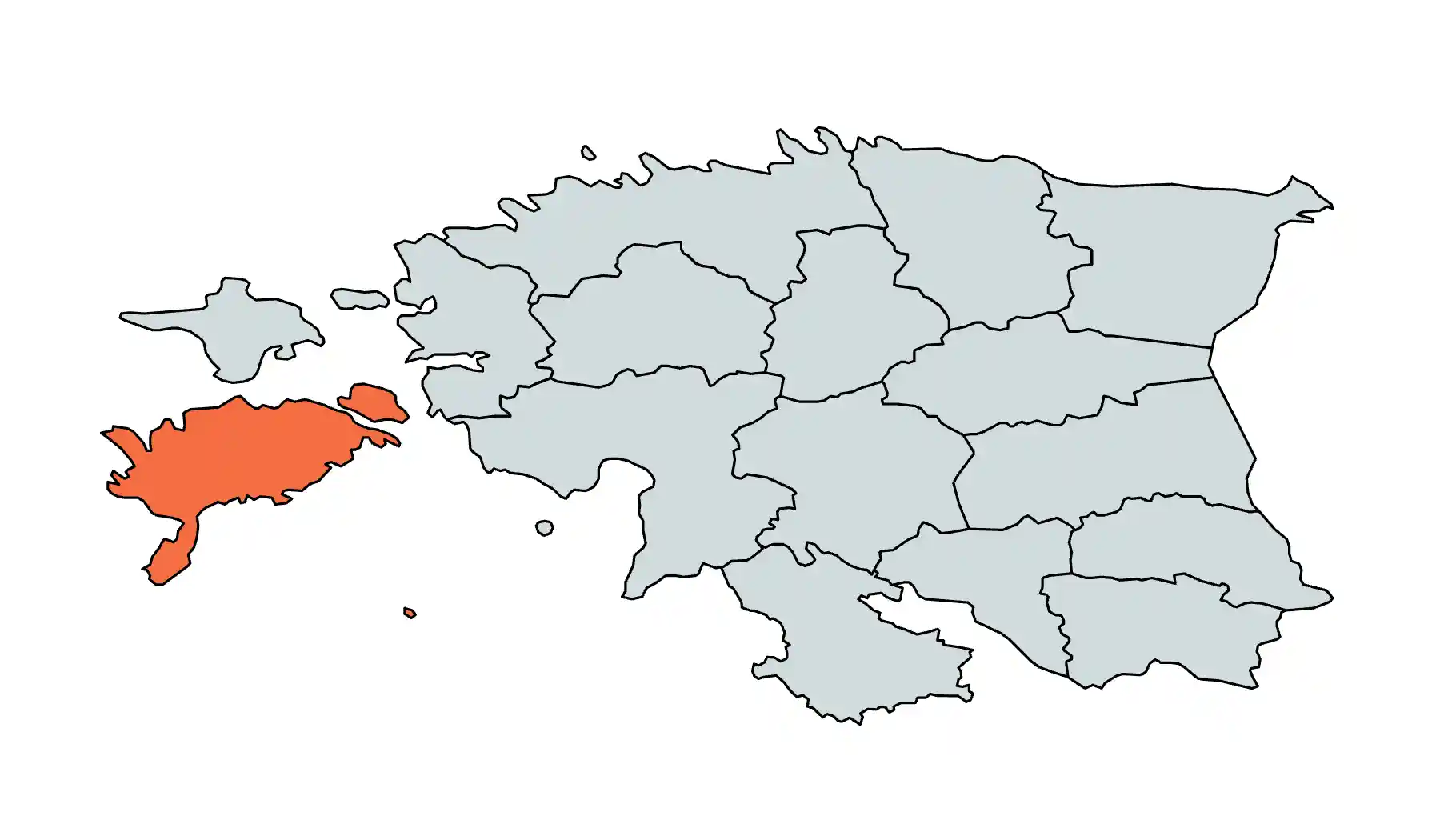
Estonia’s biggest island in the Saare county is a world of windmills and juniper fields. The Angla windmill mount is the best place to see the traditional wooden structures that once covered every hill. Drive south to the Sõrve peninsula where the road gets narrower and the sea gets wilder until you reach the tall black and white lighthouse. The tip of the peninsula is a prime spot for watching migratory birds and looking for fossils in the gray coastal rocks.
The Kaali meteorite crater is a must see with its perfectly round green lake formed by a massive impact thousands of years ago. It was a sacred site for ancient tribes and remains a powerful place to visit. On the north coast the Panga cliff offers a sheer drop into the Baltic with stone steps leading down to the waves. You can stand at the very edge and watch the sunset disappear into the endless blue of the northern sea.
Kuressaare holds a massive stone castle surrounded by a moat where you can walk the ramparts and see the medieval armory. The island roads are straight and flat making it easy to hop between small craft shops selling juniper wood carvings. It is a place of sea salt and ancient stone strength. You will find that the island has its own unique flavor, from the local home-brewed beer to the traditional dark bread.
Saare (county) highlights
- Kaali Meteorite Crater Peer into a perfectly round green lake formed by a massive space rock that crashed into the island thousands of years ago. It is the most impressive impact site in Europe and was a sacred place for ancient tribes.
- Panga Cliff Edge Walk along the highest limestone cliff on the island where the ground drops twenty one meters straight into the sea. The gray stone steps and the altar at the edge offer a dramatic view of the northern Baltic surf.
- Sõrve Lighthouse Point. Navigate to the very tip of the island where a tall black and white tower stands on a narrow gravel spit. The area is littered with shipwrecks and war relics and offers a view of the distant Latvian coast.
- Angla Windmill Mount Visit a row of five historic wooden windmills that stand on a hill in the center of the island. You can go inside the mills to see the wooden gears and learn about the traditional bread making culture.
- Kuressaare Episcopal Castle Explore the best preserved medieval fortress in the Baltic states with its massive stone walls and water filled moat. The interior museum houses a vast collection of history and the dark cells of the old prison.
- Vilsandi National Park Take a jeep or walk through the shallow sea at low tide to reach an island that is a sanctuary for thousands of seals and birds. It is the oldest protected nature area in the country and feels like a wild frontier.
- Kiipsaare Leaning Lighthouse Hike to a remote beach where a concrete lighthouse stands tilted in the waves after the sea eroded the ground beneath it. It is a hauntingly beautiful sight that shows the power of the shifting coastal sands.
- Goodkaarma Soap Farm Stop at a traditional farmstead where handmade soaps are made from local herbs and flowers in an old stone barn. You can take a workshop or simply enjoy the beautiful gardens and the quiet rural atmosphere.
- Piret’s Stone in Saaremaa Discover a massive boulder that legend says was dropped by a giantess while she was carrying stones for a bridge. The rock is a popular photo spot and sits in a field surrounded by wild orchids.
- Karja Church Carvings Visit a tiny stone church famous for its unique and mysterious medieval stone carvings that include ancient pagan symbols. It is the smallest church on the island but holds the richest architectural details.
The local Four
History of Saare (county)
The largest island of Saare county has a history that stretches back to the Viking Age, when the local people were known as fierce sailors and warriors. In 1227, it became the very last part of the country to be conquered by crusaders, who had to wait for the sea to freeze over so they could walk their horses across the ice. To keep control of the island, the knights built the massive Kuressaare Castle in the 1380s. It is still the most perfectly preserved medieval fortress in the region.
Life on the island was always a struggle against the wind and the sea, which led the locals to build hundreds of wooden windmills to grind their grain. In the 1800s, every farm had its own windmill and its own tradition of brewing strong home made beer. The island was also shaped by a massive meteorite impact thousands of years ago. That impact created a perfectly round lake that ancient tribes considered a sacred and magical place.
During the Cold War in the 20th century, the island became a strictly guarded closed zone. For nearly 50 years, it was a military frontier where even people from the mainland needed a special permit to visit. This isolation actually helped preserve the island’s traditional way of life and its clean nature. Today, the roads are open to everyone, leading past old stone walls and remote lighthouses that have watched over the Baltic for centuries.