

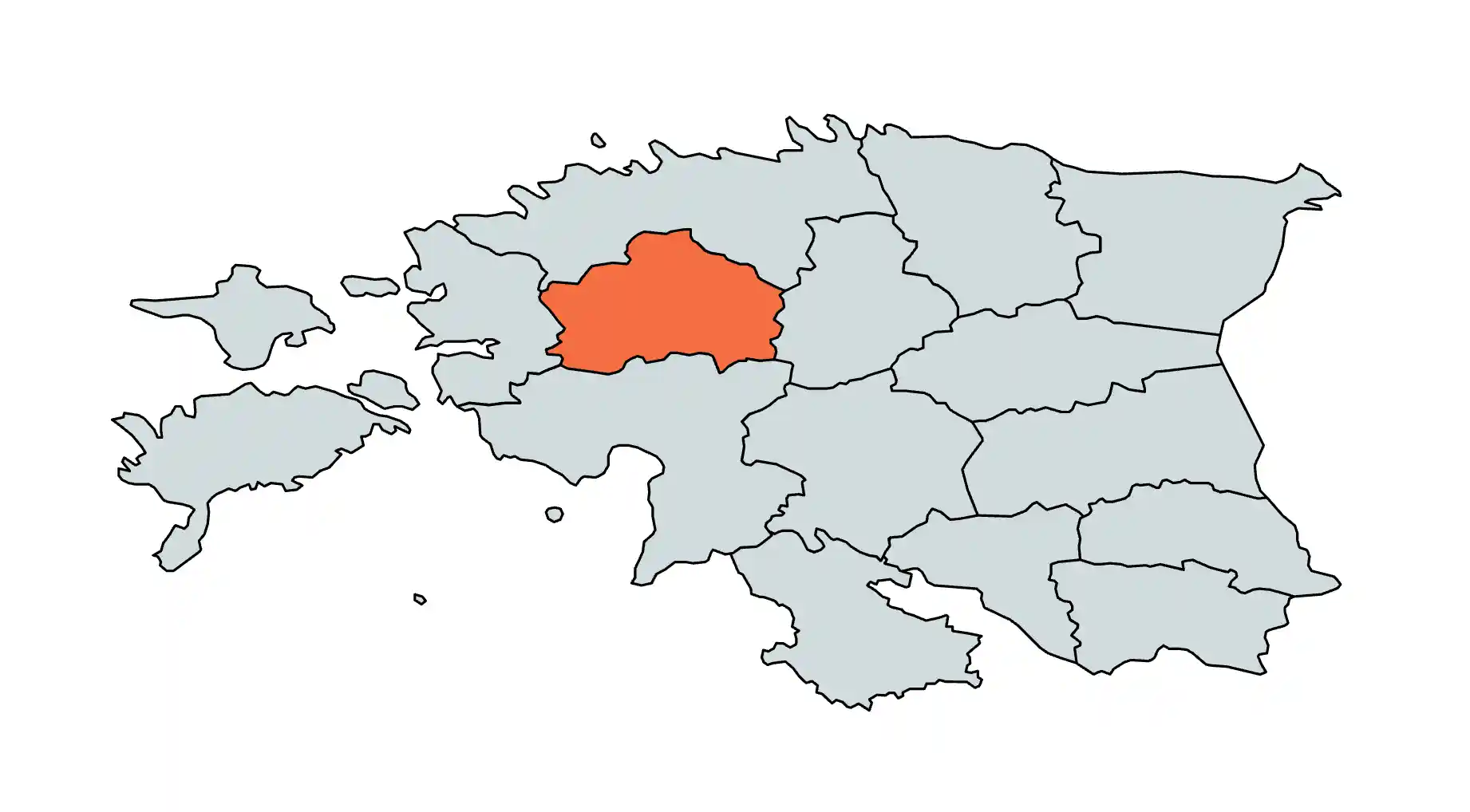
The Rapla county is a land of hidden water and stone history. The karst landscape means the rivers sometimes vanish underground leaving dry beds and mysterious sinkholes. You can find the Kuimetsa caves where the limestone has been hollowed out by water over thousands of years. Exploring these small natural tunnels gives you a sense of the hidden world that exists just beneath the surface of the fields.
The Vigala river is crossed by the Rapla stone bridge which is a rare double-deck structure built from local rock. Many grand manors like Kohila and Raikküla are scattered through the county often surrounded by ancient oak parks. The roads are lined with stone walls and old farmsteads that have stood for generations. You will find that the pace of life here is very steady, reflecting the solid stone foundations of the region.
Climb the Jalase nature trail to see a lake that sits on a limestone plateau surrounded by rare plants. The history of the region is tied to the earth and the stone that was pulled from it to build the country’s cathedrals. It is a quiet driving route for those who love geology and ruins. The backroads often lead to small village cemeteries where the stone carvings are works of art in themselves.
Rapla (county) highlights
- Kuimetsa Karst Caves Explore the largest natural cave system in the country where the river has hollowed out the limestone underground. During the spring the water flows through the caves while in summer you can walk into the dark chambers.
- Vardi Stone Bridge Drive across one of the oldest and most beautiful stone bridges in the country which spans a narrow river in a quiet valley. The surrounding park and the old mill ruins create a peaceful historic atmosphere.
- Raikküla Manor Park Visit the remains of a grand estate where ancient oak trees form a natural cathedral around the stone ruins. The manor was once a center for philosophical debate and is still a place of quiet intellectual charm.
- Jalase Nature Village Discover a perfectly preserved limestone village where the houses and walls are built from the rock pulled from the fields. The nearby nature trail leads to a lake that sits high on a plateau surrounded by bogs.
- Rapla Two Towered Church Stand before the only rural church in the country with two identical towers which dominates the skyline of the central plains. The interior is known for its incredible acoustics and grand pipe organ.
- Mahtra Peasant Museum Learn about the famous nineteenth century uprising of local farmers against the manor lords at this historic site. The museum tells a story of rebellion and the hard life of the people who worked the land.
- Kohila Paper Mill Chimney Drive past a massive red brick chimney that is a landmark of the region’s industrial history along the Keila River. The nearby manor house and park offer a beautiful riverside walk through the center of the village.
- Loosalu Bog Lake Hike to the largest bog lake in the country which is tucked away in a vast wilderness area far from the main roads. The dark water and the absolute silence of the bog make it a perfect spot for nature lovers.
- Kehtna Manor Gardens Explore a sprawling park filled with rare tree species and a grand manor house that now serves as a local school. The symmetrical gardens and the long lime tree avenues are a beautiful example of manor design.
- Varbola Hillfort Climb the massive earth ramparts of one of the largest ancient fortresses in the Baltic region. You can see the remains of the stone walls and a reconstructed siege engine that shows how the fort was defended.
The local Four
History of Rapla (county)
The Rapla county is famous for the Varbola Hillfort, which was one of the largest and most powerful fortresses in the north around a thousand years ago. It was protected by a massive wall made of limestone and earth that was nearly 600 meters long. In 1212, it was so strong that it successfully survived a massive siege by an invading army. Making it a legendary site of ancient strength and resistance.
The region is also the site of the Mahtra War in 1858, which wasn't a war between countries, but a famous uprising of local farmers against the manor lords. The farmers were fighting for their rights and for a better life, and although they were defeated, the event became a powerful symbol of the people's bravery. Today, the old battlefields and the local museum tell the story of how these ordinary people stood up for their freedom in the middle of the 19th century.
Rapla is also a land of limestone, the national stone. For centuries, the local quarries provided the building material for the country’s greatest churches and castles. In 1901, the locals finished building the Rapla Church, which is the only rural church in the country with two tall towers. Driving through the county, you can see this stone history everywhere, from the ancient arched bridges to the solid farmhouses that have stood for generations.