

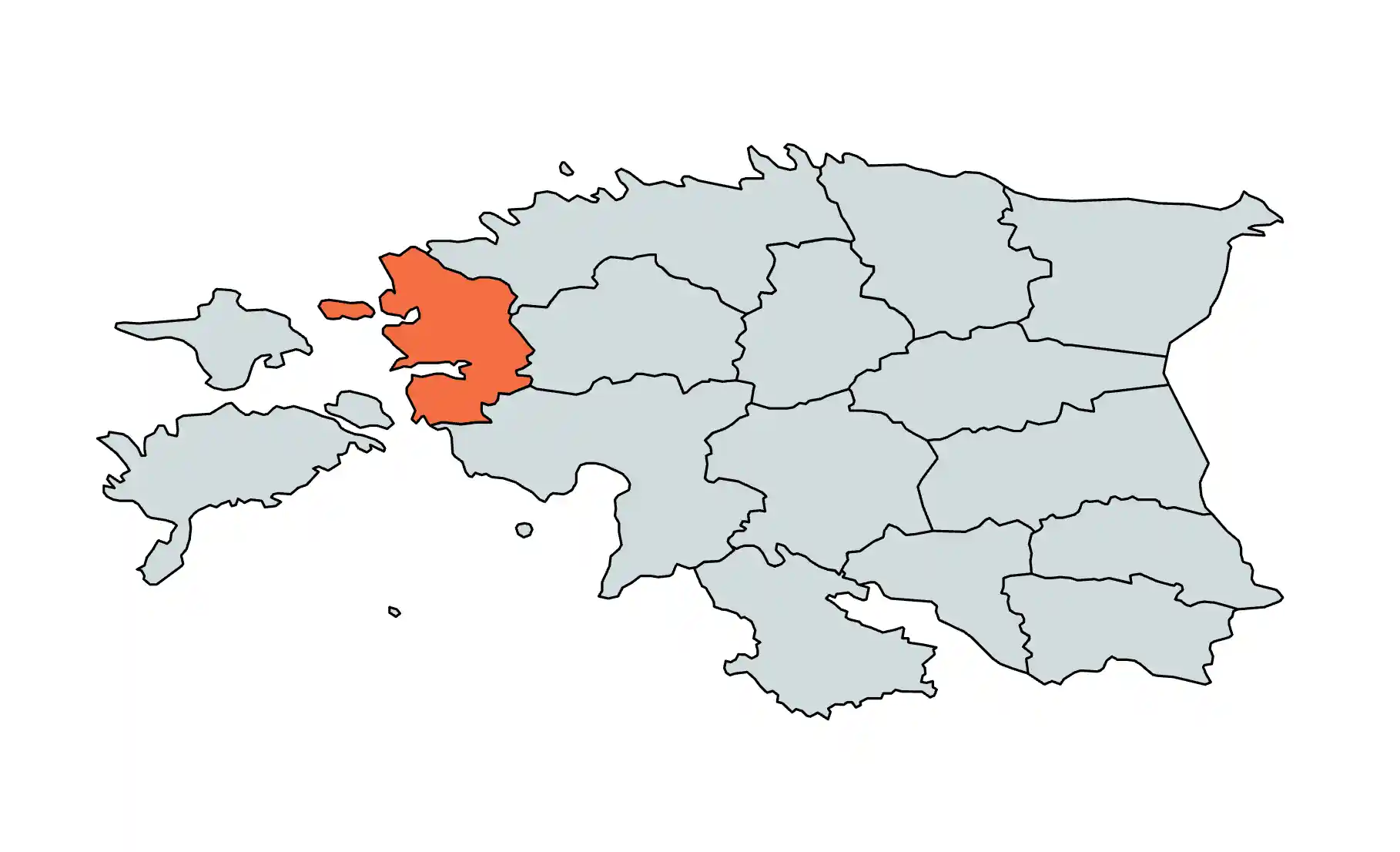
The Lääne county is a sanctuary for birds and lovers of quiet seaside charm. Matsalu bay is a world famous stop for migratory birds with observation towers standing over vast wet meadows. You can watch thousands of cranes and geese gather in the shallow waters during the spring and autumn flights. The peaceful atmosphere is perfect for those who want to disconnect from the modern world and listen to the sounds of nature.
Haapsalu is a town of mud spas and lace with a romantic promenade that has hosted emperors and composers. The Episcopal Castle ruins dominate the center with its legend of the White Lady appearing in the chapel window. The nearby railway station has the longest covered platform in the northern lands built for the arrival of the Tsar’s train. Walking along the wooden platform makes you feel like you have traveled back to the era of steam engines and royal visits.
Drive out to the Noarootsi peninsula to find a unique Swedish heritage in the village names and architecture. The roads here wind through sandy pine woods to reach remote beaches where you can have the Baltic Sea all to yourself. It is a place of shallow bays and golden coastal grass. You can find tiny seaside cafes serving fresh pastries and coffee to travelers who wander off the main path.
Lääne (county) highlights
- Noarootsi Peninsula Drive through the sandy pine forests of a region with a strong Swedish heritage and bilingual road signs. The remote beaches and quiet fishing villages offer a secluded escape from the more popular tourist spots.
- Matsalu National Park Park at one of the birdwatching towers to see thousands of cranes and geese gather in the shallow coastal bays. The park is a global sanctuary for migratory birds and offers a peaceful look at the flat seaside meadows.
- Haapsalu Episcopal Castle Explore the massive ruins of a medieval fortress where a legendary white lady is said to appear in the chapel window. The surrounding moat has been turned into a park with a modern playground and walking paths.
- Haapsalu Railway Station Visit the historic station with the longest covered wooden platform in the north built specifically for the arrival of the Russian Tsar. The old steam locomotives sitting on the tracks create a nostalgic atmosphere of travel.
- Puhtu Laelatu Nature Reserve Walk through an ancient broadleaf forest that is home to some of the richest biodiversity in the entire Baltic region. The coastal views and the old biological station offer a quiet look at the natural history of the west.
- Lihula Castle Mound Climb the hill where a massive stone fortress once stood to overlook the vast plains and the nearby town. The local manor house nearby serves as a museum and a center for the local nature film festival.
- Nõva Sandy Beaches Navigate to the northwestern corner where singing sands and coastal dunes meet a forest filled with wild berries and mushrooms. The road leading here is narrow and winds through some of the wildest parts of the coast.
- Osmussaar Island Ferry Take a small boat from the harbor to a remote island shaped by ancient earthquakes and glaciers. The island features unique geological formations called "crocodile skins" and a lighthouse standing on a steep cliff.
- Salevere Hill Trail Hike along the edge of a limestone cliff that was once an ancient shoreline and is now covered in a lush forest. The trail leads past a silver spring and offers views of the Matsalu wetlands in the distance.
- Kiideva Fishing Village Stop at a perfectly preserved coastal village where the old stone houses face the shallow water of the bay. It is a quiet spot to watch the local fishermen and enjoy the absolute silence of the western shore.
The local Four
History of Lääne (county)
In 1825, the first mud spa opened in the town of Haapsalu after people discovered the local sea mud had healing powers. This turned the region into a favorite summer spot for the Russian Tsars and high society, who built beautiful wooden villas and a romantic promenade along the water that still looks like a movie set today.
Long before the spa era, the region was a religious and military center. From the late 1200s, a massive castle in Haapsalu served as the home for a powerful bishop who ruled over the western islands and the coast. The ruins of this castle still dominate the town, and legends say a White Lady appears in the chapel window every August. The region was also home to a large Swedish community for over 700 years, leaving behind a unique heritage in the local names and traditions.
The history of the west is also tied to its massive railway station, which was built in 1904 with a covered platform over 200 meters long. It was designed this way so the Russian Emperor could step off his train and stay dry even in the rain. The quiet roads lead through flat meadows and bird sanctuaries that have been protected for generations. It provides a peaceful look at a coast that has hosted both royalty and ancient seafaring cultures.