

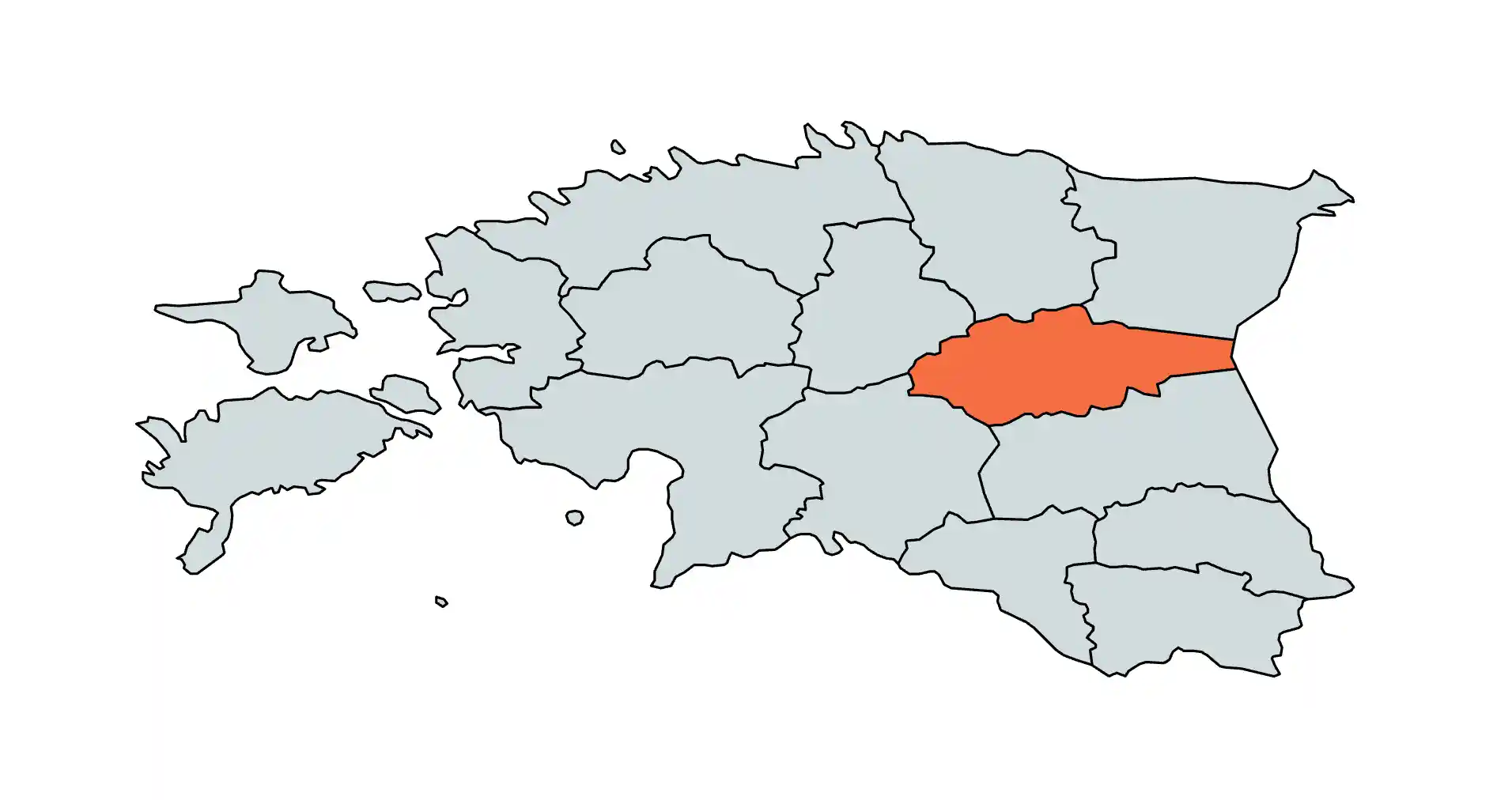
Roll over the landscape of the Vooremaa drumlins where long hills stretch like waves across the earth. These ridges were formed by ancient glaciers and now provide long views over the blue stripes of Lake Saadjärv. Every hill here has a story about the giant hero Kalevipoeg who supposedly shaped this land with his bare hands. You can find massive boulders in the fields that legend says were stones he threw during his battles.
Stop in Põltsamaa to walk over nineteen small bridges that crisscross the river and lead to a rose garden with thousands of blooms. The stone walls of the local castle hold a wine cellar where you can taste berry wines made from local harvests. It is a bright green county where the fields seem to glow in the summer light. The local park is a great spot to stretch your legs and watch the ducks floating under the weeping willows.
Visit the Elistvere animal park to see moose and lynx in their natural forest home. The shore of Lake Peipus starts here with long rows of traditional houses and garden stands. You can buy hand-knotted onion garlands and fresh cucumbers directly from the people who grow them. The lakeside roads in Jõgeva county are narrow and charming, offering a window into a lifestyle that has remained unchanged for generations.
Jõgeva (county) highlights
- Vooremaa Landscape Reserve Drive over the long rolling hills called drumlins which were shaped by retreating glaciers thousands of years ago. These parallel ridges create a unique corrugated landscape with narrow lakes shimmering in the valleys between them.
- Põltsamaa Rose Garden Park by the river to visit a garden with thousands of different rose varieties blooming in the shadow of a castle. The scent of the flowers fills the air while the river bridges offer a peaceful walk through town.
- Elistvere Animal Park Take a break to see moose and lynx and bison in a natural forest setting that focuses on local wildlife. The park is a great spot for families to learn about the forest animals that live in the Estonian woods.
- Kuremaa Manor and Lake Visit the grand yellow estate that overlooks one of the most popular swimming lakes in the central part of the country. The park is filled with ancient trees and the sandy beach is perfect for a summer afternoon stop.
- Kalevipoeg Museum Explore the legends of the national giant hero in the village of Kääpa where his sword is said to be hidden in the river. The museum tells the epic stories that define the local culture and identity of the region.
- Palamuse Parish School. Step into the world of a famous Estonian novel by visiting the historic schoolhouse that looks exactly as it did a century ago. The quiet village atmosphere and the old stone church create a sense of traveling back in time.
- Puurmani Manor Discover one of the most beautiful white renaissance style mansions in the country tucked away in a quiet park. The drive to the estate takes you through lush forests and past small rivers that feed into the central plains.
- Lake Peipus Shore Road Follow the edge of the fifth largest lake in Europe where the horizon is wide and the water looks like the sea. You can stop at small stands to buy fresh cucumbers and onions from the local garden plots.
- Mustvee Old Believers Church Visit the lakeside town that serves as a center for the unique Old Believer community with its colorful wooden churches. The local culture is a blend of ancient religious traditions and a simple life tied to the lake.
- Laiuse Castle Ruins Explore the remains of a massive fourteenth century fortress that once served as a winter residence for a Swedish king. The stone walls stand in an open field and offer a rugged look at the region’s military history.
The local Four
History of Jõgeva (county)
The hills of the Jõgeva county were sculpted by moving ice sheets about 12,000 years ago. Creating long ridges called drumlins that look like waves made of earth. These hills are the setting for the 13th century legends of Kalevipoeg, a giant hero who was said to have plowed the landscape with his bare hands. For generations, the local people believed that the massive boulders found in the middle of the fields were stones the giant threw during his ancient battles.
In the 1800s, Jõgeva became the heart of the country's literary history. The small village of Palamuse was the setting for the first major local novel written in 1887, which captured the life of children in a country schoolhouse. Visiting the school today is like stepping into a storybook, with the old wooden desks and inkwells preserved exactly as they were over a hundred years ago when the region was a center for education and rural culture.
The eastern edge of the county follows the shore of Lake Peipus, where a group called the Old Believers settled in the late 1600s. They fled religious changes in Russia to find peace on these shores. Bringing with them a unique culture of fishing and onion growing that still exists today. Driving through their long "ribbon villages" shows a lifestyle that has stayed the same for centuries, centered around the water and the seasonal harvests.