

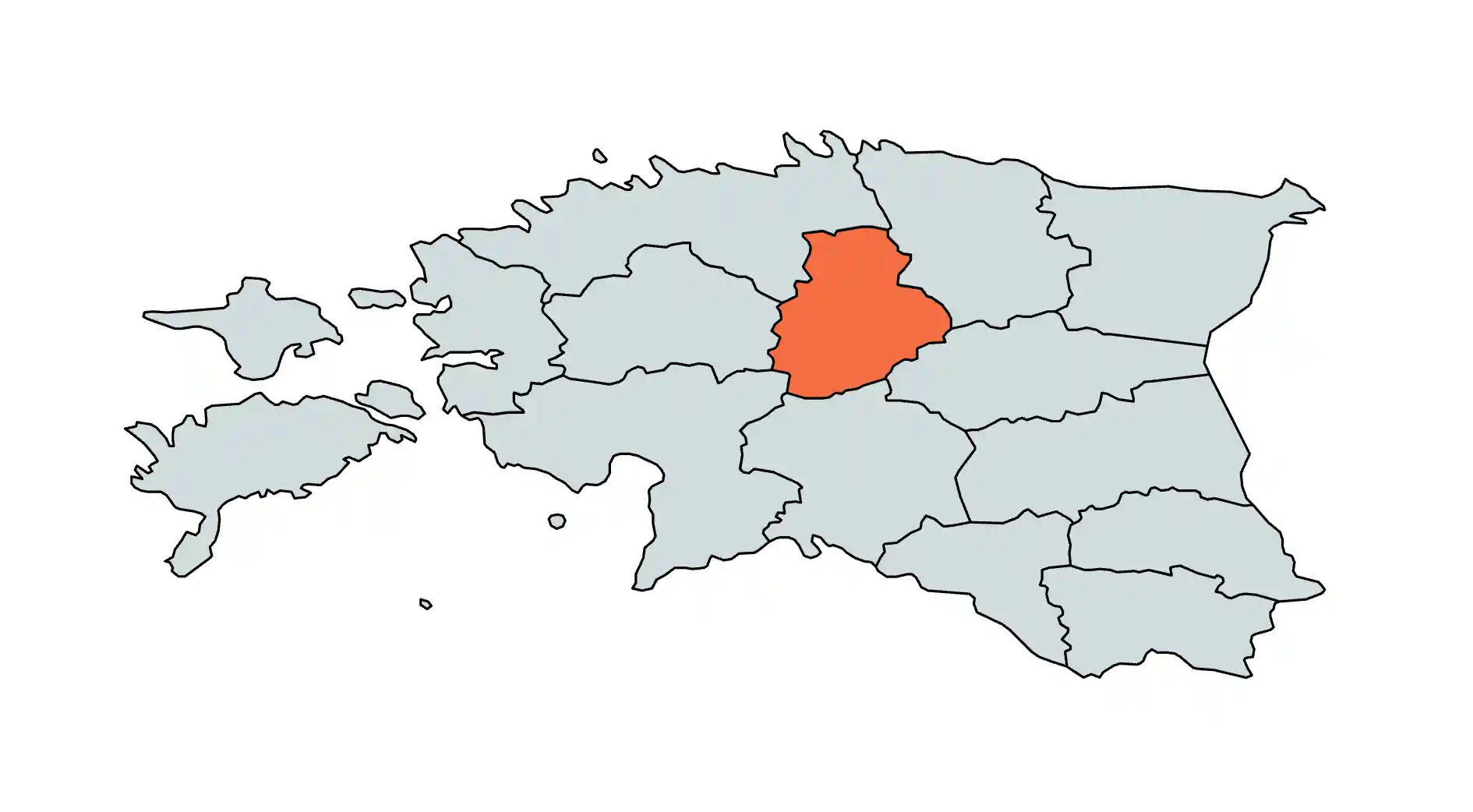
The crossroads of the Järva county lead you into a land of deep bogs and white manor houses. Step onto the wooden boardwalks of Kakerdaja bog to see tiny dark pools reflecting the clouds in a vast mossy plain. It is a silent world where the only sound is the wind in the stunted pines. The bog pools are deep and crystal clear, and some locals even take a refreshing dip in the acidic water during the hot summer months.
In Paide the stone Tall Hermann tower stands on a hill as a reminder of ancient battles and knights. You can explore the interactive museum inside to travel through different eras of Estonian history. The Roosna-Alliku manor nearby shows the luxury of the past with its white facade and grand ballroom. The surrounding parkland is perfect for a slow drive past old oak trees and perfectly kept lawns.
The village of Järva-Madise is the heart of Estonian literature where the landscape inspired the greatest local novels. Drive the quiet backroads to find small dairy farms and traditional wooden churches. It is the peaceful center of the mainland where the horizon feels endless. You will often see storks nesting on the chimneys of old farmhouses as you navigate the straight roads between the fields.
Järva (county) highlights
- Kakerdaja Bog Boardwalk Walk across a vast mossy plain on wooden paths that lead to deep dark pools reflecting the vast sky. It is one of the most accessible and beautiful bogs in the center of the country for a nature hike.
- Paide Wittenstein Tower Climb the white stone tower on the central hill to travel through different eras of history via an interactive time machine. The view from the top covers the flat green landscape of the central crossroads of the country.
- Roosna Alliku Manor Visit the "white pearl" of the region which is an elegant manor house known for its beautiful ballroom and grand facade. The surrounding park features the springs that form the beginning of the Pärnu River.
- Estonian Dairy Museum Stop in the village of Imavere to learn about the history of butter and cheese production in a historic creamery. You can even try your hand at making traditional butter using old fashioned wooden tools and methods.
- Järva Madise Church Discover the hilltop church that served as the inspiration for the greatest works of Estonian literature. The surrounding landscape of bogs and fields is exactly as described in the classic novels of the nineteenth century.
- Aravete Village Museum Explore a local history collection housed in an old schoolhouse that tells the story of rural life in the central plains. It is a quiet and authentic stop that shows the heart of the Estonian agricultural tradition.
- Seidla Windmill Visit a fully restored Dutch style windmill where you can see the massive gears and millstones still in working order. The annual antiques fair held here is one of the largest and most popular in the northern lands.
- Norra Springs Drive to the edge of the forest to see the most powerful springs in the country where crystal clear water bubbles from the earth. The area is a quiet natural oasis perfect for filling a bottle with fresh forest water.
- Esna Manor Ruins Explore the atmospheric remains of a manor house and its chapel which have become a favorite spot for photographers and film crews. The quiet backroads leading here are lined with old stone walls and tall ash trees.
- Koigi Manor Park Take a walk through the grounds of a restored estate that features a unique herb garden and a long alley of oak trees. It is a peaceful stop that offers a look at the sophisticated rural life of the past.
The local Four
History of Järva (county)
Järva has been known as the "Heart of the Land" since the Viking Age because all the major roads across the country meet here. In 1265, a massive white stone castle was built in Paide with a famous eight sided tower to guard these important crossroads. This tower allowed knights to see for miles across the flat plains and spot approaching armies long before they reached the center, making it one of the most important military sites in the middle ages.
The county was the scene of a major uprising in 1343 when local leaders tried to reclaim their land from foreign knights. Although the revolt failed, it became a legendary part of the local history. In the 1800s, Järva became a very wealthy farming area and the birthplace of the modern dairy industry. In 1908, the very first cooperative creamery was opened here and the high quality butter produced on these farms was eventually exported to royal tables all over Europe.
The landscape is also famous for its deep, ancient bogs like Kakerdaja, which have been forming for over 10,000 years. These bogs were once used as hiding places during wars, and people built secret underwater paths made of stone to walk across the quaking moss without sinking. Today, the quiet roads lead you through a land of peaceful manors and wide open fields that still feel like the beating heart of the mainland.