

The Valaste waterfall in Ida-Viru county is the star here falling over fifty meters down a vertical cliff of colorful rock layers. You can walk the steel stairs to see the power of the water hitting the forest floor far below. The viewpoint offers a unique cross section of the earth's crust with layers of limestone and sandstone visible in the cliff face.
The industrial soul of the region shows at the oil shale mining museum where you can go deep underground in a real mine. Back on the surface look for the Blue Hills and the massive ash pyramids that look like strange man-made mountains. The Narva river promenade offers a direct view across the water to a huge Russian fortress standing right opposite the Estonian castle. This dramatic architectural standoff is one of the most unique border views in all of Europe.
Relax at the long sandy beach of Narva-Jõesuu where historic wooden villas hide among the pines. The Kuremäe convent provides a peaceful contrast with its onion domes and healing holy springs. It is a region where raw industry and delicate nature live side by side. Driving through the Ida-Viru county gives you a deep appreciation for the resilience of the local people and the sheer power of the landscape.
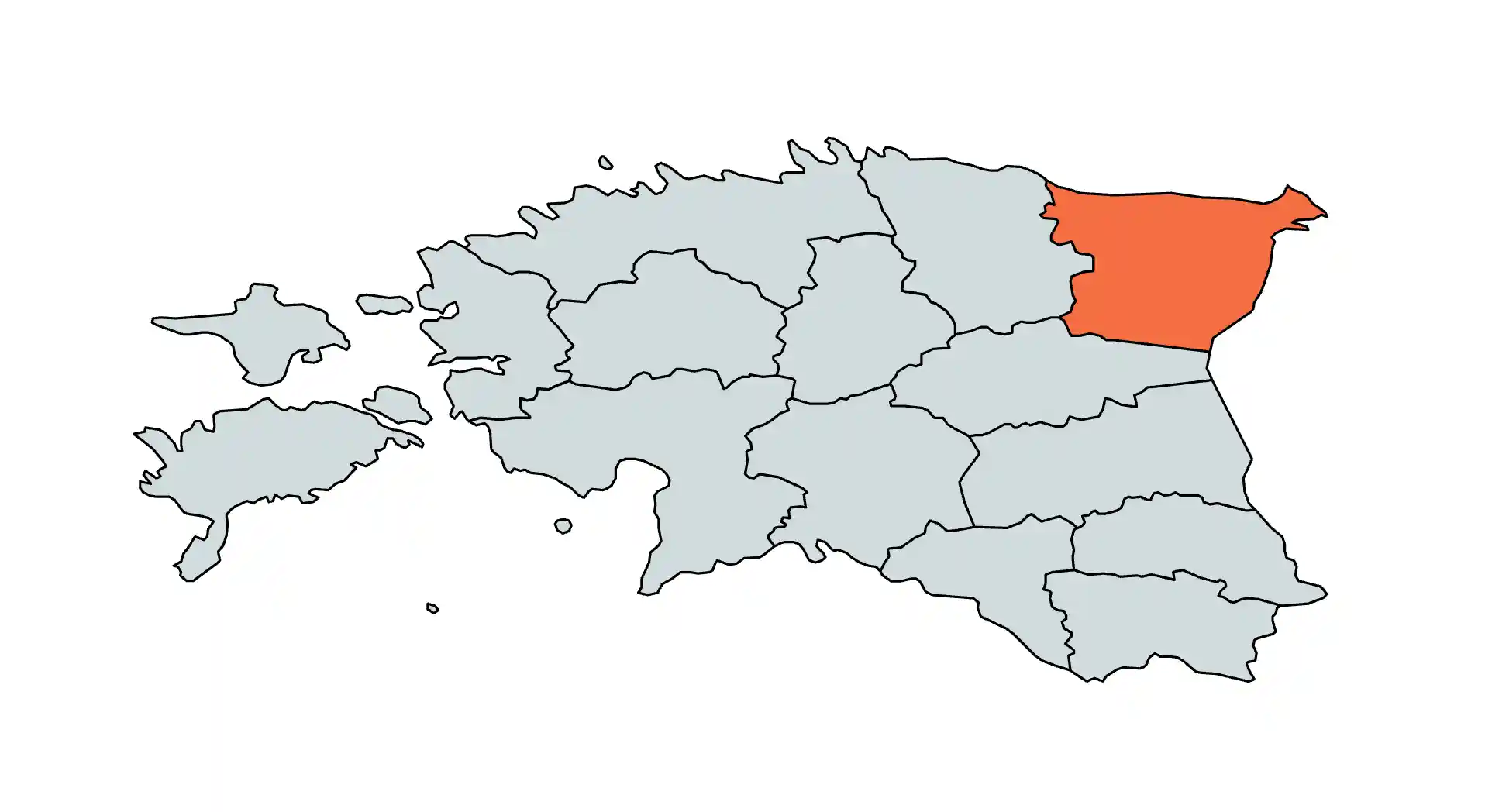
Ida-Viru (county) highlights
- Valaste Waterfall Park at the highest waterfall in the land to see the water plunge fifty meters down a vertical cliff face. A new steel staircase allows you to descend into the canyon to see the colorful rock layers up close.
- Sillamäe Stalinist Architecture Drive into this formerly secret city to see the grand staircases and neoclassical buildings that lead down to the sea. The central promenade is a unique example of imperial Soviet urban design that feels like a film set.
- Narva Castle and River Stand on the riverbank to see the massive stone fortress facing off against a Russian castle right across the water. The promenade offers a dramatic look at the border where two different civilizations meet at the river edge.
- Kuremäe Convent Visit the only active Orthodox nunnery in the country with its iconic green onion domes and holy springs. You can fill a bottle with healing water and walk through the peaceful grounds filled with oak trees.
- Pühtitsa Mother of God Gates Explore the grand red brick gates of the convent which serve as a landmark for travelers heading toward the border. The intricate wood carvings and religious icons are a testament to the local craftsmanship of the region.
- Aidu Water Park Discover a former oil shale quarry that has been flooded to create a network of crystal clear blue canals. You can hike along the artificial ridges or take a boat through the narrow canyons of this industrial landscape.
- Narva Jõesuu Sandy Beach Cruise along the longest sandy beach in the country where white dunes meet a forest of tall pine trees. The town is famous for its historic wooden villas and a relaxed atmosphere that feels like a classic Baltic spa.
- Blue Hills War Memorial Drive to the site of one of the most intense battles of the second world war where massive hills offer views of the coast. The memorial and trenches tell a story of incredible bravery and the tragic history of the border.
- Kohtla Nõmme Mining Museum Go deep underground into a real oil shale mine to see the tunnels and heavy machinery used by generations of workers. Back on the surface you can climb the massive ash pyramids for a view of the industrial heartland.
- Saka Manor and Coastal Trail Stop at this elegant estate perched on the very edge of the limestone cliff for a view of the Gulf of Finland. The trail leads down a steep staircase to a hidden beach covered in giant erratic boulders.
The local Four
History of Ida-Viru (county)
The Ida-Viru county has been the strategic front door of the north for over 700 years. In 1256, a wooden fort was built on the banks of the Narva River to mark the border between different empires, which eventually grew into a massive stone castle. For centuries, this river was one of the most tense boundaries in Europe, where the knights of the west stood on one bank and the forces of the east built their own fortress just a few hundred meters away on the other side.
The region's identity changed forever in 1916 when the first industrial extraction of oil shale began. This "burning stone" turned the county into a massive energy hub, leading to the creation of huge mines and the tall ash mountains that look like man made volcanoes today. After 1945, the town of Sillamäe became a secret city that was completely deleted from public maps because it was used for processing uranium during the early years of the Cold War.
Today, the county is a place where you can see the power of both nature and industry side by side. You can visit the Kuremäe convent, founded in 1891, where nuns still live a traditional lifestyle among ancient oak trees or see the Valaste waterfall which drops over rocks that are millions of years old.