

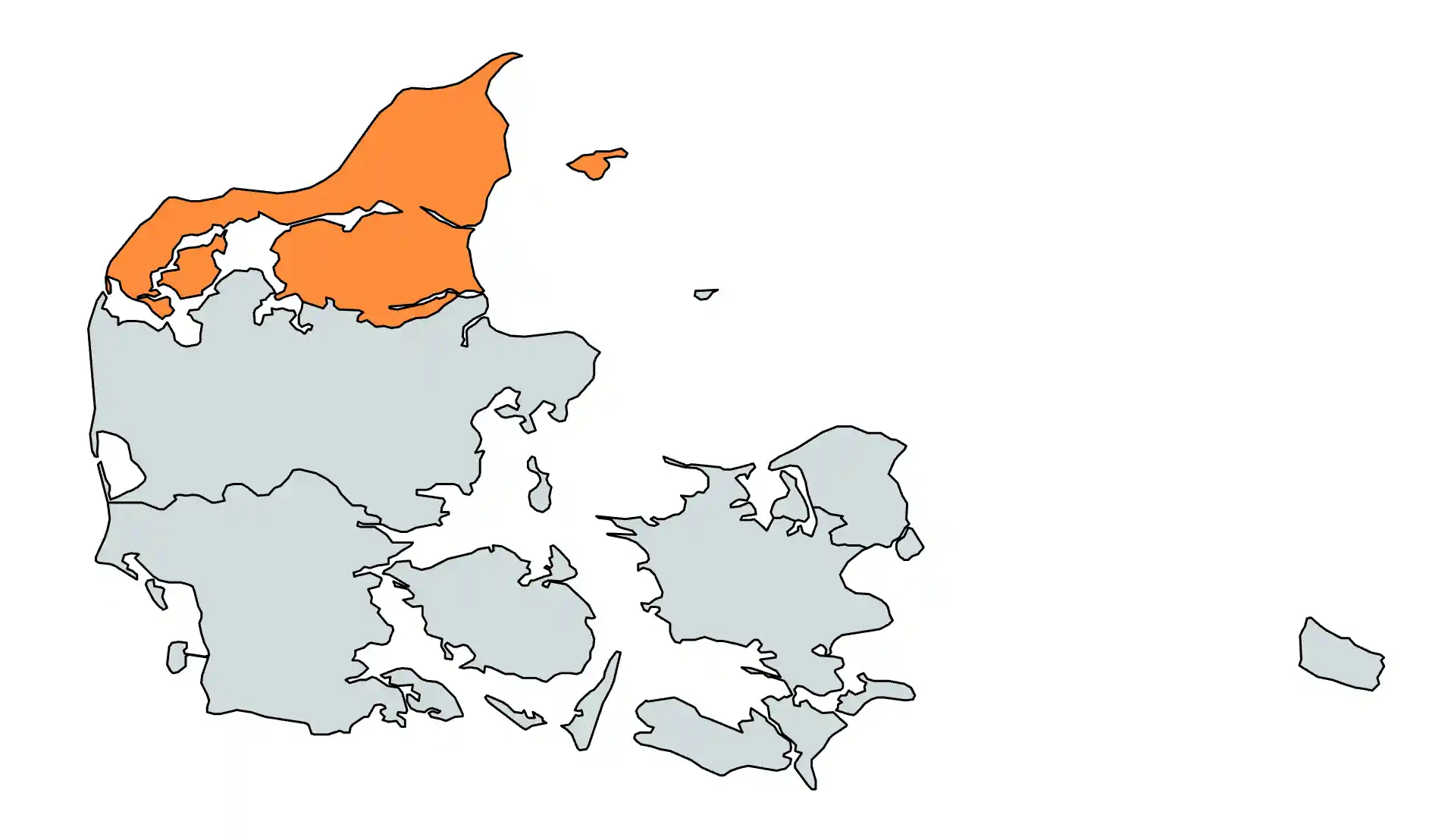
North Jutland is the bright crown of Denmark where the North Sea and the Baltic Sea crash together at the very tip of the country. You are driving through a land of shifting sands and giant dunes that swallow old lighthouses and churches. This region provides the most intense light and widest horizons in the north. You can cruise along the flat salt marshes or find a spot to park right on the sand near the rolling waves.
The view from the top of the buried tower shows a world of white sand and bright blue water stretching to the edge of the globe. From here you can follow the coast roads to find the yellow houses and busy art galleries of Skagen. The route south takes you through the deep lime caves and the massive forest of Rold Skov where the trees grow in strange twisted shapes. The fishing villages are filled with small docks and smokehouses selling fresh fish directly from the boats.
In the dunes of Rubjerg Knude the wind reshapes the landscape every single day around the lone lighthouse. Continue your drive toward the Limfjord to find quiet bays and sleek bridges that connect the island to the rest of the country. Here the local life is all about catching the famous northern light and exploring the wild cliffs of the western shore. North Jutland is a place where the power of the two seas come together.
North Jutland highlights
- Grenen Sandbar Head to the northernmost tip of the country to stand where the Skagerrak and Kattegat seas visibly collide in a swirl of waves. You can walk the sandy point or take the tractor bus to see seals resting on the shore near the meeting of two oceans.
- Rubjerg Knude Lighthouse Navigate to the high cliffs of the west coast to see this famous lighthouse surrounded by massive shifting sand dunes. The tower was recently moved on rails to save it from the sea and provides a dramatic view of the wild coastal erosion.
- Skagen Yellow Village Park your car among the iconic mustard yellow houses with white tiled roofs that have drawn world famous painters for centuries. The harbor is a lively spot to enjoy fresh shrimp while watching the fishing fleet return with the daily catch.
- The Buried Church (Tilsandede Kirke) Discover the remains of a fourteenth century church where only the white tower is visible above the encroaching desert sands. It is a striking reminder of the power of nature and a peaceful place for a walk through the surrounding forest.
- Rold Skov Forest Explore the largest forest in Denmark to find the strange crooked beech trees known as the Magic Forest. This massive green space is filled with deep freshwater springs and some of the best mountain bike trails for active road trip travelers.
- Bulbjerg Bird Cliff Go to the only limestone cliff in Jutland to see a massive rock formation that rises straight out of the crashing North Sea. It serves as a nesting ground for thousands of seabirds and provides a perfect natural balcony for watching the sun set over the water.
- Børglum Abbey Visit this historic white monastery that sits on a hill overlooking the fields and the distant sea. The old halls and the cathedral are filled with tales of bishops and kings and offer a quiet look into the medieval soul of the north.
- Lindholm Høje Viking Burial Site Stop just north of Aalborg to walk among hundreds of stone circles that mark the graves of Vikings from over a thousand years ago. The site includes an excellent museum that explains how this hill was preserved for centuries under a thick layer of sand.
- Mønsted Lime Caves Take a short detour to explore the largest man made lime mine in the world located deep underground. The endless tunnels and cold subterranean lakes create a mysterious atmosphere where thousands of bats hibernate during the winter months.
- Thy National Park Cruise through the first national park in Denmark to see a wild landscape of coastal meadows and clear blue lakes. This area is known for its wide open spaces and the small fishing huts that still sit on the dunes of the western shore.
The local Four
History of North Jutland
North Jutland's history began with the Vikings who used the Limfjord as a giant natural harbor to launch their fleets toward the western world. The past is visible in the hundreds of stone circles that mark ancient burial grounds on the hills above Aalborg. You're driving through a region where the land itself has changed shape over thousands of years as the sea retreated and the dunes rose.
The middle ages brought a time of powerful bishops and white stone monasteries that stood as beacons of order in a wild landscape. Life in the north was always a battle against the elements as the shifting sands began to swallow entire villages and fertile fields. You can see this struggle today at the old churches where only the steeples remain above the desert floor. This harsh reality created a people of incredible grit who built lighthouses on the cliffs and launched fishing boats directly into the crashing surf.
In the nineteenth century the unique light of the north attracted a colony of famous painters to the tip of the peninsula. These artists captured the raw beauty of the fishing life and the glowing horizons where the water meets the sky. North Jutland is a blend of this artistic soul and a proud maritime heritage that still thrives in every harbor. This region remains the wild and beautiful frontier of the Danish nation.