

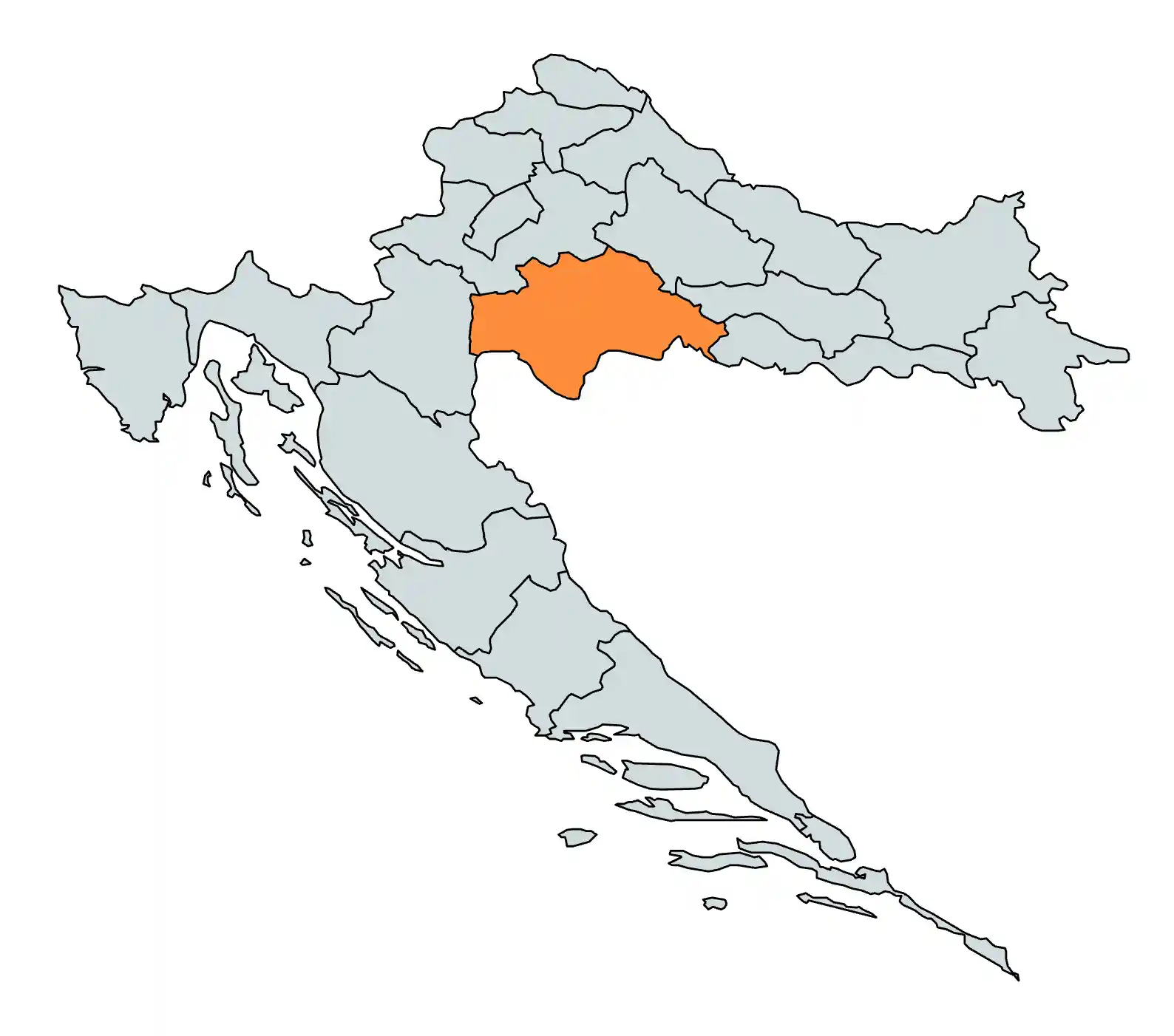
Water and wetlands define the spirit of Sisak-Moslavina. This region is home to the Lonjsko Polje nature drive. Follow the route to the village of Čigoč. It is known as the European home of the white stork. You can see dozens of nests sitting right on top of the chimneys. You can walk among old houses made of thick oak planks. These houses were built to be moved or raised when the Sava river floods. This clever design has saved the village for hundreds of years. The wood has aged to a beautiful silver color and is held together without any metal nails.
The road stays flat as it follows the Sava river embankment. From the car you can see wild Posavina horses grazing in the tall grass. These horses are very strong and have lived in these marshes for centuries. Stop in the village of Krapje to see the unique local architecture. You can also see the old gates that control the river water during the rainy season. The meadows are full of yellow flowers and rare plants that love the wet soil. It is a quiet place where you only hear the wind and the birds. It feels like you have stepped into a world that belongs to nature alone.
Drive to the Moslavina Wine Road between Kutina and Popovača to visit the August or Mikša cellars. These spots specialize in Škrlet which is a bright indigenous wine that pairs with local freshwater fish. Park at the Prijamni centar Repušnica for a direct entry point to the marsh walking trails. If you are there in June you can join a stork counting tour in Čigoč. Make sure to visit the Sisak Fortress at the confluence of the Kupa and Sava. It is a rare triangular fort that defeated the Ottoman army in 1593.
Sisak Moslavina highlights
- Čigoč Stork Village Visit the European village of storks where dozens of birds nest on old wooden chimneys. The flat roads are lined with giant oak houses that represent the soul of the river. You can watch the birds fly back to their nests as the sun goes down over the marshes.
- Krapje Architectural Village This village is a protected monument because of its unique oak wood building style. You can walk along the river bank to see the gates that control the flood waters. The silver color of the old wood shows how the houses have survived the rain for centuries.
- Repušnica Nature Entrance Park at the visitor center to access the wild meadows of the Lonjsko Polje park. It is the best spot to see wild horses and cattle grazing in the open fields. Walking trails lead you deep into the wetlands where you can see many rare water plants.
- Moslavina Wine Road Drive between Voloder and Kutina to visit small wine cellars carved into the hills. It is the only place in the world to find the rare and fresh Skrlet grape. Many families have made wine in these small hills for hundreds of years using old methods.
- Stari Grad Sisak Stop at the massive triangular fortress where three rivers meet at a single point. You can walk the thick walls that once stopped a huge army in the sixteenth century. The museum inside tells the story of the brave soldiers who defended the city.
- Petrinja City Park Take a walk through this old park filled with giant trees and flower gardens. The surrounding streets show the classic style of a royal border town from long ago. It is a quiet place to sit on a bench and enjoy the local small town feel.
- Topusko Thermal Springs These hot springs were used by the Romans and still offer healing water today. The park around the pools features ruins of an old abbey and quiet walking paths. The warm steam rising from the ground creates a magical look in the early morning.
- Sava River Ferry at Kratečko Experience a traditional river crossing on a wooden ferry powered only by the current. It is a slow and peaceful way to reach the deep woods on the other side. You will see the river life from a new angle as the ferry moves across the water.
- Zrin Castle Ruins Drive deep into the Zrinska Gora mountains to find the birthplace of famous noble rulers. The stone ruins sit on a high cliff overlooking a wild and green valley. It is a hidden gem for people who love history and hiking in the woods.
- Osekovo Bird Lookout Climb the wooden tower near the marsh to see rare birds and vast wetlands. It is a quiet spot for nature lovers who want to see the world without any noise. The view stretches for miles across the water where the sky meets the river reeds.
The local Four
History of Sisak Moslavina
This county was the Steel Gate of Europe. In 1593, a massive triangular fortress in Sisak held the line against a giant Ottoman army that had already conquered half the continent. The defenders utilized the natural junction of three rivers to outmaneuver the invaders in a victory that shifted the balance of power in the Balkans. The victory here was so huge that bells rang in churches all the way to London and Paris to celebrate the saved frontier.
Deep in the Lonjsko Polje wetlands, the people turned the swamp into a superpower. They built giant houses from iron oak wood that never rots, even when the Sava river floods the streets for months. These unique architectural marvels are constructed without a single metal nail, relying on complex interlocking joints to withstand the movement of the damp earth. This is a landscape where storks outnumber people and the river current still powers the wooden ferries that carry cars across the water.
The Moslavina hills hold a prehistoric secret: the world’s only source of the Škrlet grape. Romans first planted vines in these volcanic soils, finding that the mineral-rich earth produced a wine with incredible longevity. The same families have been carving wine cellars into the sandy cliffs for centuries, creating a subterranean network that remains naturally cool in the summer heat. It is a rugged, watery and resilient land that feels like the soul of the old Croatian frontier.