

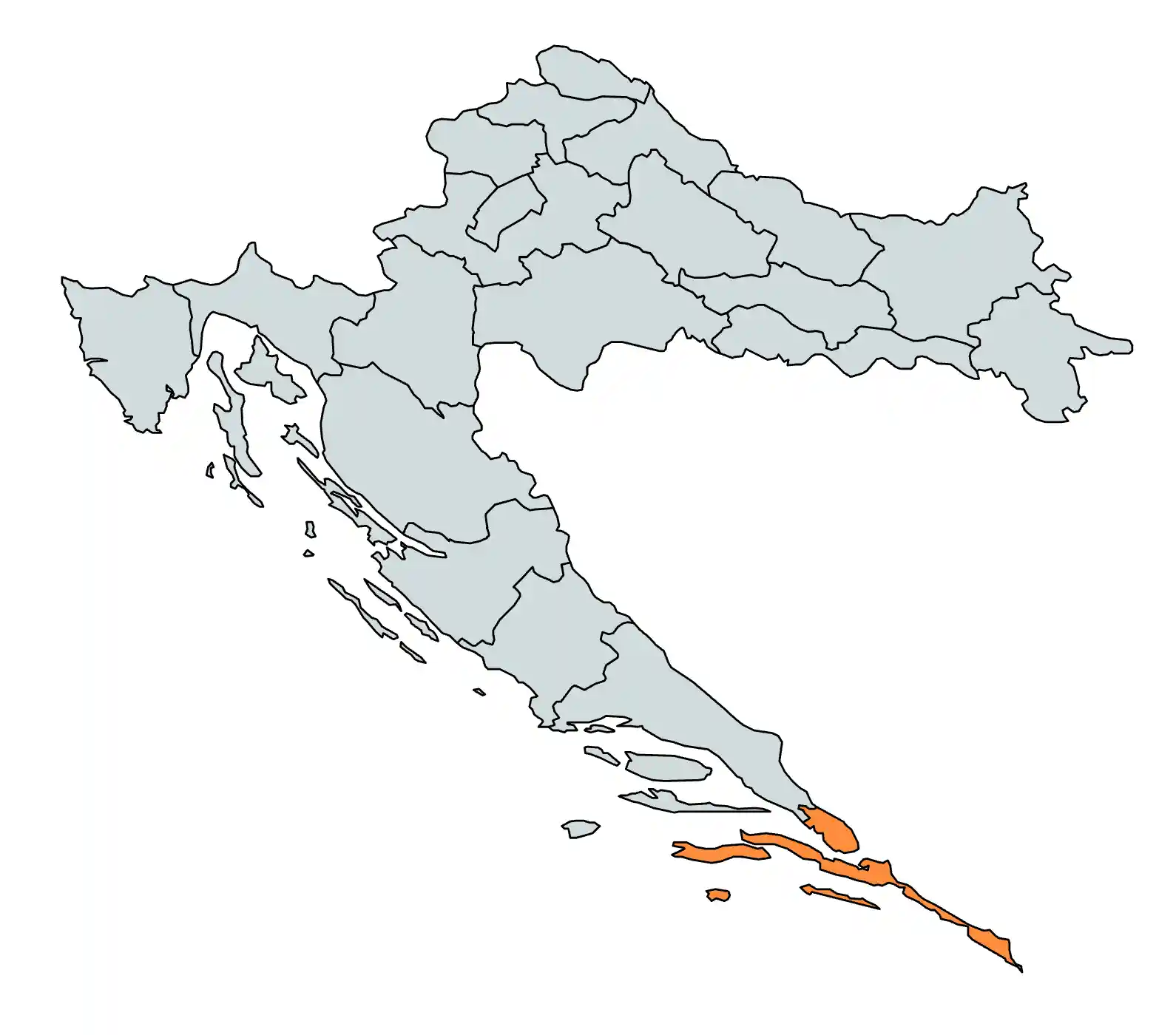
The road clings to the high cliffs in Dubrovnik-Neretva. This is the Adriatic coastal road trip. You will drive through the Neretva river delta. This is a big green area full of orange and lemon trees. The river splits into many small canals that water the fields. You can take a boat tour through the canals to see the local fruit stands and the birds. It is a green oasis in a world of grey stone and salt air. The fruit here is very sweet and you can buy it right from the side of the road.
The Walls of Ston are very long and protect the oldest salt pans in Europe. You can climb the walls for a great view of the bay and the salt fields. The salt is still made by hand using only the sun and the wind just like it was hundreds of years ago. Try the oysters of Mali Ston which are famous for their unique taste. They are pulled fresh from the sea every day. The air smells like sea salt and pine trees from the nearby islands. It is a place of old history and the best seafood you will ever taste.
Walk the Old Town walls of Dubrovnik early in the morning to beat the crowds and see the sunset from the top of Mount Srđ. For a hidden beach drive to Pasjača in the Konavle region where the path is carved directly into the cliff. Visit the Arboretum Trsteno to see the 500-year-old plane trees and the Renaissance gardens. Try the Dubrovnik Malvasia wine and the rožata (rose liqueur custard) for dessert. If you have time take the car ferry to Korčula to see the medieval walled town and taste the rare Grk white wine from the sandy vineyards of Lumbarda.
Dubrovnik Neretva highlights
- Ston Salt Walls Climb the longest stone walls in Europe that protect the old salt pans. The view from the top shows the sea and the white salt fields below. The walls go over the mountain and connect two small towns together.
- Neretva River Delta Drive through the green fields of orange and lemon trees near the wide river. You can take a boat tour through the canals to see the local fruit stands. The delta is a huge flat plain that stays green even in the winter.
- Trsteno Arboretum Visit the oldest garden in the region with giant trees and a stone fountain. It was used as a garden for kings and has a great view of the sea. The two plane trees at the entrance are over five hundred years old.
- Konavle Rock Path Walk the trail carved into the high cliffs to find a hidden beach. The path is steep and exciting and leads to the most clear blue water. You can see the waves hitting the rocks far below as you walk down.
- Mljet Salt Lakes Take a ferry to the island to see two lakes of sea water inside a forest. There is a small island with a monastery in the middle of the lake. You can rent a bike and ride all the way around the quiet water.
- Korčula Stone Town Explore the walled city that looks like a mini version of Dubrovnik on an island. The streets are built in a fishbone shape to keep the wind out. It is the birthplace of a famous explorer and is full of old palaces.
- Pelješac Wine Road Drive the steep hills of the peninsula to visit the famous red wine cellars. The vineyards grow on cliffs that fall straight into the Adriatic sea. The air here smells like salt and grapes and wild mountain herbs.
- Mali Ston Oysters Stop at the bay to try the best oysters in the world right from the wooden boats. The water here is perfect for growing the best seafood. You can see the rows of shells growing in the quiet and clear sea water.
- Srđ Mountain View Take the road to the top of the hill for the best view of the old city walls. You can see all the islands and the mountains of Bosnia too. A cable car also goes to the top if you don't want to drive.
- Lumbarda Sand Vineyards Visit the island of Korčula to see grapes growing in the white sand near the beach. It is a unique place that makes a very rare white wine. The sand makes the grapes sweet and gives the wine a special taste.
The local Four
History of Dubrovnik Neretva
The Republic of Ragusa (Dubrovnik) was the world’s first Silicon Valley of diplomacy and trade. They were so clever that they managed to stay free for 450 years without a big army, using only gold and smart talk to stay independent. The Republic was also one of the first states to abolish slavery and implement a public health system to fight the plague. The city walls are 1.9 kilometers of solid stone that have never been breached by an invader.
To the north, the Neretva Delta is the California of Croatia. It is a massive green flatland where millions of mandarin oranges grow in the river mud. The delta’s unique network of canals is navigated using traditional wooden boats, which are still the primary way for farmers to transport their harvest. This was once a land of Neretva Pirates who used narrow, shallow boats called lađas to ambush heavy Venetian ships in the reeds.
On the Pelješac peninsula, the walls of Ston are the second-longest in the world after the Great Wall of China. They were built to protect the white gold (the salt pans) that made the Republic rich. Even today, the salt is harvested by hand using methods that haven't changed since the 14th century. This is a land of 45 degree vineyards that fall into the sea and oysters that have been eaten by royalty for centuries.