

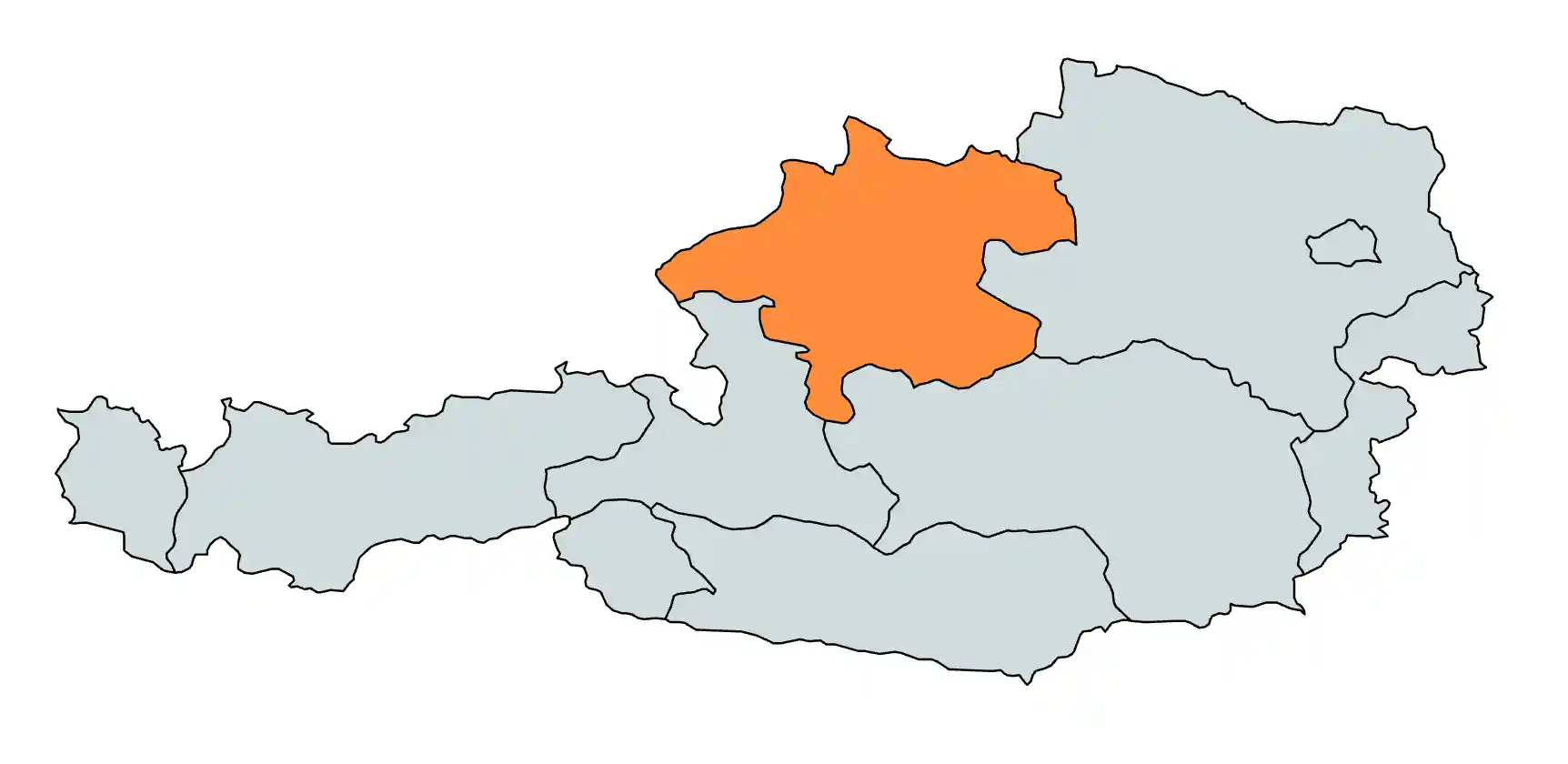
This is a land of deep blue lakes and mysterious forests that stretch toward the northern border. You find yourself in the Salzkammergut where the lake Hallstätter See reflects the steep mountains and the famous salt mine village. The water is clear and cold and the shorelines are dotted with old wooden boathouses. The roads wind through narrow tunnels and over high ridges that offer a new view around every corner.
The north offers a different world in the rolling hills of the Mühlviertel. Here the landscape is a combination of granite boulders and dark pine woods that hide quiet farmsteads. You can visit the historic town of Steyr where two rivers meet or explore the massive St. Florian Monastery. The local breweries are world famous and provide a great reason to stop in the small market towns along the way.
Upper Austria is perfect for a road trip that combines water and wood. You can find quiet spots to park your van by the Attersee or hike the trails in the Kalkalpen National Park. The light on the water in the evening creates a peace that is hard to find anywhere else. It is a region that rewards the curious traveler with hidden swimming spots and ancient forest paths that lead to the heart of nature.
Upper Austria highlights
- Hallstatt Village Drive to the most photographed lake village in the world to see the wooden houses stacked against the mountain. The views from the skywalk offer a stunning perspective on the deep blue water.
- Gmunden and Lake Traunsee Visit the town of ceramics and see the white castle of Ort sitting on a small island in the lake. The mountains rise steeply from the water to create a dramatic and elegant coastal vibe.
- Schlögener Schlinge Hike to the lookout point to see the Danube River perform a perfect 180 degree turn in a narrow forested valley. It is a natural masterpiece and a highlight for any road trip along the river.
- St. Wolfgang and Schafberg Take the steepest steam cog railway in the country to the top of the mountain for a view of seven lakes. The town below is a classic pilgrimage site with beautiful lakeside gardens.
- Dachstein Ice Caves Explore massive underground halls filled with ice sculptures and a suspension bridge high above the valley. The giant ice palace is a cool escape during the peak of the summer heat.
- Mühlviertel Granite Highlands Drive the quiet backroads of the north where massive boulders and dark pine forests define the landscape. This area is famous for its beer culture and its peaceful traditional farmsteads.
- Steyr Walk the confluence of two rivers in a city that has been a center for iron trade for a thousand years. The gothic and baroque buildings are some of the best preserved in the nation.
- Attersee Lake Enjoy the largest lake in the region which was a favorite summer spot for the painter Gustav Klimt. The water is famous for its turquoise color and its clarity for diving and swimming.
- Kalkalpen National Park Discover the largest continuous forest area in the country with wild lynx and golden eagles. The roads lead to remote valleys where you can find true silence and untouched nature.
- St. Florian Abbey Visit a massive baroque monastery known for its grand organ and the tomb of the composer Anton Bruckner. The marble hall and the library are stunning examples of imperial architecture.
The local Four
History of Upper Austria
Upper Austria is a land of lakes and salt that has been inhabited since the dawn of time. The village of Hallstatt is so old that it gave its name to an entire era of human history. For thousands of years, people have been mining salt from these mountains, carrying the "white gold" down to the lakes to be shipped across Europe. This ancient trade created a landscape of wealthy market towns and stunning lakeside estates that look like they were pulled from a dream.
The northern part of the region tells a different story of granite and grit. The Mühlviertel highlands were a land of stone-cutters and brewers, where the rugged terrain forced the people to become masters of the earth. Grand monasteries like St. Florian were built as centers of art and music, housing the world-famous Bruckner organ. The history here is a blend of industrial power along the Danube and quiet, mystical forests where the old traditions of linen weaving and beer brewing are still practiced with pride.
Modern Upper Austria is a powerhouse of innovation, but it keeps its secrets well-hidden in the mountain gorges and the deep blue lakes. The Schlögener Schlinge, where the Danube performs a perfect U-turn, served as a natural trap for sailors and a scenic masterpiece for travelers for centuries. Whether you are exploring the salt mines of the Salzkammergut or the granite farmsteads of the north, you are following a trail of ancient wealth and natural beauty that has remained unchanged for generations.