

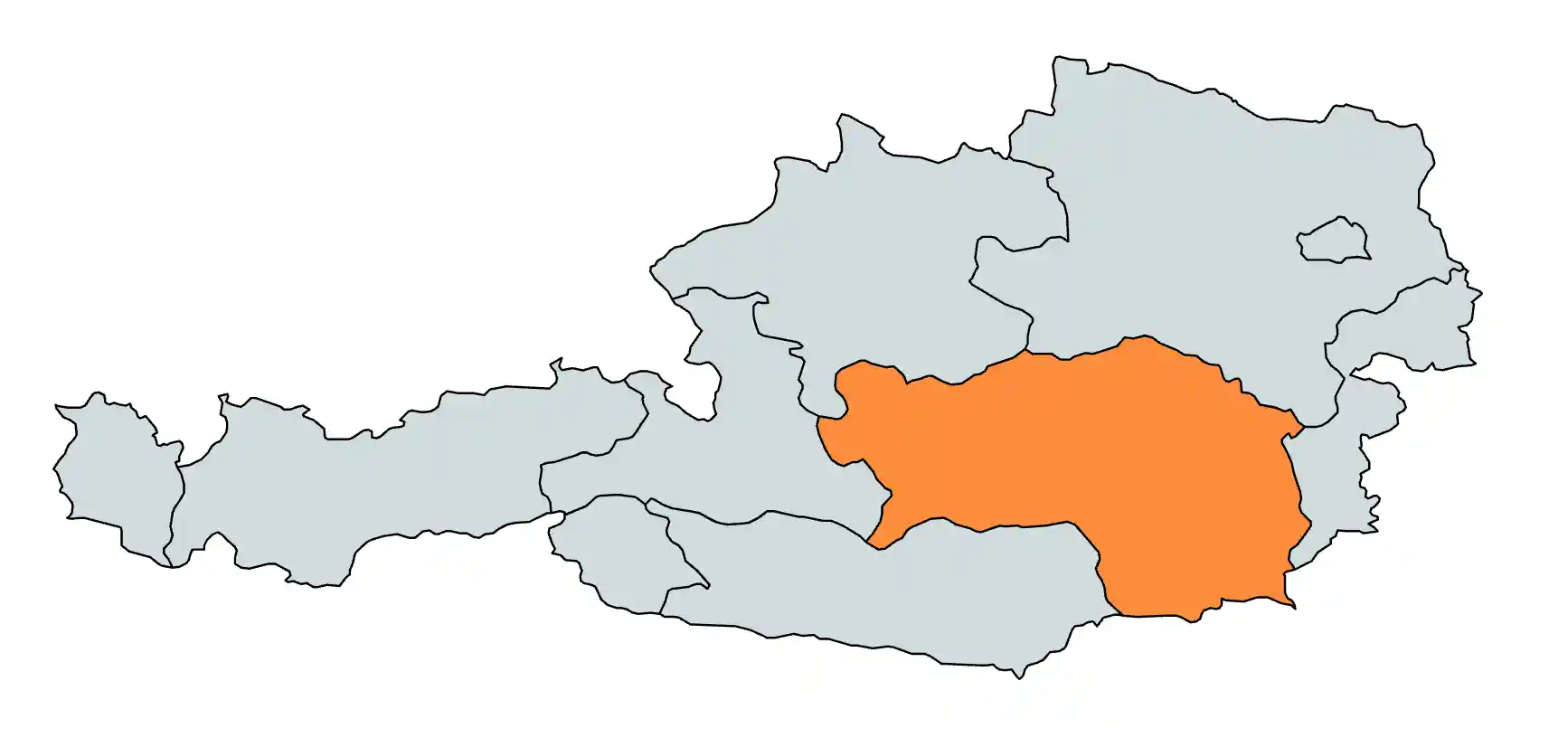
Styria is the green heart where the forests are thick and the hills are covered in pumpkin fields. This is a region of contrast where the limestone walls of the Dachstein meet the rolling vineyards of the south. You find yourself in Graz where red roofs and modern art sit side by side along the river. The vibe is earthy and authentic with a focus on local food and wild nature.
The roads in the south are narrow and wind through what locals call the Austrian Tuscany. You can drive the South Styrian Wine Road where the path follows the border and provides views for miles over the green ridges. Stop at a local oil mill to see how they make the famous dark green pumpkin seed oil. Further north the landscape becomes rugged with deep canyons and white water rivers perfect for a wild adventure.
History is carved into the mountains at the Erzberg mine where giant trucks move through a landscape that looks like another planet. You can visit the Admont Abbey to see the largest monastic library in the world with its white and gold halls. Styria offers a sense of discovery for those who want to find the path less traveled. It is a region of quiet woods and rich flavors that stays in your memory long after you leave.
Styria highlights
- Graz Clock Tower Climb the Schlossberg hill in the regional capital to see the iconic tower with its reversed clock hands. The view over the red roofs of the old town shows why it is a UNESCO heritage site.
- Admont Abbey Library Step into the largest monastic library in the world which looks like a white and gold palace of books. The ceiling frescoes and the secret doors make it a masterpiece of late baroque art.
- Dachstein Skywalk Take the cable car to the glacier for a walk on a glass floor bridge hanging over a thousand foot drop. The stairs to nothingness offer the most dramatic mountain view in the country.
- Zotter Chocolate Theatre Visit a creative chocolate factory where you can taste hundreds of unique flavors on a moving belt. It is a quirky and delicious stop located in the middle of the green rolling hills.
- Riegersburg Castle Explore a massive fortress sitting on a dormant volcano with a dramatic path leading up the rocky slopes. The castle hosts a falconry center and a museum dedicated to local witch trials.
- South Styrian Wine Road Drive the narrow ridge road along the border where the vineyards fall away on both sides. Stop at a local Buschenschank for a cold plate of smoked meat and fresh horseradish.
- Green Lake (Grüner See) Discover a park that disappears under emerald green snowmelt water every spring to create an underwater forest. It is a natural wonder with water so clear it looks like liquid glass.
- Erzberg Mine Take a tour of a massive open pit iron mine on a giant Hauly truck that makes your car look like a toy. The orange stepped landscape is unlike anything else in the alpine region.
- Lurgrotte Caves Explore the largest dripstone cave system in the nation with a massive natural entrance and underground rivers. The caves stay at a constant cool temperature regardless of the summer heat.
- Piber Lipizzaner Stud Visit the home where the world famous white horses of the Spanish Riding School are born and raised. You can walk through the stables and see the young foals playing in the green meadows.
The local Four
History of Styria
Styria is the "Green Heart" of Austria, but its history is forged in iron and stone. The defining landmark of the province is the Erzberg, a mountain of iron ore that has been mined for over 1,300 years. This single peak fueled the industrial rise of the entire region, creating a landscape of blacksmiths, miners, and engineers. The people of Styria became known for their practical skill and their ability to turn the raw materials of the earth into tools, weapons, and grand structures.
While the north was busy with iron, the south was a land of constant border tension. To protect the fertile rolling hills, noble families built the "Castle Road," a chain of massive fortresses like Riegersburg that sat on dormant volcanoes. These walls were designed to stop the advance of Ottoman armies, creating a culture of resilience. Between the battles, the people cultivated the land, perfecting the dark green pumpkin seed oil and the crisp wines that are now the symbols of the local identity.
The regional capital Graz provides a different side of the story. As a favorite residence of the Habsburgs, it became a center of the Renaissance and the home of the astronomer Johannes Kepler. The city’s history is a blend of Mediterranean flair and northern grit. Your road trip takes you from the orange-stepped iron mines through the silent forests of Admont Abbey to the beautiful vineyards.