

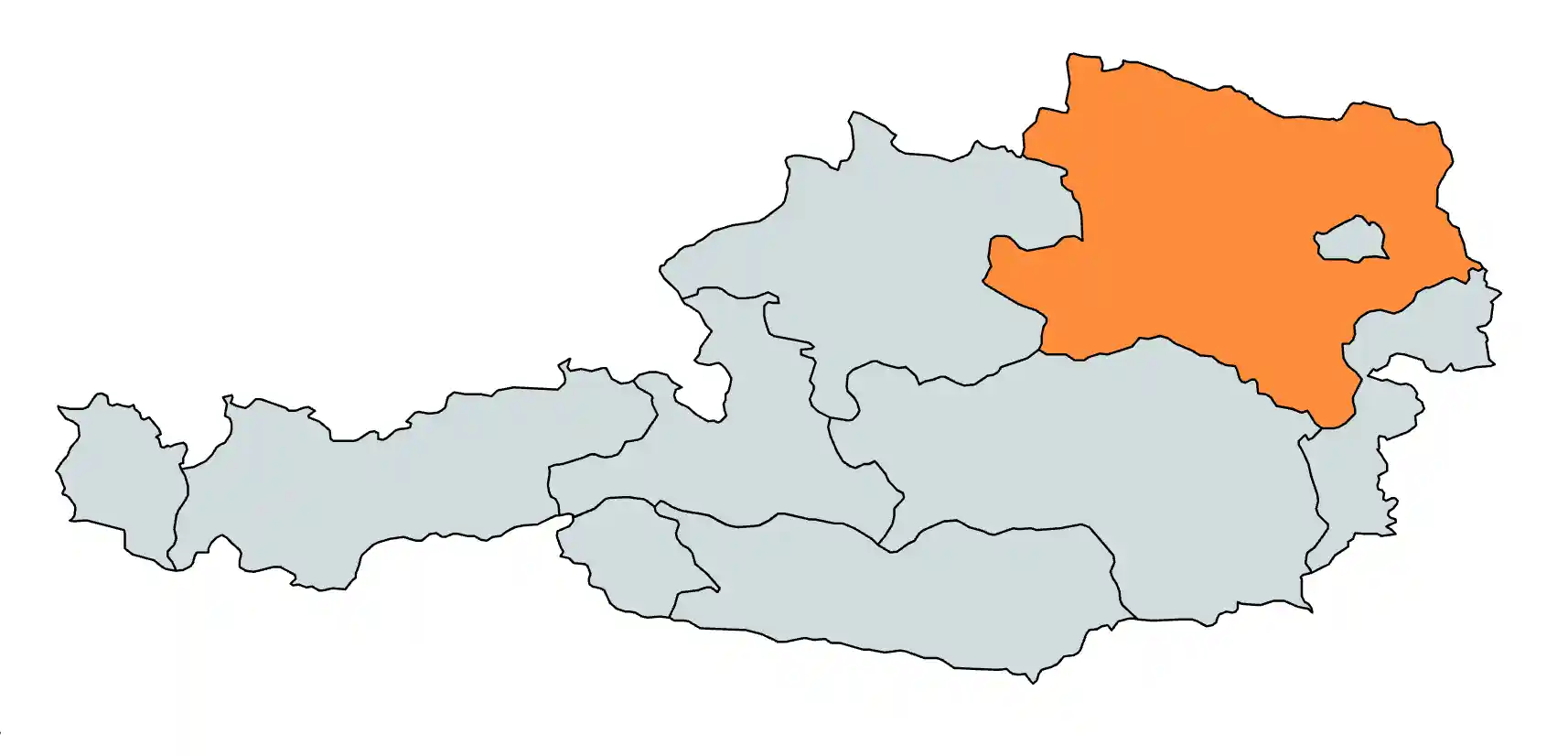
Lower Austria is the historic core of the nation where the massive Danube River cuts through steep hills and green valleys. You find yourself in the Wachau Valley where ancient stone walls hold up thousands of grapevines. Medieval ruins like Dürnstein look down over the water from rocky heights. The roads follow the curve of the river past grand abbeys and small ferry crossings that connect the tiny villages.
The landscape shifts from the lush woods of the Waldviertel to the rocky summits of the Rax mountains. You can visit the massive library at Melk Abbey or explore the Roman ruins of Carnuntum near the eastern border. The forest roads are quiet and lead to hidden waterfalls and dark ponds deep in the pine woods. It is a region of variety where every hour brings a change in the scenery.
Local life centers around the rustic wine taverns known as Heuriger. You can find these spots marked with a bundle of twigs above the door in the rolling hills of the Weinviertel. They serve cold plates of local cheese and fresh bread that are perfect for a midday road trip break. Lower Austria is a journey through time where the old world feels very much alive in the stone and the soil.
Lower Austria highlights
- Melk Abbey Stand in awe of this golden baroque masterpiece perched on a cliff overlooking the Danube River. The library and the spiral staircase are world famous examples of high imperial design.
- Dürnstein Ruins Hike up from the river to the rocky site where King Richard the Lionheart was once held prisoner. The blue church tower in the village below is the most iconic sight in the Wachau Valley.
- Schallaburg Castle Visit a stunning renaissance palace known for its terracotta courtyard and rotating world class exhibitions. It is surrounded by beautiful gardens and sits in a quiet hilly landscape.
- Carnuntum Roman City Explore a rebuilt Roman quarter with working kitchens and heated floors near the banks of the Danube. It is a massive archaeological park that brings the ancient past back to life.
- Myra Falls Walk across wooden bridges and stairs that follow a rushing stream through a narrow mossy gorge. It is a hidden nature gem that stays lush and green throughout the hiking season.
- Aggstein Castle Discover the ruins of a robber knight castle sitting high on a crag with a massive view of the river bends. The legend of the rose garden adds a dark mystery to this rugged stone fortress.
- Lower Austria Wine Road Follow the signs through the rolling hills of the Weinviertel to find quiet villages and cellar lanes. This is the largest wine region in the nation and offers endless scenic backroads.
- Semmering Railway Go to the station to see the first mountain railway in the world which is now a world heritage site. The viaducts and tunnels cut through a dramatic landscape of deep forest and cliffs.
- Heidenreichstein Castle Visit a massive water castle that has never been captured and still features a working drawbridge. It is one of the best preserved medieval structures in the northern forest region.
- Hohe Wand Nature Park Drive to the top of a massive limestone plateau for a walk on the Skywalk platform hanging over the edge. You can watch paragliders launch and see all the way to the lake in Hungary.
The local Four
History of Lower Austria
Lower Austria is the historic heartland of the nation, where the massive Danube River has acted as a liquid highway for thousands of years. The story begins with the Romans at Carnuntum, a city that was once as important as Vienna, serving as a gateway to the wild northern territories. For centuries, the fate of empires was decided along these riverbanks, where the Nibelungen legends were born and the first Babenberg dukes laid the foundation for the Austria we see today.
The Middle Ages brought a golden era of spiritual and intellectual power to the region. Grand abbeys like Melk and Göttweig were built on high cliffs, serving as beacons of light in a changing world. These "castles of God" were centers of knowledge, housing massive libraries that preserved the history of the west. The river valleys were filled with the sound of bells and the work of monks who carved the first wine terraces into the steep stone hills of the Wachau.
As you move away from the river, the history shifts to the deep "Wood Quarter" and the high peaks of the Semmering. In the 19th century, engineers achieved the impossible by building the world’s first mountain railway through these jagged cliffs, linking the empire together. This region is a layered history book, where every road leads to a different era from Roman ruins and robber knight castles like Aggstein to the elegant hunting lodges of the Habsburg emperors.